
Switzerland at World Cup 2026: The Nati’s Consistent Excellence
 Available in US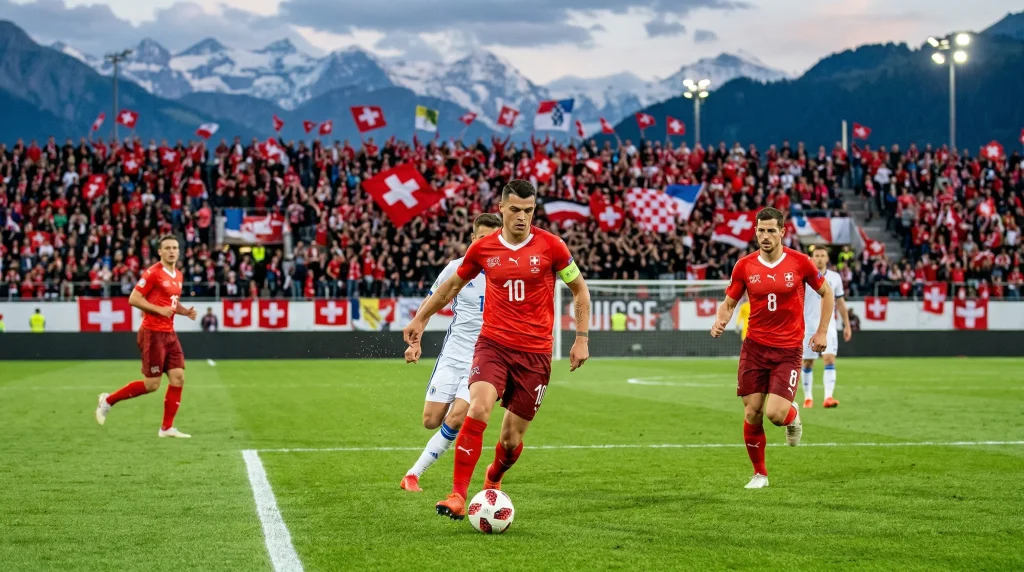
Table of Contents
Switzerland doesn’t produce headlines. They produce results. While flashier European nations generate drama through spectacular victories and crushing defeats, the Nati methodically accumulate tournament appearances, knockout-round qualifications, and respectable exits against superior opponents. This reliability defines Swiss football’s contemporary identity — never the best, rarely disappointing, always competitive.
Switzerland World Cup 2026 enters Group B as clear favorites ahead of Canada, Qatar, and Bosnia and Herzegovina. The Euro 2024 quarter-final appearance confirmed Swiss quality at tournament level. The consistent qualification across World Cups and European Championships demonstrates sustainable excellence rather than isolated peaks. For Canadian bettors, understanding Switzerland’s profile determines expectations for the pivotal group-stage clash.
I’ve tracked Swiss tournament performance across multiple cycles, and their reliability stands out even among traditionally competitive European nations. The organizational discipline, the tactical intelligence, and the collective effort consistently exceed what individual talent levels might suggest. Switzerland maximizes resources through efficiency that other nations squander through disorganization.
Euro 2024 Quarter-Finalists: Switzerland’s Steady Rise
The Euro 2024 campaign confirmed Swiss evolution from reliable qualifier to genuine knockout-round threat. Defeating Italy in the Round of 16 — a fixture against historically superior opposition — demonstrated that the Nati can produce decisive performances when stakes intensify. The subsequent quarter-final defeat to England on penalties reflected competitive equality rather than clear inferiority.
What distinguished Euro 2024 performance involved the tactical flexibility that modern tournament football demands. Swiss formations shifted based on opponent characteristics without sacrificing organizational coherence. The ability to defend deep against possession teams, then press high against teams preferring direct play, created matchup advantages that single-system approaches cannot achieve.
The tournament also revealed Swiss attacking evolution. Previous iterations sometimes struggled to convert territorial dominance into goals. The 2024 version demonstrated clinical finishing when chances appeared. This efficiency — quality over quantity in attacking output — matters in knockout rounds where single goals decide advancement.
Swiss Qualifiers: Efficient as Always
European qualification for World Cup 2026 proceeded without drama. Switzerland topped their group ahead of competitive opposition, accumulating points through victories against ranked opponents and comfortable margins against lesser teams. The qualification campaign confirmed baseline quality without testing ultimate ceiling.
What qualifying revealed involved Switzerland’s ability to control matches through midfield dominance. Granit Xhaka’s presence dictated tempo across fixtures, allowing Swiss attacks to build patiently while defensive structures remained organized. This midfield control translates directly to World Cup football where opponents test concentration across extended periods.
The integration of younger players during qualification accelerated development timelines. Beyond established names, additional options earned competitive minutes that tournament readiness requires. This depth-building creates resilience that Swiss squads have sometimes lacked when key players faced injury or suspension.
Squad Analysis: Technical Excellence
Swiss squad construction emphasizes collective function over individual stardom. The players who represent Switzerland developed through club environments that prioritize tactical understanding over isolated brilliance. This foundation creates squads where the whole exceeds the sum of parts — organizational coherence that compensates for missing world-class individuals.
Goalkeeping provides the foundation Swiss defensive identity requires. Yann Sommer’s Inter Milan career confirmed elite status that extends beyond domestic reputation. His shot-stopping, distribution, and command of the area provide security that allows defensive structures to operate confidently.
Defensive personnel combines experience with emerging quality. Center-back partnerships have developed understanding through consistent selection. Full-back positions feature both defensive reliability and attacking contribution. The overall defensive organization reflects Swiss football’s emphasis on collective structure over individual heroics.
Midfield construction centers on Xhaka’s controlling presence. His Arsenal and subsequent career established him among Europe’s best deep-lying playmakers. The supporting options provide different profiles — energy, creativity, defensive screening — that complement his orchestration.
Granit Xhaka and the Key Players
Granit Xhaka’s influence on Swiss football extends beyond statistics into the tempo control that dictates match character. His positioning, his passing range, and his leadership qualities anchor the entire Swiss system. When Xhaka controls midfield, opponents struggle to establish rhythm. This dominance translates across tournament matches where consistency matters more than isolated brilliance.
At 33 during World Cup 2026, Xhaka enters the period where accumulated wisdom compensates for any physical diminishment. His reading of the game, his timing of interventions, and his understanding of when to accelerate or slow tempo reflect experience that younger midfielders cannot replicate. This maturity proves valuable in tournament environments where composure under pressure separates contenders from hopefuls.
Supporting midfield options have developed through competitive European minutes. The variety — more dynamic profiles alongside Xhaka’s controlling presence — provides tactical flexibility that single-profile midfield cannot offer. This depth allows in-game adjustments that respond to opponent characteristics.
Attacking options provide the efficiency that Swiss football requires. The profiles emphasize intelligent movement and clinical finishing over spectacular individual action. This collective approach creates consistent output that star-dependent attacks sometimes cannot sustain.
The Swiss attacking depth has improved through development of younger players who’ve earned European opportunities. These options provide tactical variety — some offering pace, others providing hold-up play, others bringing creative vision. This diversity allows in-game adjustments that respond to opponent defensive structures rather than forcing identical approaches regardless of context.
Defensive leaders beyond the starting eleven provide tournament resilience. The depth that allows rotation without quality drop-off determines whether Swiss consistency sustains across compressed tournament schedules. Swiss player development has produced defensive options who can contribute competently when starters require rest or face suspension.
Group B Preview: Canada, Qatar, Bosnia
Switzerland enters Group B as clear favorite following the draw that eliminated Italy from World Cup 2026. Qatar and Bosnia represent manageable opposition, while Canada provides the host-nation challenge that determines group positioning. The fixture in Vancouver against Canada represents Group B’s decisive match.
Canada’s home advantage in Toronto and Vancouver creates atmosphere challenges that neutral venues would avoid. The passionate support, the familiar conditions, and the national pressure to perform all favor Les Rouges. Switzerland must navigate this environment while maintaining the composure that defines Swiss tournament football.
The Switzerland versus Canada fixture determines group hierarchy. Both teams should advance past Qatar and Bosnia comfortably. Their head-to-head result likely decides first place, with corresponding knockout-round seeding implications. Swiss tactical discipline faces Canadian attacking energy in the match that defines Group B.
Qatar’s 2022 hosting experience provided tournament exposure that hasn’t translated into sustained competitiveness. Their group-stage elimination despite home advantage suggests limitations that Switzerland should exploit. Bosnia’s qualification through the playoff that eliminated Italy created fairytale narrative without guaranteeing competitiveness against organized European opposition.
Switzerland vs Canada: The Key Battle
The Group B finale between Switzerland and Canada in Vancouver represents the fixture that Canadian observers should prioritize. Swiss defensive organization faces Canadian transition speed in tactical matchup that favors Swiss experience but could reward Canadian moments of brilliance.
Switzerland’s approach will likely prioritize possession control that limits Canadian counter-attacking opportunities. Denying Davies and David space to accelerate neutralizes Canadian attacking strengths. The Swiss will accept territorial battles where their organizational discipline proves advantageous.
Canada’s best hope involves early goals that force Switzerland to chase. Swiss defensive resilience makes overtaking difficult once they establish leads. Canadian pressing intensity must generate turnovers in dangerous areas before Swiss organization settles into match rhythm.
For Canadian bettors, the spread likely opens around Switzerland -0.5 or pick’em depending on market assessment of home advantage. The Swiss quality suggests favorites, but Canadian circumstances could produce upset.
Switzerland Odds: Group Favorites
Current World Cup 2026 odds place Switzerland around +6000, reflecting both reliable tournament performance and the quality gap to genuine contenders. This pricing positions Switzerland as capable knockout-round participant but not championship threat. The market asks whether consistent competence can translate to exceptional achievement.
My assessment places Switzerland’s actual probability of reaching quarter-finals around 25-30%, translating to fair odds between +235 and +300 for that achievement. At +6000 for outright victory, you’re paying for possibility that Swiss history suggests unlikely. Value lies in advancement propositions.
Group B victory should price around -110 based on quality advantage over Canada, Qatar, and Bosnia. The Canadian home matches complicate certainty, but Swiss organizational quality should produce sufficient points for first place.
The more speculative proposition involves Switzerland reaching the quarter-finals. At approximately +200, this captures knockout-round advancement that Swiss tournament history suggests achievable. Their consistent progression to elimination stages, followed by competitive exits against superior opponents, represents the pattern that quarter-final pricing reflects.
For Canadian bettors specifically, the Switzerland versus Canada match presents direct betting interest. The spread will likely reflect slight Swiss advantage, with moneyline around -130 for Switzerland. Taking Switzerland on Asian handicap -0.5 at similar pricing captures expected outcome without draw complication.
Swiss Reliability
Switzerland enters World Cup 2026 as the opponent everyone respects but nobody fears. Their consistent tournament appearances, their reliable knockout-round qualifications, and their competitive exits against superior opponents define a nation that maximizes available resources. For Canada, understanding Swiss profile informs Group B expectations and betting considerations.
The Nati won’t produce spectacular victories or crushing defeats. They’ll control matches through midfield, defend with organization, and convert chances efficiently. This formula has produced sustainable international success that flashier approaches often cannot match.
My tournament prediction places Switzerland atop Group B with advancement to at least the Round of 16. The quarter-final ceiling depends on bracket positioning — favorable draws enable progression, elite opponents expose limitations. Among the 48 teams competing, Swiss reliability continues; championship ambition remains beyond realistic expectation.
