
World Cup 2026 Group G: Belgium’s Last Dance?
 Available in US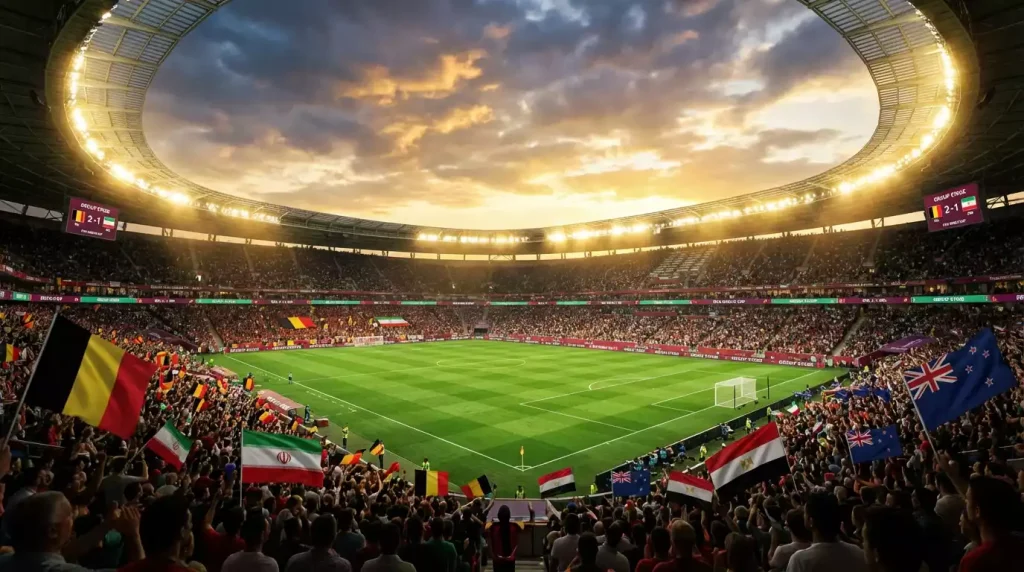
Table of Contents
Kevin De Bruyne turns 35 during this tournament. Romelu Lukaku has spent the better part of a decade chasing major silverware with his national team. Eden Hazard already retired. The core of Belgium’s celebrated golden generation — ranked number one in the world for years, semifinalists in 2018, perennial dark horse picks — faces its final World Cup. Group G represents their last realistic chance at the trophy that’s eluded them through qualification heartbreaks and knockout round disappointments. I’ve watched this team evolve from talented youngsters to battle-tested veterans, and the question on everyone’s mind is whether they can finally deliver when it matters most.
But Belgium isn’t alone in bringing narrative weight to this group. Egypt features one of the world’s best players in Mohamed Salah, who at 34 is running out of World Cup opportunities himself. Iran carries the technical excellence and tactical discipline that’s made them Asia’s most consistent qualifier. New Zealand returns to the World Cup stage after earning Oceania’s spot, hoping to make an impact beyond mere participation. Four nations, four distinct stories, one collective pursuit — and for the betting market, a group that looks straightforward on paper but carries upset potential in every match.
The Golden Generation’s Final Shot
There’s something almost cruel about how world football works. Belgium assembled perhaps the most talented generation in its football history — De Bruyne orchestrating Manchester City’s dominance, Lukaku scoring goals across Serie A and the Premier League, Thibaut Courtois anchoring Real Madrid’s Champions League runs, Hazard once dazzling at Chelsea before his move to Madrid. Yet the trophy cabinet remains empty. Third place in Russia 2018 felt like the start of something, not the peak.
The 2022 World Cup in Qatar exposed the cracks I’d been tracking for years. Belgium limped out in the group stage, losing to Morocco and needing a draw against Croatia they couldn’t manage. The internal tensions between players went public. Coach Roberto Martínez departed. The golden generation looked tarnished, possibly finished.
What followed was a recalibration rather than a collapse. Domenico Tedesco took over and injected pragmatism into a side that had often relied on individual brilliance over collective structure. The Euro 2024 qualifying campaign showed glimpses of adaptation — younger players earning minutes, tactical flexibility replacing predictable patterns. Belgium secured their World Cup spot with enough comfort to suggest the foundations remain solid even as the superstructure ages.
The betting markets reflect this transitional reality. Belgium enters Group G as clear favorites at around 1.45 to top the group, but those odds are notably longer than they would have been in 2018 or even 2022. Bookmakers are pricing in the uncertainty — will the veteran core produce one more run, or will age finally catch up with a group that’s been on the cusp for so long?
Group G: Belgium’s to Lose
I remember analyzing groups that looked this lopsided in previous tournaments, and the lesson is always the same — paper form matters until it doesn’t. Belgium sits as the overwhelming favorite, with Iran, Egypt, and New Zealand all carrying odds between 8.00 and 15.00 just to finish second. The market expects Belgium to cruise through with minimal resistance.
The group’s competitive balance comes not from parity at the top but from the fight for second place. Egypt and Iran represent genuine knockout-round quality on their day. Both nations boast Premier League talent in key positions and defensive organizations capable of frustrating superior opponents. The matches between these two will likely determine who joins Belgium in the Round of 32 — assuming Belgium holds up their end of the bargain.
New Zealand faces the steepest challenge, priced around 25.00 to advance from the group. The All Whites lack the depth and individual quality of their competitors, though they’ve shown in past tournaments that Oceania’s representative can spring surprises. Their 2010 World Cup saw them earn draws against Italy and other opponents, leaving South Africa unbeaten despite failing to advance.
From a betting perspective, Group G offers limited outright value at the top. Belgium’s odds to win the group are too short for the risk involved, given their recent tournament struggles. The second-place race between Egypt and Iran provides better opportunities — particularly if you believe Salah’s presence elevates Egypt above their FIFA ranking suggests. Iran’s consistency and tactical discipline make them a sensible pick for bettors who prefer form over stardom.
Belgium: Now or Never
The Red Devils landed in Group G with a mixture of relief and pressure. No co-host nation to navigate, no established World Cup power blocking the path — just opponents they should handle. That “should” has haunted Belgium before. Croatia in 2022 wasn’t supposed to eliminate them either. I’ve learned to temper expectations when it comes to Belgium’s tournament performances, even when the draw seems kind.
Tedesco’s tactical approach differs markedly from Martínez’s philosophy. Where Martínez trusted his stars to create magic, Tedesco demands structure and defensive responsibility even from the most gifted players. De Bruyne still orchestrates, but within a more disciplined framework. Lukaku leads the line with clearer positional instructions. The trade-off is some of the spontaneous brilliance that once characterized Belgian attacks, replaced by reliability and reduced risk.
The squad balance concerns me more than the tactics. Courtois in goal remains world-class when healthy, though injuries have disrupted his recent seasons. The defensive unit around him has undergone generational turnover — Jan Vertonghen and Toby Alderweireld aged out, leaving younger center-backs to shoulder responsibility they haven’t proven capable of handling at the highest level. Wout Faes and Zeno Debast represent promise rather than certainty.
In midfield, De Bruyne’s importance cannot be overstated. Belgium’s entire creative structure flows through his vision and passing range. Youri Tielemans and Amadou Onana provide the platform for De Bruyne to operate, but without the Manchester City man, Belgium becomes predictable and one-dimensional. His fitness throughout the tournament will determine how far they progress.
Lukaku’s goal-scoring record for Belgium is extraordinary — over 80 international goals — but his tournament performances have disappointed. Missed chances, heavy touches at crucial moments, questions about his movement off the ball. At 33, this represents his final opportunity to silence critics who’ve argued he underperforms on the biggest stages. The group phase should provide scoring opportunities against defensively weaker opponents, though I’ll wait until the knockout rounds to judge whether he’s rediscovered his predatory instincts.
Belgium should win Group G. Their overall quality exceeds that of any opponent they’ll face. But “should” and “will” remain different propositions entirely with this squad, and I wouldn’t bet confidently on them topping the group until they prove the 2022 collapse was an aberration rather than a preview of decline.
Iran: Team Melli’s Ambitions
Carlos Queiroz built something remarkable with Iran’s national team over multiple stints as manager. The defensive organization, the tactical discipline, the ability to frustrate superior opponents and strike on the counter — these qualities made Iran the most feared team in Asian qualifying and a genuine threat at every World Cup they’ve attended. Whether Queiroz remains in charge or another coach inherits his system, Iran brings structural excellence to Group G.
The 2022 World Cup demonstrated both Iran’s potential and limitations. They pushed England hard before collapsing to a 6-2 defeat, beat Wales 2-0 in a crucial group match, then fell narrowly to the United States in a politically charged encounter that came down to fine margins. The talent exists to compete with mid-tier European and South American nations, though the gap against genuine contenders remains significant.
Sardar Azmoun and Mehdi Taremi led Iran’s attack in Qatar, and both should feature again in 2026. Taremi’s movement and clinical finishing make him one of Asia’s best strikers, while Azmoun’s pace and technical ability create problems for defenders who haven’t faced him before. The question is whether Iran can generate enough chances against organized opponents like Belgium and Egypt, both of whom defend more competently than typical Asian rivals.
Iran’s World Cup record shows consistent qualification but limited knockout-round success. They’ve never advanced past the group stage in six previous appearances, though several near-misses suggest the breakthrough could come with favorable circumstances. Group G offers those circumstances — Belgium represents a likely loss, but Egypt and New Zealand are beatable, and six points from those matches might be enough for second place depending on goal difference.
The betting market prices Iran around 4.50 to finish second in Group G, reflecting their competitive position without inflating expectations. I find value there if you believe Egypt’s group-stage record will continue to disappoint, as Salah’s club form rarely translates directly to international tournament success.
Egypt: Salah’s World Cup Dream
Mohamed Salah has won Premier League titles, Champions League finals, scoring records across multiple seasons — and yet the World Cup has largely eluded him. Egypt’s 2018 qualification felt like destiny finally arriving, only for Salah to enter the tournament injured, score a penalty, and watch his team finish bottom of a group containing Russia, Uruguay, and Saudi Arabia. The Pharaohs’ 2022 absence after losing an Africa Cup of Nations final penalty shootout to Senegal compounded the disappointment.
At 34, Salah enters what’s almost certainly his final World Cup with everything still to prove on football’s biggest stage. His club performances remain extraordinary — Liverpool’s talisman shows no signs of decline in the Premier League. But international football demands different qualities, and Egypt’s supporting cast hasn’t always matched Salah’s individual brilliance.
The Egyptian Football Association has prioritized building a team worthy of their best player’s final years. The qualifying campaign showed progress, with defensive solidity providing the platform for Salah’s moments of magic. Mostafa Mohamed offers a genuine striking partner rather than forcing Salah to create everything himself. The midfield blend of creativity and industry has improved under current management.
Egypt’s tactical setup typically revolves around protecting their defensive structure and releasing Salah into space on transitions. Against Belgium, this approach makes sense — absorb pressure, stay compact, hope Salah produces something from limited opportunities. Against Iran and New Zealand, Egypt must show they can control matches and break down organized defenses without relying solely on counter-attacks.
The betting market positions Egypt as slight favorites over Iran for second place, around 3.80 compared to Iran’s 4.50. That margin reflects Salah’s X-factor more than Egypt’s overall team quality, and I’m not convinced it’s warranted. Egypt’s African Cup of Nations record includes heartbreak and underperformance despite Salah’s presence. Tournament football hasn’t suited them recently, and Group G won’t offer easy wins against disciplined opponents.
For bettors, Egypt represents high-risk, high-reward territory. Back them if you trust Salah to elevate the entire team through force of will. Fade them if you believe their supporting players lack the quality to capitalize on whatever chances their star creates. I lean toward the latter, though I’d never write off a team featuring one of the world’s five best players.
New Zealand: The All Whites Return
When I mention New Zealand football, most people think of the All Blacks — rugby dominates the national sporting consciousness to an extent few countries match. Football exists in the shadows, competing for talent and attention against a rugby machine that produces world champions with remarkable consistency. Yet the All Whites have carved out their own history, qualifying for multiple World Cups and representing Oceania with competitive spirit that belies their underdog status.
The 2026 qualification was never in serious doubt once New Zealand topped their continental group. Oceania’s pathway to the World Cup expanded with the 48-team format, ensuring that the region’s best team would secure automatic qualification rather than facing intercontinental playoffs against South American or Asian opposition. New Zealand capitalized, winning their matches with the comfort expected against significantly weaker Oceanian rivals.
Chris Wood leads the attack — the Nottingham Forest striker has scored prolifically in the Premier League and represents New Zealand’s most recognized international player. His aerial presence and hold-up play give the All Whites a focal point, though the service into him often lacks the quality found in club football. Around Wood, the squad features a mix of players from European lower leagues, Australian A-League clubs, and domestic New Zealand football. The depth simply cannot match Iran or Egypt, let alone Belgium.
Realism should guide expectations. New Zealand will compete, defend with organization, and hope to avoid embarrassment against superior opponents. A point from any match would count as success. A victory would represent one of the biggest upsets in modern World Cup history. Their 2010 performance — three draws, zero defeats, fourth in their group — remains the benchmark, though that team faced Italy, Slovakia, and Paraguay rather than the opponents they’ll meet in 2026.
From a betting perspective, New Zealand offers value only for those seeking extreme long shots. Their odds to advance from Group G hover around 25.00, reflecting the near-impossible task they face. Back them for individual match results if Belgium or Egypt rotate heavily, but expecting them to reach the knockout rounds requires ignoring too much evidence pointing in the opposite direction.
Schedule and Venues
Group G matches will unfold across American venues, with the specific stadiums adding different challenges for teams adapting to North American conditions. The schedule spacing favors balanced preparation — three-day gaps between matches give everyone equal recovery time, which typically helps lower-ranked teams who rely on defensive organization and set-piece execution rather than sustained attacking pressure.
Belgium opens against Iran in what represents the group’s marquee encounter outside of potential upset scenarios. This match will set the tone — a comfortable Belgian victory essentially clinches first place and relegates Iran to fighting Egypt for second. A closer result or Iranian upset would transform Group G into a genuine contest with multiple qualification scenarios persisting into the final matchday.
Egypt versus New Zealand follows as the second match, offering Egypt an opportunity to secure three points against the group’s weakest team before facing sterner tests. Salah should dominate against New Zealand’s defense if Egypt approach the match with appropriate intensity and avoid the complacency that sometimes afflicts favored teams playing supposed minnows. New Zealand’s best hope lies in Egyptian underperformance rather than their own overperformance.
The second round brings Belgium against Egypt — a fascinating tactical matchup between Tedesco’s structured approach and Egypt’s Salah-centric counter-attacking. Belgium’s ability to break down organized defenses will be tested, while Egypt must decide whether to sit deep or press higher than usual against opponents who struggle when denied space. Iran faces New Zealand simultaneously, needing maximum points to maintain second-place hopes against the group’s only beatable opponent.
The final matchday features Belgium against New Zealand and Egypt against Iran. If results follow expectations, Belgium will have already secured qualification before their final match, potentially leading to rotation and reduced intensity. Egypt versus Iran becomes the decisive encounter for second place — a match that could see both teams needing victory, producing either attacking football born from desperation or cagey tactical chess where neither side wants to concede the first goal.
Group G Predictions
Nine years of analyzing World Cup groups has taught me that favorites rarely disappoint when the gap in quality is this substantial. Belgium will win Group G, collecting seven to nine points depending on whether they approach the New Zealand match with full intensity or rest players for the knockout rounds. De Bruyne’s orchestration, Lukaku’s finishing, and Courtois’s shot-stopping should prove too much for opponents who lack the firepower to punish Belgian defensive vulnerabilities.
The second-place battle between Egypt and Iran offers more uncertainty. I lean toward Iran — their organizational discipline and tournament experience suggest they’ll handle the pressure better than an Egyptian team that’s disappointed in recent competitions despite Salah’s presence. Iran’s head-to-head record against African opponents at World Cups is solid, and their ability to grind out results through defensive resilience suits knockout qualification races where goal difference often decides fates.
Egypt finishing second remains possible, perhaps even probable if Salah delivers the individual brilliance his club career suggests he’s capable of. But I’ve watched too many World Cups where stars struggled to drag inferior teammates to success. Salah’s supporting cast has improved, yet the gap between Liverpool’s quality and Egypt’s remains vast. One player alone cannot overcome that deficit against well-organized opposition.
New Zealand will finish fourth, likely with zero or one point from three matches. Their 2010 achievements were remarkable and unrepeatable — that team caught opponents off guard, while the 2026 version arrives with no such anonymity. Belgium, Iran, and Egypt all know what to expect, and none will underestimate Oceania’s representatives enough to enable similar results.
For bettors seeking Belgium’s complete World Cup profile, the group stage should provide minimal drama. The value lies in second-place markets and individual match betting, where Iran’s odds often seem too long given their competitive history. Egypt’s premium reflects Salah’s stardom more than their tournament credentials — a pricing inefficiency for those willing to bet against conventional expectations. Group G offers neither the drama of a Group of Death nor the certainty of predetermined outcomes, but somewhere in between lies opportunity for those who read the matchups correctly.
