
Brazil at World Cup 2026: A Seleção’s Return to Glory
 Available in US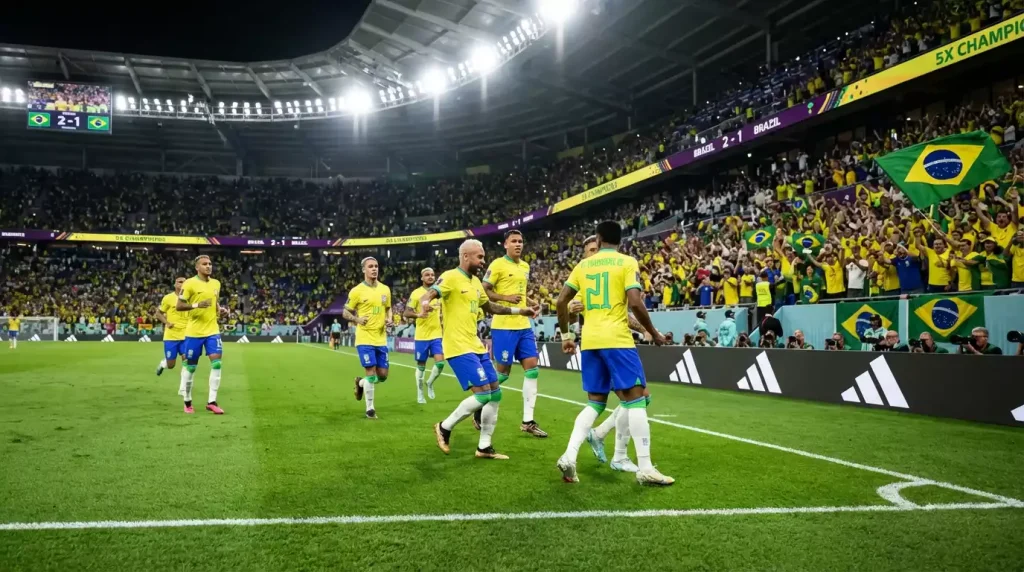
Table of Contents
Twenty-four years without a World Cup. For most nations, that drought would register as unfortunate but unremarkable. For Brazil — five-time champions, the most successful nation in tournament history — each passing cycle deepens a wound that no amount of domestic success can heal. The Seleção have won everything except the trophy that matters most since Ronaldo’s redemption in Yokohama.
Brazil World Cup 2026 carries weight that transcends normal tournament pressure. The 2014 home humiliation against Germany, the 2018 quarter-final exit, the 2022 penalty shootout defeat to Croatia — each failure compounds the narrative of a footballing superpower in decline. Now, with Vinícius Júnior emerging as the next Brazilian icon and a rebuilt squad seeking redemption, the pressure to deliver reaches historical proportions.
I’ve watched Brazil cycle through managers, systems, and generations since that 2002 triumph. The talent remains abundant — no nation produces individual brilliance at Brazil’s rate. But the organizational coherence, the tournament mentality, the championship DNA that defined earlier eras has proven elusive. This squad must answer whether Brazilian football’s problems are structural or simply a prolonged run of bad variance waiting to correct.
Qatar Heartbreak: What Went Wrong
Croatia. Penalties. Again. The pattern that haunts Brazilian tournament football repeated in December 2022, with another promising campaign ending in spot-kick failure. Neymar’s brilliant goal in extra time seemed to secure advancement; Bruno Petković’s 117th-minute equalizer forced the shootout that Brazil would lose.
What distinguished the 2022 exit from previous Brazilian disappointments was the attacking exuberance that preceded it. Tite’s team played the most entertaining football of the tournament, dancing through opponents with joy that recalled the romantic ideals of jogo bonito. The group stage victories featured synchronized celebrations and creative combinations that captured imaginations worldwide. And then — as quickly as the magic appeared — it vanished against determined Croatian defense.
The post-mortem revealed tactical inflexibility when opponents neutralized Brazil’s preferred patterns. Against Croatia’s disciplined block, the samba rhythms couldn’t find space to develop. Neymar’s injury-affected performances limited his influence in decisive moments. And the penalty-taking hierarchy produced misses from Rodrygo and Marquinhos that ended dreams for another four-year cycle.
Understanding Qatar’s failure informs 2026 preparation. The new coaching staff, the adjusted tactical approaches, and the shifted personnel priorities all reflect lessons learned from Croatian heartbreak. Whether those adjustments prove sufficient depends on execution under pressure that previous Brazilian squads couldn’t handle.
The penalty shootout failures have become psychological pattern that demands direct address. Brazilian players have missed critical spot-kicks repeatedly across tournament competitions, suggesting mental preparation requires as much attention as technical training. The coaching staff has implemented shootout practice with simulated pressure conditions, attempting to normalize the anxiety that paralyzed previous penalty takers.
Turbulent Qualifiers: Brazil’s Difficult Path
CONMEBOL World Cup qualification proceeded far less smoothly for Brazil than the historical norm suggests. For the first time in decades, automatic qualification wasn’t assured until the final stretch of matches. Dropped points against lesser opponents, defensive vulnerabilities, and managerial instability created genuine anxiety about whether Brazil would even reach North America.
The coaching carousel began when Tite departed after Qatar. His replacement struggled to establish identity, producing inconsistent results that eroded Brazilian confidence. The subsequent change attempted to restore order, but the accumulated damage meant qualification required fighting rather than cruising. These struggles provided unexpected benefits — the adversity forged resilience that comfortable qualification campaigns cannot produce.
Results eventually stabilized as the squad’s quality eventually overwhelmed regional opposition. Brazil’s depth allows them to out-talent most CONMEBOL competitors regardless of tactical circumstances. But the journey exposed weaknesses that European elite will exploit more ruthlessly than South American rivals. Defensive organization, particularly against transitional attacks, requires improvement before World Cup football begins.
The positive from turbulent qualification involves player rotation and integration. Younger talents earned extended opportunities when established options struggled. This experimentation accelerated development timelines and provided tournament preparation for players who might otherwise arrive at World Cup 2026 with minimal senior minutes. Necessity created opportunity that comfortable circumstances would have denied.
New Era: Brazil’s Rebuilt Squad
The post-Neymar transition, though gradual, has fundamentally reshaped Brazilian football’s attacking identity. Where previous cycles orbited the Barcelona and PSG star’s creative influence, the current squad distributes responsibility across multiple generators. This structural evolution reduces single-point-of-failure risk while creating tactical flexibility that Neymar-dependent systems couldn’t accommodate.
Goalkeeping stability has emerged through consistent selection. The position that troubled Brazil following Júlio César’s decline now features reliable options who provide distribution quality and shot-stopping competence. Ederson’s Manchester City pedigree brings passing range that initiates attacks from the back, while alternative options maintain quality if rotation becomes necessary.
Defensive personnel has turned over substantially since 2022. Younger center-backs bring pace and aggression that previous options lacked. Full-back positions feature attacking intent without sacrificing defensive responsibility. The overall defensive age profile suggests a unit entering peak years rather than managing decline — energy and recovery speed that tournament football’s accumulating demands require.
Midfield construction balances different functional profiles. Holding midfielders provide screening that previous Brazilian systems sometimes neglected. Progressive passers connect defense to attack with vertical intent rather than circular possession. The creative midfield role has evolved from traditional number ten into more fluid, interchangeable responsibilities. This modern approach reflects European tactical trends that Brazil historically resisted but now embrace.
Vinícius Júnior: The New Icon
The transition from Neymar to Vinícius represents more than generational succession — it reflects a different archetype of Brazilian superstar. Where Neymar operated as playmaker and finisher from central positions, Vinícius devastates from wide areas, combining pace and dribbling that few defenders can contain. His Real Madrid success, including decisive Champions League performances, established credentials that transfer directly to international stages.
At 25 years old during World Cup 2026, Vinícius enters his athletic prime with technical refinement that early career critics questioned. The finishing that seemed inconsistent has become ruthlessly efficient. The decision-making in final thirds now balances individual brilliance with team-oriented choices. The complete attacker has emerged from the raw talent that Real Madrid acquired from Flamengo.
Vinícius’ profile creates specific tactical demands. He requires space to accelerate into, which means Brazil’s system must create width and depth that allows his explosive runs. Against compact defenses, finding that space becomes challenging — a puzzle that coaching staff must solve before World Cup knockout rounds arrive. When Vinícius receives possession in favorable conditions, the outcome usually favors Brazil. Creating those conditions consistently represents the tactical challenge.
The leadership dimension also evolves with Vinícius’ ascendancy. His vocal confrontations with referees and opponents reflect personality that previous Brazilian stars tempered for international duty. Whether that combative nature inspires teammates or creates distractions depends on channeling aggression productively. The emotional energy that Vinícius brings can ignite Brazilian attacks or detonate Brazilian discipline.
Young Talent and Fresh Faces
Beyond Vinícius, Brazilian football’s talent pipeline continues producing prospects at remarkable rates. Every major European league features Brazilian teenagers and early-twenties players developing into potential national team contributors. The selection challenge involves identifying which emerging stars merit World Cup roster spots despite limited senior international experience.
Rodrygo’s Real Madrid emergence provides complementary attacking quality to Vinícius’ left-sided threat. His versatility — capable of playing across the front line or in deeper creative roles — adds tactical flexibility that coaches value. The club partnership with Vinícius translates directly to national team understanding, creating automatic combinations that don’t require extensive international camp development.
Endrick’s prodigious rise from Palmeiras to Real Madrid marks him as a generational talent whose World Cup involvement depends on competitive development by June 2026. At 19 during the tournament, his raw ability could provide impact substitute options that change matches. The historical precedent of Brazilian teenagers thriving at World Cups — Pelé, Ronaldo, Neymar — suggests that age alone shouldn’t exclude genuine talents.
Defensive prospects have also emerged through European club opportunities. Center-backs and full-backs developed in competitive environments bring tactical sophistication that domestically-based players sometimes lack. This European-trained defensive core provides the organizational foundation that Brazilian attacks require to function freely.
The midfield balance between creativity and defensive responsibility has improved compared to previous Brazilian iterations. Where earlier squads prioritized attacking flair without adequate screening, the current setup features players who can protect defensive lines while still contributing progressively. This evolution reflects broader understanding that modern tournament football requires contributions in both directions from central midfield positions. The romantic notion of purely attacking midfielders has given way to practical acknowledgment that balance produces championships.
Tactical Rebuild: Finding the Brazilian Way
The tension between Brazilian attacking tradition and modern tactical demands creates identity questions that every manager must navigate. Do you prioritize the jogo bonito creativity that defines Brazilian self-image, or do you embrace the defensive organization that recent World Cup winners have demonstrated? The balance determines both results and cultural acceptance.
Current coaching philosophy attempts synthesis rather than choosing between extremes. Defensive structure receives attention that previous Brazilian systems neglected, but the attacking freedom that makes Brazilian football distinctive remains preserved. The goal involves defending like Europeans while attacking like Brazilians — ambitious combination that few managers have achieved.
Pressing triggers have become more coordinated than Brazil’s traditional individual pursuit. When specific conditions appear — goalkeeper receiving back-pass, center-back isolated without options — Brazilian forwards initiate pressure that midfielders support. This organized approach creates turnovers in dangerous areas more frequently than chaotic chasing that wastes energy without generating possession.
Set-piece preparation has improved from the neglect that characterized previous cycles. Both attacking routines and defensive assignments receive focused attention. Brazil’s athletic profile — tall central defenders, powerful aerial strikers — suggests set pieces should provide scoring opportunities that previous underperformance squandered. Whether training translates to tournament execution remains uncertain until matches actually occur.
Transition moments represent Brazil’s most dangerous attacking phase. When possession changes in central areas, the speed of counter-attacking movement overwhelms defensive recoveries. Vinícius’ pace combined with supporting runners creates overloads that convert at high rates. The system prioritizes these transition opportunities while maintaining enough defensive structure to prevent opponents executing similar counters in the opposite direction.
Group C Analysis: Morocco, Scotland, Haiti
Brazil’s group draw delivered one serious threat and two manageable fixtures. Morocco — the 2022 semi-finalists who captured neutral hearts with their improbable run — represents genuine quality that Brazil cannot take lightly. Scotland and Haiti offer different challenges without the individual quality to threaten Brazilian advancement.
The Morocco rematch creates narrative tension. Brazil’s 2022 quarter-final opponent (Croatia, not Morocco) prevented the matchup then, but now these teams meet with fresh context. Morocco has maintained the defensive organization that frustrated opponents throughout Qatar while developing attacking variety that addresses their previous limitations. This fixture could determine group positioning rather than mere advancement.
Scotland returns to World Cup football after missing 2022, representing European qualifying success through the playoff pathway. Their squad features Premier League experience concentrated in key positions, but the overall depth cannot match Brazil’s quality across the roster. The tactical challenge involves Scotland’s potential to frustrate through physicality and direct play that disrupts Brazilian rhythm.
Haiti participates in their first World Cup since 1974, achieving qualification through CONCACAF’s expanded allocation. Their squad development has accelerated through diaspora players based in European and North American leagues, but the gap to elite opposition remains vast. Brazil should rotate freely against Haiti, preserving fitness for knockout rounds while still securing comfortable victory.
The scheduling of Group C matches provides Brazil with favorable preparation rhythm. Opening fixtures against lesser opposition allow for confidence building before the Morocco test. The final group match, likely with advancement secured, permits rotation and strategic rest. This structure supports the knockout-round freshness that accumulated group-stage fatigue sometimes denies.
Five-Time Champions: Living Up to History
No nation has won more World Cups than Brazil’s five. Pelé lifted the trophy three times. Ronaldo’s redemption in 2002 provided the last Brazilian triumph. This legacy creates expectations that crush lesser squads — every Brazilian team plays against history as much as current opponents.
The pressure manifests differently than for nations chasing first titles. Brazilian players grow up understanding that World Cup victory is birthright rather than aspiration. When results fall short of championship, failure perception intensifies beyond what European nations typically experience. This cultural weight can motivate or paralyze depending on individual and collective psychology.
The 24-year drought has produced multiple explanations: tactical evolution that Brazil resisted, European league dominance that homogenized development, overconfidence that breeds complacency. Each theory contains partial truth without fully explaining why the most talented footballing nation on earth cannot convert talent into titles. The answer likely involves complex interaction between all factors rather than single isolated causes.
The comparison with Argentina’s recent success intensifies Brazilian frustration. Messi’s 2022 triumph occurred while Brazil watched from the sidelines after their own tournament elimination. The rivalry that defines South American football now tilts toward Argentina in the measurement that matters most. Brazilian players entering World Cup 2026 carry awareness of this imbalance and the opportunity to correct it.
Brazil at +750: Value or Trap?
World Cup 2026 odds place Brazil around +750, positioning them alongside France in the tier below Spain and England. This pricing reflects the talent level while acknowledging organizational questions that qualification struggles raised. The market essentially asks: can this generation overcome the psychological barriers that blocked their predecessors?
My assessment places Brazil’s actual championship probability around 10-12%, translating to fair odds between +735 and +900. At +750, you’re getting approximately fair value — perhaps slight edge if the coaching situation stabilizes and Vinícius performs at Ballon d’Or levels. The uncertainty creates opportunity for those confident in Brazilian bounce-back scenarios.
Group C advancement should price around -500 based on the quality gap between Brazil and their opponents. Morocco complicates certainty, but Brazil should still accumulate sufficient points across three matches. Brazil to win Group C at approximately -160 captures the expectation that maximum points or near-maximum arrives despite Moroccan threat.
The deeper tournament propositions involve Brazil reaching semi-finals or beyond. At approximately +150 for semi-final appearance, the value depends on bracket assessment. If Brazil’s path avoids Spain and England until the latest stages, the price becomes attractive. If early knockout rounds produce difficult matchups, the risk increases accordingly.
Value Markets for Brazil
I’m taking Brazil to top Group C at -160 as my primary position. Morocco’s defensive quality won’t prevent Brazilian attacking supremacy across 90 minutes. Scotland and Haiti lack the tools to challenge directly. The group should conclude with Brazil atop on goal difference even if Morocco also advances comfortably.
For individual matches, Brazil versus Morocco presents the most interesting group-stage betting opportunity. The head-to-head spread likely opens around Brazil -1.0, capturing the expectation that Brazil’s attacking quality eventually breaks through organized Moroccan defense. Taking Brazil on the moneyline at approximately -180 offers lower variance with reasonable return.
Vinícius Júnior’s Golden Boot candidacy at +800 deserves speculative position. If Brazil reaches deep tournament stages, Vinícius’ involvement in goals should accumulate rapidly. His penalty duties and dead-ball threat provide opportunities beyond open play that other candidates might not access. The price reflects appropriate risk-reward for a player capable of tournament-winning performances.
The Pentacampeões’ Challenge
Brazil enters World Cup 2026 carrying history’s heaviest burden. Five titles demand a sixth. Twenty-four years demand redemption. And the emergence of Vinícius Júnior demands validation on football’s biggest stage. The pressure that destroyed previous Brazilian campaigns awaits this generation with equal intensity.
What distinguishes this cycle from recent failures involves the psychological reset that managerial changes have provided. The 2022 heartbreak belongs to a different coaching regime, different tactical system, different emotional context. This squad can write its own story rather than carrying predecessor baggage.
My tournament prediction places Brazil in the quarter-finals with realistic path to the semi-finals. The talent supports deeper runs; the question involves whether organizational improvements translate to knockout-round execution. If Vinícius produces the performances his club form suggests, Brazil becomes genuinely dangerous. If the historical pattern of tournament collapses continues, another cycle of recrimination follows.
