
World Cup 2026 Teams: Complete Guide to All 48 Nations
 Available in US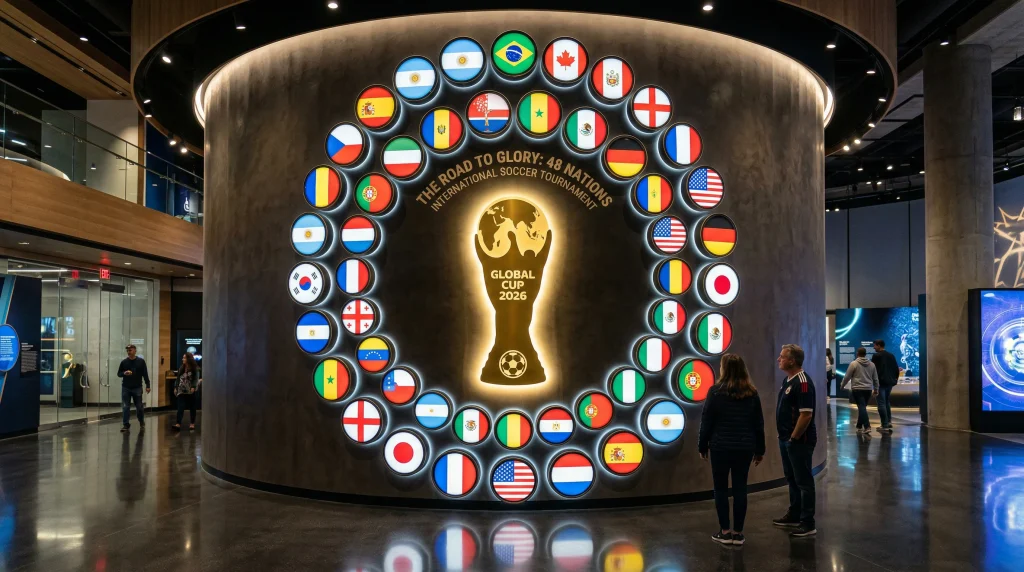
Table of Contents
I still remember the 1998 World Cup in France — the first time FIFA expanded to 32 teams. Pundits called it bloated, worried about quality dilution, predicted mismatches that would embarrass the tournament. Then Croatia reached the semifinals. Then South Korea and Turkey shocked the world in 2002. The expansion critics went quiet.
Now we stand at another threshold. The 2026 World Cup in USA, Mexico, and Canada features 48 nations — a 50% increase from the 32-team format we’ve known since France 98. Twelve groups. 104 matches. 39 days of football across three countries and 16 cities. This is the largest World Cup field in history, and I’ve spent the past eight months mapping every qualified nation, their strengths, their vulnerabilities, and their realistic tournament ceiling.
The expansion brings four World Cup debutants — Cape Verde, Curaçao, Jordan, and Uzbekistan — alongside returns we haven’t seen in decades. Iraq plays their first World Cup since 1986. Scotland ends a 28-year absence. Sweden bounces back after missing Qatar 2022. The storylines multiply with every additional team, and so do the betting opportunities.
What follows is my confederation-by-confederation breakdown of all 48 World Cup 2026 teams. I’m organizing by region because that’s how the qualification pathways work, how playing styles cluster, and how I think about value when analyzing international football. Whether you’re tracking your home nation or hunting for dark horse value, this guide maps the entire competitive landscape ahead of June 11th.
The format change creates genuine uncertainty that bookmakers struggle to price accurately. Historical models calibrated on 32-team tournaments need recalibration. Extra matches fatigue favorites. Wider knockout brackets create longer paths to the final. All of this means value exists throughout the field — you just need to know where each team sits in the global hierarchy and why.
The Hosts: USA, Mexico, and Canada
Three host nations. Three automatic qualifiers. Three completely different World Cup stories converging on North American soil. I’ve never seen a tri-nation hosting arrangement at a World Cup, and the logistics alone make this tournament unprecedented — but what matters for betting purposes is how each host leverages their home advantage.
The United States enters with arguably their most talented generation in history. Christian Pulisic captains a squad where nearly every starter plays in Europe’s top five leagues. Weston McKennie at Juventus, Tyler Adams at Bournemouth, Gio Reyna at Borussia Dortmund — this isn’t the MLS-heavy roster of previous American World Cup teams. The USMNT plays 11 of their potential matches on home soil, including group stage games at SoFi Stadium in Los Angeles. Home advantage matters in tournament football, and 60,000 American fans creating wall-of-sound atmosphere in modern NFL stadiums represents something European teams haven’t encountered. Current outright odds around +2500 underestimate how deep this team can run. The quarter-finals feel like floor rather than ceiling.
Mexico carries different weight. El Tri opens the entire tournament at Estadio Azteca against South Africa on June 11th — the same venue that hosted two World Cup finals, the same altitude that drains visiting teams, the same passionate crowd that makes the Azteca one of world football’s most intimidating venues. But Mexico’s narrative isn’t about reaching new heights. It’s about breaking the curse. Seven consecutive World Cups eliminated in the Round of 16. El Quinto Partido — the fifth game — has become a national obsession. This generation features fewer household names than previous Mexican sides, but they draw Group A alongside South Korea, South Africa, and Czechia. That’s a path to the Round of 32 that should be comfortable. Whether they finally break through to the quarter-finals matters more to Mexican fans than any outright odds.
Canada represents the emotional heart of this tournament for me. Les Rouges waited 36 years between World Cup appearances, enduring decades as CONCACAF’s forgotten nation while neighbors to the south dominated headlines. Then Alphonso Davies emerged. Then Jonathan David started scoring goals in Ligue 1. Then Canada qualified for Qatar 2022 — and though they lost all three group stage matches, the qualification campaign showed a nation transforming. Now Canada hosts World Cup matches in Toronto and Vancouver, plays all group games on home soil, and draws Group B alongside Switzerland, Qatar, and Bosnia and Herzegovina. After Italy’s shocking loss to Bosnia in qualifying playoffs, Canada suddenly faces a group without a traditional heavyweight. The path to the Round of 32 is legitimate. Odds around +15000 to win the tournament are lottery tickets, but odds around -225 to advance from Group B represent fair value for a motivated host nation playing every match at home. For detailed squad analysis and betting angles, see our Canada World Cup 2026 guide.
The Defending Champion: Argentina’s Quest to Repeat
Lionel Messi lifting the World Cup trophy in Qatar felt like football’s fairy tale ending. The greatest player of his generation finally claiming the only prize that had eluded him. I watched that final in a Buenos Aires sports bar surrounded by crying strangers, and I understood why Argentina’s 2022 triumph meant more than any tournament result in decades.
But World Cup history punishes defending champions. Since Brazil’s back-to-back victories in 1958 and 1962, only one team has successfully defended the title — Brazil again in 1994 and 1998, when they reached the final before losing to France. Germany crashed out in the 2018 group stage. Spain exited in 2014’s group stage. France fell in the 2022 final. The defending champion curse is real, and Argentina arrives in North America with the additional burden of Messi’s age.
Messi will be 38 during the 2026 World Cup. He’s publicly committed to playing if healthy, and his performances for Inter Miami suggest he retains the vision and passing that defined his career. But 39 days of World Cup football across North American time zones tests even 25-year-olds. The altitude in Mexico. The humidity in Miami. The travel between host cities. Lionel Scaloni must manage Messi’s minutes while maintaining team chemistry, a balance that could tip either direction.
Beyond Messi, Argentina’s core remains formidable. Enzo Fernández anchors midfield at 25 — his prime years ahead of him. Julián Álvarez continues developing under Pep Guardiola at Manchester City. Alexis Mac Allister won the Premier League with Liverpool. The World Cup-winning spine combines with younger talents who didn’t feature prominently in Qatar but have matured since. Alejandro Garnacho at Manchester United. Valentín Barco at Brighton. Argentina’s depth exceeds what they showed in 2022.
Group J pairs Argentina with Austria, Algeria, and Jordan. It’s a manageable draw that should allow Scaloni to rotate heavily, protecting key players for the knockout rounds. Argentina’s outright odds around +800 remain among the tournament’s shortest, but I see them as slightly overpriced given the defending champion curse and Messi’s age-related decline. The quarter-finals feel achievable. Anything beyond requires health and fortune that can’t be predicted eight months out. For complete analysis of La Albiceleste’s prospects, see our Argentina World Cup 2026 guide.
Europe’s Finest: 16 Teams Chasing Glory
UEFA sends 16 teams to the World Cup 2026 — a third of the entire field. That’s not tournament seeding bias; it’s reflection of where elite football currently clusters. The top six betting favorites all represent European confederations. If you’re hunting for the eventual winner, you’re probably hunting here.
Spain enters as the betting favorite at around +450 after dominating Euro 2024 with a style that blended Barcelona-era possession with vertical directness. Lamine Yamal will be 18 during the World Cup — a teenager leading Spain’s attack alongside Nico Williams. Rodri anchors midfield as the reigning Ballon d’Or winner. Pedri orchestrates tempo. This Spanish generation combines the technique of their tiki-taka predecessors with an athleticism that 2010-era Spain lacked. Group H pairs Spain with Uruguay, Saudi Arabia, and Cape Verde — a draw that should allow Luis de la Fuente to manage workloads before knockout rounds. Spain’s title odds feel accurate. They’re the best team in the world entering this tournament. For detailed squad analysis, see our Spain World Cup 2026 guide.
England arrives at +550, still searching for a major trophy since 1966. The Three Lions reached the Euro 2020 final and the 2018 World Cup semifinal before crashing out of Euro 2024 against Spain. Jude Bellingham’s emergence at Real Madrid transforms England’s ceiling — he’s a genuinely world-class attacking midfielder in ways previous English generations lacked. Bukayo Saka, Phil Foden, Cole Palmer represent attacking depth that should terrify opponents. Group L draws England alongside Croatia, Ghana, and Panama. Another manageable path to the knockouts, where England’s tournament history turns anxious. The penalty shootout curse. The defensive fragility in knockout matches. England’s talent exceeds their odds, but their tournament psychology might not.
France occupies the +750 range as 2018 champions and 2022 finalists seeking redemption after that penalty shootout loss to Argentina. Kylian Mbappé remains the world’s most explosive attacker at 27 — peak years for a player who’s already scored 12 World Cup goals. But France’s depth beyond Mbappé shows cracks. The midfield transition from N’Golo Kanté and Paul Pogba hasn’t produced equal replacements. Didier Deschamps’ pragmatic approach may struggle against teams that can absorb pressure and counter. Group I pairs France with Senegal, Norway, and Iraq — comfortable on paper, but Senegal’s physical approach could test French defenders. France’s odds reflect past performance more than current form.
Germany demands attention despite back-to-back group stage exits in 2018 and 2022. Julian Nagelsmann’s post-Euro 2024 project rebuilt around Florian Wirtz and Jamal Musiala — two attacking midfielders under 23 who combine skill with pressing intensity. Germany’s home Euro 2024 performance showed a team reconnecting with identity after years of confusion. Group E pairs them with Ecuador, Ivory Coast, and Curaçao. The path to the quarterfinals looks clear. Whether Germany can convert potential into tournament success remains uncertain after recent failures.
Portugal at +1200 enters a new era. Cristiano Ronaldo at 41 likely won’t start, shifting focus to the younger generation Roberto Martínez has cultivated. Rafael Leão at AC Milan. João Félix at Chelsea. Bruno Fernandes orchestrating from midfield. Portugal’s technical quality runs deep, but their tournament history since Euro 2016 shows a team that flatters to deceive — impressive group stages followed by knockout round exits. Group K pairs Portugal with Colombia, Uzbekistan, and DR Congo. Two debutants in one group suggests comfortable progression, but Portugal needs knockout round wins to justify their odds.
The Netherlands, Belgium, and Croatia complete Europe’s contender tier. The Dutch seek their first World Cup title despite three final appearances, bringing Virgil van Dijk’s defensive leadership and Cody Gakpo’s attacking directness. Belgium’s golden generation enters their final dance — Kevin De Bruyne and Romelu Lukaku both over 30, time running out on a generation that never won a major trophy. Croatia’s run to the 2018 final and 2022 third place came behind Luka Modrić’s midfield mastery, but Modrić turns 41 during the tournament. These teams range from +1200 to +2500 in outright odds, each carrying legitimate paths to the semifinals with ceiling limitations that cap their tournament upside.
Beyond the contenders, Europe sends teams with narrower ambitions. Switzerland reached the Euro 2024 quarterfinals and favorites Group B in Canada’s draw. Sweden returns after missing 2022. Scotland ends their 28-year World Cup absence. Czechia qualified through a competitive playoff. Austria brings one of Europe’s best pressing systems. These middle-tier European teams won’t win the tournament, but they can influence group outcomes and provide knockout round upsets that cascade through brackets.
South American Flair: 6 CONMEBOL Representatives
CONMEBOL qualification remains the world’s most brutal path to a World Cup. Ten nations playing home and away across 18 rounds, altitude matches in La Paz, sea-level humidity in Barranquilla, the pressure of knowing every point matters because only six direct spots exist. The six teams emerging from this gauntlet arrive battle-tested in ways European qualifiers can’t match.
Argentina and Brazil headline South America’s contingent, but their paths to qualification diverged dramatically. Argentina cruised through qualifiers as defending world champions, losing only twice across 18 matches. Brazil stumbled. The Seleção fired two coaches during qualifying, struggled with an aging core, and only secured their spot in the final rounds. Brazil’s +750 odds feel optimistic given their dysfunction, but the talent — Vinícius Júnior at Real Madrid, Rodrygo, Endrick emerging at 20 — suggests course correction remains possible. New management has seven months to rebuild confidence before June.
Uruguay brings their characteristic grit despite smaller population than most competitors. La Celeste qualified third in CONMEBOL behind Argentina and Colombia, driven by the next generation rather than aging icons. Darwin Núñez leads the attack at 27 — physical, direct, capable of producing moments from nothing. Federico Valverde anchors midfield with the energy that made him Real Madrid’s most important outfield player. Uruguay’s Group H draw alongside Spain creates an immediate heavyweight clash, but second place and advancement remain achievable. Uruguay’s +4000 odds offer value for a team with knockout round pedigree.
Colombia’s resurgence deserves attention. Los Cafeteros reached the 2024 Copa América final and qualified second in CONMEBOL behind Argentina. Néstor Lorenzo built a balanced squad around James Rodríguez’s returning creativity and Luis Díaz’s Liverpool-honed directness. Colombia’s Group K draw alongside Portugal sets up a fascinating battle for top position. At +5000, Colombia represents live dark horse value — a team capable of reaching quarterfinals if matchups align.
Ecuador and Paraguay complete South America’s six. Ecuador’s young core — Moisés Caicedo at Chelsea, Kendry Páez emerging at 18 — suggests future potential more than immediate threat. Paraguay qualified through the playoff pathway after finishing sixth in CONMEBOL, suggesting limitations that Group D alongside USA will expose. Both teams should target Round of 32 advancement as success, with anything beyond representing overperformance.
African Renaissance: 9 CAF Nations Ready to Shine
Morocco’s 2022 semifinal run rewrote what African nations could achieve at World Cups. The Atlas Lions didn’t just survive the group stage — they beat Belgium, Spain, and Portugal en route to the final four. Watching Morocco dismantle Spain on penalties in a Qatari stadium, I understood we were witnessing a paradigm shift. African teams no longer arrived hoping for dignified exits. They arrived expecting knockout round advancement.
Nine CAF nations qualified for 2026, the most in World Cup history. Morocco returns with largely the same core that reached the semifinals — Achraf Hakimi at Paris Saint-Germain, Youssef En-Nesyri’s aerial threat, Sofyan Amrabat’s midfield tenacity. Group C pairs Morocco with Brazil, Scotland, and Haiti. That Brazil matchup immediately tests whether Morocco can repeat their giant-killing from 2022. At +5000, Morocco offers genuine value as an African team that’s proven capable of beating anyone on their day.
Senegal brings similar pedigree as reigning African champions. The Teranga Lions won AFCON 2021 and reached the 2022 World Cup Round of 16 before falling to England. Sadio Mané’s absence due to injury clouds their attack, but Ismaïla Sarr at Crystal Palace and Nicolas Jackson at Chelsea provide Premier League-tested alternatives. Group I pairs Senegal with France — a rematch loaded with colonial history significance that extends beyond football. Senegal’s +8000 odds feel appropriate for a team that could beat France on their day but lacks consistency across seven potential matches.
Ivory Coast capitalized on home AFCON advantage in 2024, winning the title after nearly exiting in the group stage. Sébastien Haller’s cancer recovery story inspired a nation as he scored crucial goals throughout the tournament. But AFCON success doesn’t always translate to World Cup performance — different climate, different opponents, different pressure. Group E pairs Ivory Coast with Germany, Ecuador, and Curaçao. Advancement to Round of 32 seems likely; advancement beyond tests their depth.
Egypt’s qualification marked Mo Salah’s first World Cup since 2018, when injury limited his minutes in Russia. At 34 during the tournament, Salah remains one of the world’s elite wingers — his Champions League form for Liverpool proves that. Egypt’s supporting cast limits their ceiling, but Group G alongside Belgium, Iran, and New Zealand offers a path to the knockout rounds. Salah alone makes Egypt dangerous in single elimination matches.
Algeria, South Africa, Ghana, and DR Congo round out Africa’s nine. Algeria’s passionate support and technical midfield could cause problems in Group J alongside Argentina. South Africa draws the opening match against Mexico at Azteca — maximum pressure on day one. Ghana brings physical athleticism and Premier League familiarity. DR Congo makes their World Cup debut in Group K, representing Central African football at the global stage for the first time. These teams range from outside knockout round contenders to celebration-of-qualification participants, but all nine represent African football’s growing depth.
Asian Ambition: 8 AFC Teams on the Rise
Japan’s 2022 World Cup performance — beating Germany and Spain in the group stage before losing to Croatia on penalties — announced Asia as a serious football continent. The days of comfortable European victories over Asian opposition ended somewhere between Japan’s first goal against Germany and Saudi Arabia’s shock win over Argentina. AFC sends eight teams to 2026, and at least four have legitimate knockout round ambitions.
Japan enters as Asia’s clear standard-bearer with odds around +5000 that still undervalue their potential. The Samurai Blue feature more players in Europe’s top five leagues than any previous Japanese generation. Takefusa Kubo at Real Sociedad. Kaoru Mitoma at Brighton. Daichi Kamada at Crystal Palace. Ritsu Doan at Freiburg. Japan’s technical quality matches European mid-tier nations, and their pressing intensity under Hajime Moriyasu creates problems for any opponent. Group F draws Japan alongside Netherlands, Sweden, and Tunisia — another group where Japan could finish first with the right results. Reaching the quarterfinals would be historic; reaching the semifinals isn’t impossible.
South Korea arrives without Son Heung-min at his physical peak — the Tottenham captain turns 34 during the tournament. But South Korea’s midfield depth and tactical discipline under Jürgen Klinsmann (if he remains manager) provides knockout round potential regardless. Group A pairs South Korea with Mexico, South Africa, and Czechia — a draw that should yield comfortable Round of 32 advancement. South Korea’s tournament ceiling depends on whether Son can summon peak form one more time.
Saudi Arabia’s Argentina upset in 2022 remains one of World Cup history’s greatest shocks. The Green Falcons’ high defensive line suffocated Argentina’s attack in the first half, and their finishing exploited every chance created. Can they replicate that intensity across a tournament? Group H alongside Spain suggests another opportunity for giant-killing, but the 2022 squad has aged without clear replacements for key players. Saudi Arabia’s odds around +15000 price them as long shots who’ve proven capable of single-match magic.
Iran, Australia, Qatar, Iraq, and Uzbekistan complete Asia’s eight. Iran’s political situation creates uncertainty beyond football, but their playing squad includes Mehdi Taremi at Inter Milan and Sardar Azmoun at Roma — quality that exceeds their +20000 odds. Australia’s Socceroos rebuild around younger talents after their veteran-led 2022 run. Qatar follows their disastrous home World Cup (three losses, one goal scored) with a North American tour that tests whether their 2022 struggles reflected pressure rather than quality. Iraq returns after 40 years — an emotional storyline for a nation that’s endured decades of conflict. Uzbekistan makes their World Cup debut, representing Central Asian football’s growing competitiveness.
CONCACAF’s Moment: 6 Regional Contenders
CONCACAF has never hosted a World Cup with this many regional teams qualified. Six nations from North and Central America plus the Caribbean will compete on home turf — a chance to demonstrate that CONCACAF football has evolved beyond Mexico and the United States.
Beyond the three host nations already discussed, Panama returns after their debut in 2018 and absence in 2022. Los Canaleros lack the individual star power of CONCACAF rivals, but their collective organization and tournament experience provides value that odds around +50000 don’t capture. Group L draws Panama alongside England, Croatia, and Ghana — a difficult draw where third place might be the ceiling, but upsets happen when underdogs have nothing to lose.
Haiti makes their World Cup debut as the Caribbean’s lone representative. Les Grenadiers qualified through CONCACAF’s expanded pathway, and their presence represents a region that’s produced individual talents (Thierry Henry’s Guadeloupean heritage, Patrick Vieira’s Senegalese-French-Guadeloupe background) without ever qualifying a nation for the World Cup. Group C alongside Brazil, Morocco, and Scotland offers a steep introduction to World Cup football, but Haiti’s qualification alone represents historic achievement.
Curaçao joins Haiti as a Caribbean debutant, though their small population (under 150,000) makes their qualification perhaps the tournament’s most improbable story. The Netherlands Antilles dissolved in 2010, leaving Curaçao as an independent football nation that’s climbed from CONCACAF’s lower tiers to World Cup participation in 14 years. Group E pairs them with Germany, Ecuador, and Ivory Coast — opponents who will test whether Curaçao can compete at this level. Even one point would represent success; avoiding embarrassment matters more than advancement.
Oceania’s Representative: New Zealand Returns
The All Whites return to the World Cup for the first time since 2010 — a 16-year absence that felt longer given New Zealand’s relative football isolation. OFC qualification means facing opponents like Fiji, Papua New Guinea, and New Caledonia before an intercontinental playoff that historically eliminated Oceanian hopes. New Zealand broke through this cycle by defeating Costa Rica in March 2026, securing their third World Cup appearance ever.
Chris Wood leads New Zealand’s attack at 34, bringing Premier League experience from Nottingham Forest. But New Zealand’s squad depth reveals the challenges facing Oceanian football — most players compete in A-League, lower European divisions, or American second-tier leagues. The gap between OFC qualification matches and World Cup group stage play against Belgium, Iran, and Egypt will test New Zealand’s ability to compete at higher speeds and intensities.
New Zealand’s 2010 World Cup produced three draws — against Slovakia, Italy, and Paraguay — earning the All Whites a point from each match without ever winning. That unbeaten record made them technically the only undefeated team in the tournament, a quirk of statistics that doesn’t quite capture the challenge of avoiding defeat while never really threatening victory. Similar results in 2026 would represent success. Group G’s composition suggests third place is achievable if New Zealand can steal points from Egypt and Iran while limiting damage against Belgium.

The Newcomers: First-Time World Cup Nations
Four nations make their World Cup debut in 2026 — Cape Verde, Curaçao, Jordan, and Uzbekistan. Each represents a different pathway to qualification and a different story about football’s global expansion.
Cape Verde’s qualification from Africa might be the most impressive given the competition. The Blue Sharks navigated a CAF qualification pathway that eliminated Nigeria, Cameroon, and Côte d’Ivoire before that nation’s home AFCON surge. Cape Verde’s population under 600,000 makes them smaller than some American cities, yet they’ve produced enough players in Portuguese and Belgian leagues to compete internationally. Group H alongside Spain, Uruguay, and Saudi Arabia offers a brutal introduction, but Cape Verde’s qualification alone justifies celebration.
Jordan’s pathway through Asia brought the Nashama to their first World Cup after years of near-misses. Jordan reached the 2023 Asian Cup final before losing to Qatar, proving their competitive capability against continental rivals. Al-Nahdat Stadium in Amman created fortress-like home form during qualification. Group J pairs Jordan with Argentina, Austria, and Algeria — defending champions in the opening match, a scenario that could either overwhelm or galvanize a debutant nation. Jordan’s +100000 odds reflect reality, but their passionate fanbase and tactical organization under Hossam Hassan suggests they won’t embarrass themselves.
Uzbekistan qualified from Asia’s competitive AFC pathway, ending their previous near-misses that saw them consistently reach playoff stages without breaking through. The White Wolves bring players from Russian Premier League and Uzbek domestic football — not the European pedigree of Asian rivals, but sufficient quality for Group K alongside Portugal, Colombia, and DR Congo. Uzbekistan enters as clear underdogs but capable of points against DR Congo if they perform to potential.
Curaçao’s story deserves repetition: a nation of 150,000 people competing at the World Cup. The Netherlands Antilles’ dissolution created Curaçao as an independent football nation in 2010. In 14 years, they’ve climbed from CONCACAF’s lowest tiers to World Cup qualification. Most players hold dual Dutch-Curaçaoan nationality and compete in Eredivisie or lower Dutch divisions. Group E’s draw alongside Germany, Ecuador, and Ivory Coast represents the steepest challenge any debutant faces. Curaçao’s presence matters more than their results.
The Missing: Italy, Denmark, and Surprise Exits
Italy missing a third consecutive World Cup defies football logic. The Azzurri won Euro 2020, producing moments of joy that lit up pandemic-era Europe. Then they failed to qualify for Qatar 2022 in a playoff loss to North Macedonia. Then they lost to Bosnia and Herzegovina in the 2026 playoff semifinals on penalties. Three World Cups without Italy — a nation with four World Cup titles, the heritage that defines international football’s history. Roberto Mancini’s post-Euro 2020 departure triggered instability that Italy hasn’t recovered from. Their absence leaves Group B considerably easier for Canada and Switzerland.
Denmark’s failure to qualify shocked European football observers. The Danes reached the Euro 2020 semifinals, created a redemptive narrative around Christian Eriksen’s cardiac arrest recovery, and entered 2026 qualifying as clear favorites in their group. But Denmark lost home matches they shouldn’t have, drawing against North Macedonia and losing to Scotland and Switzerland. The talent — Eriksen, Simon Kjær, Rasmus Højlund — didn’t translate to results. Denmark’s absence opens opportunities for teams in their qualification group who advanced.
Wales and Poland joined Denmark in European qualification failures, their Euro 2020 and World Cup 2022 appearances now looking like peaks rather than baselines. Cameroon’s absence from African representation surprises given their six previous World Cup appearances. Costa Rica, Colombia’s CONCACAF rival, failed to qualify after reaching the 2022 World Cup and 2014 quarterfinals. Each absence creates opportunities elsewhere in the draw while removing teams from contention calculations.
Betting Tiers: How We Categorize the Field
After analyzing all 48 teams, I organize them into five tiers for betting purposes. These tiers reflect tournament ceiling — how far each team could realistically advance — rather than pure talent assessments.
The Championship Tier contains four teams: Spain, England, France, and Argentina. These nations have the combination of squad depth, tournament experience, and recent major tournament success that justifies odds under +1000. Any of them could lift the trophy without shocking the football world. Their matches against each other in potential knockout rounds represent the tournament’s highest-profile clashes. Betting on these teams requires accepting shorter odds but higher probability.
The Semifinal Tier spans eight teams: Germany, Brazil, Portugal, Netherlands, Belgium, Croatia, Uruguay, and Colombia. Each has ceiling extending to the final four, but limitations — recent tournament failures, aging cores, missing key players — cap their upside. Odds range from +1200 to +5000. Value exists here for bettors who believe market underprices specific teams’ form heading into the tournament.
The Quarterfinal Tier includes approximately ten teams: USA, Mexico, Switzerland, Japan, South Korea, Morocco, Senegal, Denmark, and Sweden among them. These nations could reach the final eight with favorable draws and peak performances. They’re unlikely to win the tournament but capable of producing memorable runs that upset better-fancied opponents. Odds typically range from +5000 to +15000.
The Round of 32 Tier encompasses teams expected to advance from group stages but unlikely to progress further. Canada sits here — capable of topping Group B but facing likely Round of 32 elimination against bracket favorites. Ecuador, Austria, Scotland, Iran, Australia, and similar mid-tier nations populate this category. Betting on these teams requires targeting group winner markets or specific match outcomes rather than outright tournament success.
The Participation Tier includes debutants and nations whose qualification represents their tournament goal. Cape Verde, Curaçao, Jordan, Uzbekistan, Haiti, Panama, and others enter hoping for points rather than advancement. Betting on these teams involves creative markets — first goal, clean sheet maintenance, specific scorelines — rather than advancement wagers. Their presence adds color to group stages without threatening knockout round calculations.
Understanding tier placement helps you identify where World Cup 2026 odds misprice teams relative to their realistic ceiling. A Championship Tier team at +800 differs from a Semifinal Tier team at the same price — the floor matters as much as the ceiling.
From 48 Nations to Your Betting Strategy
Forty-eight teams. Six confederations. Twelve groups. The 2026 World Cup’s expanded format creates complexity that favors prepared bettors over casual punters. I’ve mapped every qualified nation’s strengths, limitations, and realistic tournament ceiling because understanding the full field reveals opportunities that surface-level analysis misses.
The teams I watch most closely: Japan as a genuine dark horse with quarterfinal potential. Morocco as the African giant-killer capable of repeating 2022 magic. Canada as a host nation with favorable group draw and home advantage. These teams offer odds-to-ceiling mismatches that more popular markets don’t provide.
Whether you’re backing favorites or hunting value at triple-digit odds, every bet starts with understanding who plays, how they qualified, and what they’re realistically capable of achieving. For detailed breakdowns of how these teams match up in their respective pools, see our complete World Cup 2026 groups analysis. The tournament starts June 11th. The preparation starts now.
