
Netherlands at World Cup 2026: Oranje’s Final Push for Glory
 Available in US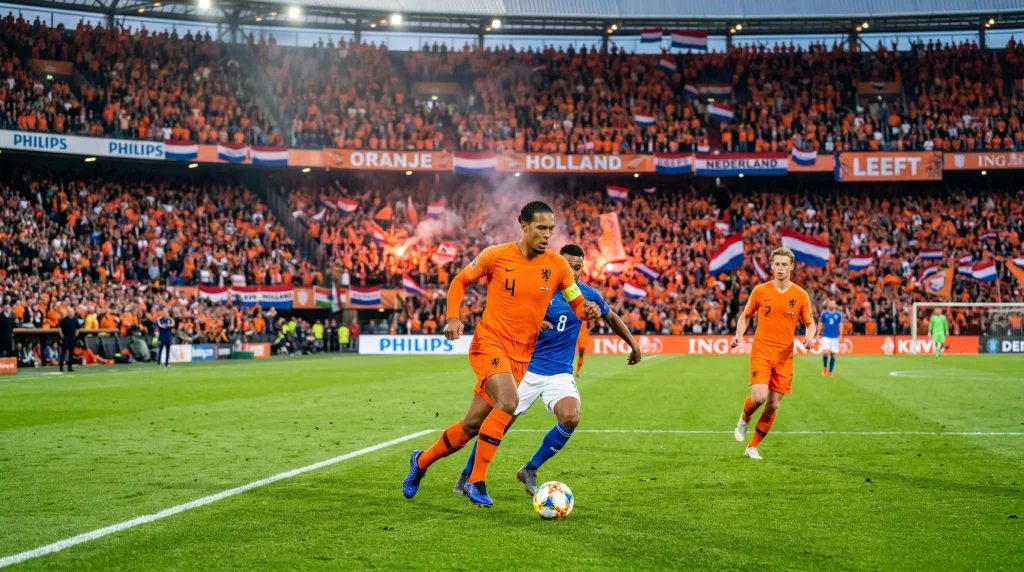
Table of Contents
Three World Cup finals. Zero World Cup victories. The cruelest statistic in international football belongs to the Netherlands, a nation whose philosophical influence on the game vastly exceeds their trophy cabinet. Total Football revolutionized tactical thinking in the 1970s, yet the Dutch have never lifted the trophy that matters most. Oranje enters every tournament carrying this peculiar burden — celebrated for beauty, denied ultimate glory.
Netherlands World Cup 2026 arrives with a squad that lacks the transcendent individual talent of previous Dutch generations but compensates through collective organization and tactical coherence. Virgil van Dijk anchors the defense with experience and authority. The midfield features multiple options from elite clubs. And the attacking positions, while not boasting a Cruyff or a van Basten, provide enough quality to trouble most opponents.
I’ve tracked Dutch tournament campaigns through the cycles of optimism and disappointment that define their relationship with major competitions. The current team represents pragmatic evolution rather than revolutionary philosophy. They can win matches through defensive discipline and transitional efficiency rather than requiring aesthetic dominance. Whether this practical approach succeeds where beauty failed remains the question World Cup 2026 must answer.
The Eternal Bridesmaids: Can Oranje Finally Win?
The narrative of Dutch near-misses requires historical context to appreciate fully. The 1974 World Cup final featured perhaps the greatest team never to win the tournament, defeated by West Germany despite playing football that redefined tactical possibilities. The 1978 final brought another defeat, this time to Argentina in Buenos Aires amid controversial circumstances. And the 2010 final saw Spain triumph through Andrés Iniesta’s extra-time goal after a match that abandoned Dutch attacking principles for physical confrontation.
These failures shape Dutch football psychology in ways that transcend tactics. The players who don the orange jersey know they represent unfulfilled potential — glorious football that somehow never translates to ultimate victory. This awareness creates pressure that compounds with each passing tournament, each opportunity squandered, each final lost.
The current generation includes veterans who experienced the 2014 third-place finish and the 2022 quarter-final exit. These players understand tournament dynamics, both the momentum that carries teams forward and the moments when campaigns collapse. Their experience provides valuable reference points — similar to what Belgium’s golden generation accumulated — but it also carries accumulated disappointment that younger players don’t bear.
Breaking the bridesmaid pattern requires either transcendent individual talent or exceptional collective organization. The 2026 squad lacks the former but might possess the latter. If defensive solidity and tactical discipline can compensate for missing creative genius, the Dutch formula for success differs from historical prototypes while potentially proving more effective in tournament football’s unforgiving format.
The Dutch public expects results that match the nation’s footballing self-image. This expectation creates pressure that players must manage alongside tournament demands. The gap between Dutch self-perception as elite football nation and actual trophy collection generates frustration that each tournament’s failure amplifies. Players carry this collective expectation whenever they wear orange.
Dutch Qualifiers: The Road to 2026
European qualification proceeded competently without revealing definitive answers about Dutch championship credentials. The group featured Germany, Hungary, Bosnia and Herzegovina, and lesser opponents — competitive enough to require professional effort, insufficient to challenge maximum Dutch performance consistently. The results confirmed baseline quality without testing ultimate ceiling.
The Germany matches provided the most useful competitive data. Both fixtures featured high-level tactical chess between neighboring rivals with long competitive history. The results — narrow margins in either direction — suggested competitive parity between the nations. Neither clearly superior, neither clearly inferior. The bracket dynamics of World Cup 2026 may eventually require resolution of this question.
What qualifying revealed about Dutch style involved the balance between possession and transition. Under current management, the Netherlands don’t seek to dominate territory the way previous Dutch teams attempted. They accept periods without the ball, defend in organized shapes, and strike through quick transitions when opportunities appear. This pragmatic approach suits the personnel available while acknowledging that Pure Dutch football requires personnel the current squad lacks.
The integration of younger players during qualification accelerated development that tournament football will test. Beyond the established names, options emerged through competitive minutes that friendly fixtures cannot replicate. This depth-building creates resilience against the injuries and suspensions that tournament progression inevitably produces.
Squad Analysis: Dutch Total Football
The phrase “Total Football” carries specific meaning in Dutch context, referencing the positional fluidity and tactical innovation that Johan Cruyff personified. Modern Dutch squads invoke the legacy without fully embodying its principles — the interchangeability and creative chaos that characterized the 1974 generation doesn’t translate to contemporary tactical environments. What remains is technical quality and spatial awareness that Dutch development programs instill from youth ages.
Goalkeeping features options who’ve developed through competitive Dutch and European environments. The position provides reliability without exceptional quality — competence that prevents weakness rather than creating strength. Tournament football requires goalkeepers who can make saves when called upon; Dutch options should fulfill that baseline expectation.
Defensive construction centers on Virgil van Dijk’s presence. His physical dominance, tactical intelligence, and leadership qualities anchor the entire defensive structure. The players around him benefit from his organization, his communication, and his ability to recover when mistakes occur. Van Dijk’s importance extends beyond individual performance into the confidence he provides teammates operating in his vicinity.
Midfield options provide tactical flexibility through different profiles. More controlling options suit matches requiring possession dominance. More dynamic options enable transitions and pressing sequences. The depth across midfield positions allows in-game adjustments without sacrificing quality — coaches can shape midfield characteristics to match specific opponent requirements.
Virgil Van Dijk and the Key Men
Van Dijk’s career trajectory from Southampton acquisition to world’s best defender validated scouting that identified potential others missed. His Liverpool tenure has produced Champions League and Premier League success, tournament experience that translates directly to international pressure. At 34 during World Cup 2026, he enters the period where accumulated wisdom maximizes the value of diminishing physical attributes.
What separates Van Dijk from other elite defenders involves the composure that pressure cannot disturb. His positioning, his timing, his decision-making remain consistent regardless of match stakes. This reliability anchors Dutch defensive structure, allowing more adventurous players to take risks knowing Van Dijk provides insurance against their failures.
The captaincy responsibilities Van Dijk carries extend beyond wearing the armband. His vocal presence organizes defensive shapes in real time. His standards for preparation and professionalism establish squad culture. His experience in knockout-round pressure provides reference points that younger teammates can access. The leadership value compounds with each successive tournament as his reputation solidifies.
Frenkie de Jong’s Barcelona career has featured injury concerns that complicate his international availability. When healthy, his progressive carrying and passing from midfield create attacking advantages that few Dutch alternatives replicate. His absence forces tactical adjustments; his presence enables Dutch football’s best version. Managing his fitness across tournament progression represents coaching challenge that outcomes may depend upon.
Memphis Depay’s unconventional career path — from Manchester United disappointment to Barcelona and Atlético Madrid resurgence — provides attacking experience that scores goals in pressure situations. His confidence, occasionally criticized as arrogance, becomes asset when tournament moments demand players willing to take responsibility. His finishing quality and creative vision add dimensions that Dutch attacks require.
Tactical DNA: The Dutch Way
Current Dutch tactical identity reflects evolution from historical principles rather than abandonment of them. The possession emphasis remains, but it serves pragmatic purposes rather than philosophical ones. The defensive structure has strengthened without sacrificing attacking intent. The balance between control and transition reflects modern tournament football’s demands.
The formation typically features 4-3-3 or 3-4-3 variations depending on opponent and available personnel. The wide forwards stay high to stretch defenses; the midfield triangle controls tempo through possession phases. Full-backs or wing-backs provide width in both formations, with defensive responsibilities adjusting based on system selection. This tactical flexibility creates preparation challenges for opponents who cannot predict Dutch shape.
Pressing structure operates through coordinated sequences rather than constant high-energy pursuit. Triggers activate based on opponent positioning, with forwards initiating pressure that midfielders and defenders support in coordinated waves. This selective pressing conserves energy for attacking transitions while still creating turnovers in dangerous areas when conditions align.
Set-piece preparation has improved from historical Dutch neglect of dead-ball situations. Both attacking routines and defensive assignments receive detailed attention. Van Dijk’s aerial presence creates scoring opportunities on corners; organized marking reduces vulnerability when defending. These details matter in tournament football where margins shrink and single goals decide advancement.
Transition moments represent Dutch football’s most dangerous phases under the current system. When possession changes in central areas, the speed of movement toward goal overwhelms defensive recoveries. The personnel suited to this approach — players with pace, directness, and finishing ability — populate attacking positions specifically because these transitions create Dutch advantages. The system prioritizes these moments while maintaining enough possession to prevent opponents executing similar counters.
Group F Analysis: Japan, Sweden, Tunisia
Netherlands’ group draw presented challenges without clear hierarchy. Japan’s tactical sophistication and European-based talent create genuine competitive threat. Sweden’s return to World Cup football brings physical approach that tests defensive concentration. Tunisia represents African quality that cannot be dismissed as weak opposition. Group F requires consistent professional performance across all three fixtures.
Japan’s 2022 World Cup success — defeating Germany and Spain in the group stage — established credentials that demand respect. Their pressing intensity, transitional speed, and technical quality match European standards. The Dutch cannot assume superiority based on historical reputation; they must earn advancement through competitive execution against an opponent capable of causing upset.
Sweden’s qualification through European playoff success returns them to World Cup football after missing 2022. Their physical profile — tall players, aerial threat, direct approach — creates matchup challenges that technical superiority alone cannot solve. Van Dijk’s aerial dominance becomes particularly valuable against Swedish set pieces and crosses.
Tunisia’s AFCON performances and World Cup history demonstrate quality that reaches beyond African continental context. Their organized defensive structure and transitional counter-attacks trouble opponents who expect easy domination. The Dutch must remain focused against Tunisia rather than assuming comfortable victory that complacency might surrender.
The scheduling of Group F fixtures creates preparation challenges. Three competitive opponents means three matches requiring near-maximum intensity. The ability to rotate without quality drop-off determines whether Dutch depth sustains performance across compressed group-stage schedule.
The Netherlands versus Japan fixture represents Group F’s marquee match. Both teams possess tactical sophistication and quality that demands mutual respect. The result likely determines group positioning rather than mere advancement. Dutch preparation for Japanese pressing intensity will reveal how thoroughly coaching staff have analyzed opponents. The tactical chess between two systems that prioritize organization over individual brilliance creates fascinating strategic dynamics.
Netherlands Odds and Value
Current World Cup 2026 odds place Netherlands around +1600, positioning them behind the primary European favorites. This pricing reflects the quality gap between Dutch squad construction and the depth that Spain, England, France, and Germany possess. The market asks whether Van Dijk’s defensive anchor and tactical organization compensate for missing attacking starpower.
My assessment places Netherlands’ actual championship probability around 5-7%, translating to fair odds between +1330 and +1900. At +1600, you’re getting approximately fair value with slight potential edge if Group F produces favorable results and bracket positioning cooperates. The uncertainty creates opportunity for those confident in Dutch organization exceeding their star power limitations.
Group F advancement should price around -250 based on the competitive balance within the group. Japan, Sweden, and Tunisia all possess quality that could produce upset results; Netherlands should still accumulate sufficient points but without guarantee. Netherlands to top Group F at approximately +140 captures the expectation of narrow edge without comfortable margin.
The more speculative proposition involves Netherlands reaching the semi-finals. At approximately +400, this captures tournament progression possibility through favorable bracket paths. If knockout draws avoid Spain and France in early rounds, Dutch defensive solidity could produce advancement that attacking limitations wouldn’t otherwise enable.
Player markets offer angles worth consideration for Dutch followers. Van Dijk’s defensive statistics, Netherlands’ clean sheet totals, and tournament goals scored all provide positions where assessment might differ from market consensus. The defensive organization that defines Dutch identity should translate to clean sheet opportunities against weaker opposition. Individual props capture this potential without requiring championship achievement.
Chasing the Elusive Trophy
Netherlands enters World Cup 2026 carrying history’s weight without possessing history’s talent. The Total Football legacy demands aesthetic excellence that the current squad cannot deliver. What they offer instead is competitive reliability — the ability to organize defensively, control matches tactically, and execute transitions efficiently. Whether that formula produces championship success depends on variables no analysis can predict.
Van Dijk’s leadership provides the foundation that Dutch ambitions require. His presence transforms defensive structure into genuine strength rather than area requiring protection. The midfield and attacking options, while not elite individually, combine into collective threat that opponent analysis must respect. The whole exceeds the parts when organization maximizes contribution.
My tournament prediction places Netherlands in the knockout rounds with realistic path to quarter-finals. The group stage presents genuine challenges that comfortable advancement cannot assume. Beyond that, the bracket determines Dutch ceiling more than squad quality — favorable draws enable progression, difficult draws expose limitations. Among the 48 teams competing, the eternal bridesmaids continue waiting for circumstances to align with performance.
