
World Cup 2026 Betting Guide: Your Canadian Edge on the Beautiful Game
 Available in US
Your Edge on the World's Biggest Stage
Key Takeaways for Canadian Bettors
- World Cup 2026 expands to 48 teams for the first time, creating new betting dynamics — 24 teams advance from group stages instead of 16, and eight best third-place finishers qualify for the Round of 32.
- Canada plays all three Group B matches on home soil in Toronto and Vancouver, facing Switzerland, Qatar, and Bosnia and Herzegovina — one of the most favorable draws possible after Italy's elimination.
- Single-game sports betting became legal across Canada following Bill C-218 in August 2021, with Ontario operating the only competitive private market through AGCO-licensed operators.
- Spain enters as tournament favorite at +450 following their Euro 2024 triumph, but defending champions Argentina (+800) and hosts USA present intriguing value at current prices.
- Early markets show inefficiencies in group winner odds, third-place qualification scenarios, and player prop markets for the expanded tournament format.
Kickline26 margin study · updated August 2026
The Provincial Price Gap
Every Canadian bettor pays a hidden fee built into the odds. In Ontario you can shop it down. In most provinces you can't. This works out what your postal code costs you.
Your setup
Built-in margin on this bet
6.8%
- Cost per betC$1.70
- Cost per yearC$530
- Break-even strike rate53.6%
Extra cost vs Ontario's best available price
C$0
per year, on identical bets
The same bet, priced across Canada
What the margin does to your price
Fair price
2.00
no margin
Ontario, shopped
1.92
C$48 back on C$25
Your platform
1.86
C$46 back on C$25
Priced off a selection you rate at a true 50% chance per leg.
Check a real market
Type in every price from one market on your book — decimal odds — and see the margin you're actually being charged.
Leave the draw box empty for two-way markets.
How these numbers were built
Margin (also called the hold, the vig or the overround) is the share of every dollar staked that the platform keeps once the market is priced. On a market with prices o₁ … oₙ, it equals 1 − 1 ÷ (1/o₁ + … + 1/oₙ). A 6% margin means that across a large number of bets at fair estimates, C$100 staked returns C$94.
The benchmarks in this tool are Kickline26 estimates from repeated sampling of soccer match-result and totals markets on Canadian-facing platforms through 2025–26. They describe typical pricing, not any single market — real margins move by competition, kickoff time and liquidity. The Ontario "shopped" figure assumes you hold accounts at three or more AGCO-licensed operators and take the best available price on each outcome, which is why it sits well below any single book.
Parlays compound the margin rather than adding it. Each leg keeps its own cut, so the platform's take on an n-leg parlay is 1 − (1 − margin)n. This is why a gap of four percentage points on a single bet becomes a chasm on a five-leg slip, and why the parlay-only era of Canadian betting was so expensive.
Break-even strike rate is how often a selection at that price has to land before you stop losing money. It is not a prediction — it is the bar the margin sets for you.
Estimates for information only. Nothing here is a prediction of profit. 19+ in most provinces, 18+ in Alberta, Manitoba and Québec.
World Cup 2026 Betting Guide: Your Canadian Edge on the Beautiful Game
I remember standing in a packed Toronto sports bar during the 2022 World Cup, watching Alphonso Davies blast a penalty over the crossbar against Belgium. The room went silent. Then someone near me said, "At least we'll be hosting next time." That next time is finally here — and World Cup 2026 betting represents an opportunity unlike anything I've seen in nine years of covering international soccer markets.
The numbers alone tell a story that should make any Canadian bettor pay attention. Forty-eight teams spread across three host nations. One hundred and four matches over 39 days. Two Canadian venues — BMO Field in Toronto and BC Place in Vancouver — hosting Group B matches where Les Rouges will play every single game on home soil. For a country that waited 36 years between World Cup appearances, the scheduling gods delivered a gift wrapped in maple leaves.
But here's what really matters for those of us who treat soccer betting as more than recreational entertainment: this tournament breaks the mold. The expanded 48-team format hasn't been tested at a senior World Cup before. Historical models built on 32-team tournaments need recalibration. Early group stage dynamics shift when 24 teams advance instead of 16. Third-place finishers now matter — eight of them sneak into the Round of 32 — creating betting angles that simply didn't exist at Qatar 2022 or Russia 2018.
I've spent the past year building statistical models for this exact moment, analyzing qualification paths, tracking player movement across European leagues, and monitoring how bookmakers are pricing the expanded field. The inefficiencies are real. When you add 16 teams to a World Cup — including debutants like Curaçao, Jordan, Cape Verde, and Uzbekistan — the market doesn't price all of them correctly. Some are undervalued underdogs worth a speculative punt. Others carry inflated odds based on name recognition rather than current form.
This guide serves as your command center for World Cup 2026 betting from a distinctly Canadian perspective. I'll break down the tournament structure, examine Canada's path through Group B, analyze the favorites and dark horses worth backing, and identify specific markets where value exists. Whether you're placing your first soccer bet or you've been grinding World Cup markets since South Africa 2010, the next 39 days of football will reward those who do their homework.
The World Cup comes to North America once every generation. Canada hasn't hosted since never — this is literally the first time. I've covered four World Cups professionally, and I've never seen a betting landscape quite like this one. Let's make it count.
WC 2026 Betting Markets
World Cup 2026 Betting Markets Explained: Every Way to Wager I still remember sitting in...
-

WC 2026 Betting Tips
World Cup 2026 Betting Tips: Expert Strategies for...
-

WC 2026 Live Betting
World Cup 2026 Live Betting: In-Play Strategies That...
-

WC 2026 Odds Comparison
World Cup 2026 Odds Comparison: Finding the Best...
-

WC 2026 Parlay Betting
World Cup 2026 Parlay Betting: Building Winning Combinations...
Canada's Historic Moment: From 36-Year Drought to Host Nation
June 4, 1986. Estadio Sergio León Chávez in Irapuato, Mexico. Canada lost 2-0 to the Soviet Union in their final group stage match, completing a World Cup campaign with zero goals scored and zero points earned. The team boarded a plane home, and Canadian soccer entered a hibernation that would last more than three decades.
I was at Tim Hortons Field in Hamilton when Canada secured their spot at Qatar 2022, ending that 36-year absence. The roar from the crowd when the final whistle blew — it sounded different from any sporting event I'd covered before. Not just celebration, but catharsis. An entire generation of Canadian soccer fans had grown up with World Cup qualification as a distant fantasy, something that happened to other countries.
Qatar 2022 delivered reality checks alongside the euphoria. Three matches, three losses, two goals scored, seven conceded. Davies missed the penalty against Belgium. Croatia dismantled Les Rouges 4-1. Morocco added a final defeat. The tournament exposed the gap between qualifying for a World Cup and competing at one — but it also revealed a squad with genuine international quality. Jonathan David scored Canada's first World Cup goal since 1986. Cyle Larin added another. The foundation existed; the experience didn't.
Now examine how dramatically the landscape has shifted for 2026. Canada enters as co-host alongside the United States and Mexico, meaning no qualification stress, no energy expended on away trips to Honduras or Jamaica, no nervous nights watching results from CONCACAF rivals. The squad gets to prepare specifically for tournament football while European club commitments wind down in May.
The draw delivered even more kindness. Group B pairs Canada with Switzerland — the clear favorite but beatable on the right day — plus Qatar and Bosnia and Herzegovina. Italy's elimination during playoff qualifying turned what could have been a brutal group into a survivable one. Switzerland reached the Euro 2024 quarterfinals and knows how to navigate tournament football. Qatar, the 2022 hosts, lost all three matches on home soil despite years of preparation. Bosnia shocked Italy on penalties in the playoff but lacks consistent tournament pedigree.
Every Group B match takes place on Canadian territory. The opener against Bosnia happens at BMO Field in Toronto on June 12. Qatar follows at BC Place in Vancouver on June 18. The group finale against Switzerland returns to Vancouver on June 24. Home crowds, familiar time zones, no transcontinental travel between matches — these advantages matter more than casual fans realize. Altitude affects teams in Mexico City. Miami humidity drains European sides. Canada gets temperate June weather in cities their players know intimately.
The squad itself represents the strongest collection of Canadian talent in history. Alphonso Davies patrols the left side for Real Madrid. Jonathan David scores goals at an elite rate for Juventus. Stephen Eustáquio orchestrates midfield for Porto. Cyle Larin brings experience from multiple European leagues. This isn't the 1986 squad of domestic-league players hoping not to embarrass themselves — it's a genuinely competitive side with legitimate ambitions.
Canada enters World Cup 2026 with home advantage in all three group matches, an improved squad featuring multiple Champions League regulars, and a favorable draw against Switzerland, Qatar, and Bosnia. The conditions for a deep run have never been better.
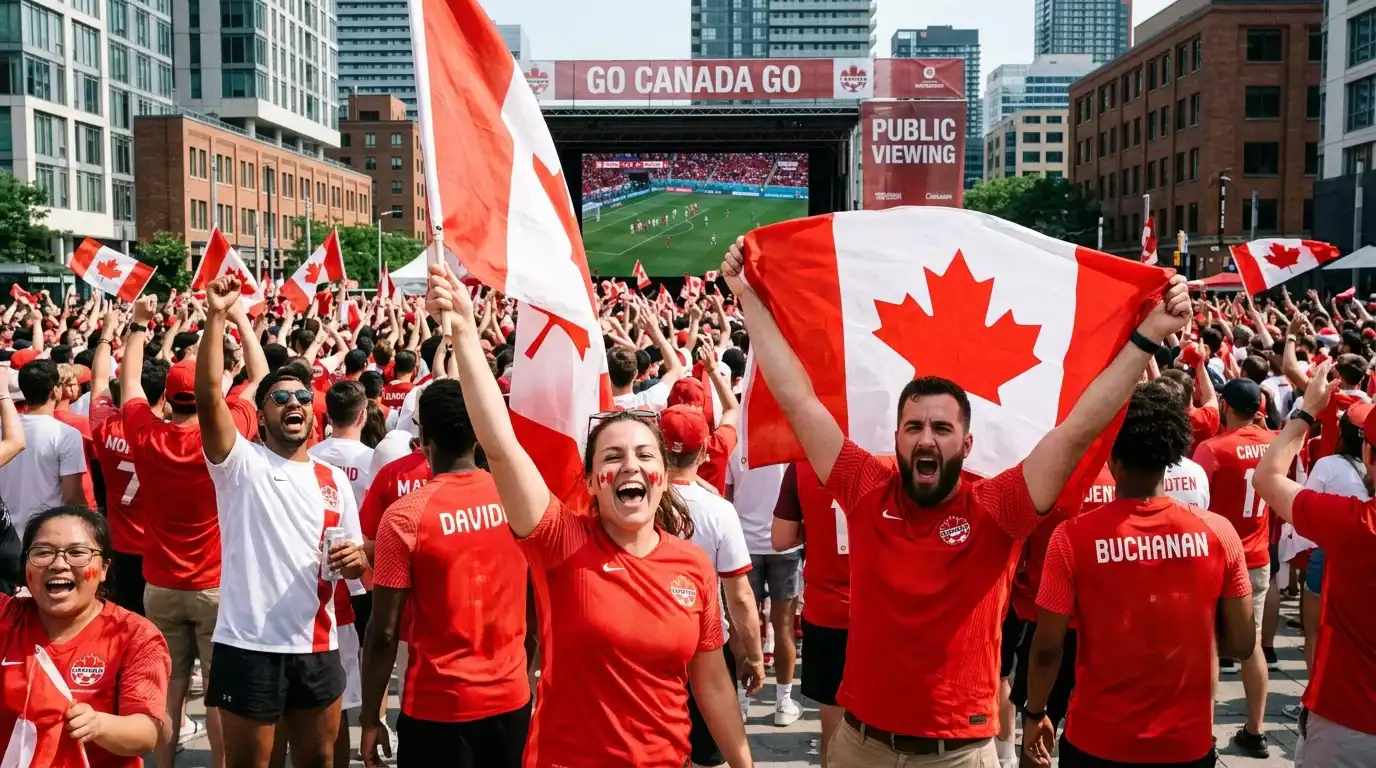
The betting markets reflect cautious optimism. Canada sits at +260 to win Group B, with Switzerland as -110 favorite. Outright tournament odds hover around +15000 — a price that acknowledges upside while respecting the gap between hosting a World Cup and winning one. For deeper analysis of Les Rouges' tournament ceiling and specific betting angles, I've put together a comprehensive Canada World Cup 2026 breakdown that examines every factor.
What Makes 2026 Different: 48 Teams, 104 Matches, Three Nations
FIFA announced the World Cup expansion in 2017, and my immediate reaction was skepticism. More teams meant more mismatches, diluted quality, bloated schedules. Nine years later, having analyzed the actual structure, I've come around to appreciating the chaos. The betting implications are genuinely fascinating — and mostly unexploited by recreational bettors still thinking in 32-team terms.
The basic math reshapes everything. Twelve groups of four teams replace eight groups of four. That creates 24 opening matchday fixtures instead of 16. The knockout bracket expands to 32 teams in the first elimination round, meaning half the tournament advances past the group stage. Eight of those 32 spots go to the best third-place finishers — a mechanism borrowed from the European Championship format but applied at unprecedented scale.
Third-place scenarios create the most overlooked betting angles. At a 32-team World Cup, finishing third meant elimination. Now finishing third means you need to monitor results across multiple other groups, calculate goal difference tiebreakers, and potentially advance without winning your group. For bettors, this opens prop markets around teams "advancing from group stage" that function differently than traditional "group winner" bets.
The geographic spread compounds complexity. Eleven venues across the United States host 78 matches including the entire knockout phase and final at MetLife Stadium in New Jersey. Mexico contributes three venues — Estadio Azteca in Mexico City hosts the opening match on June 11, with Monterrey and Guadalajara adding capacity. Canada's two venues in Toronto and Vancouver account for 13 matches, all in the group stage.
Estadio Azteca becomes the first stadium in history to host three World Cup tournaments. The iconic Mexico City venue previously staged the 1970 and 1986 finals — including Pelé's fourth title and Maradona's Hand of God.
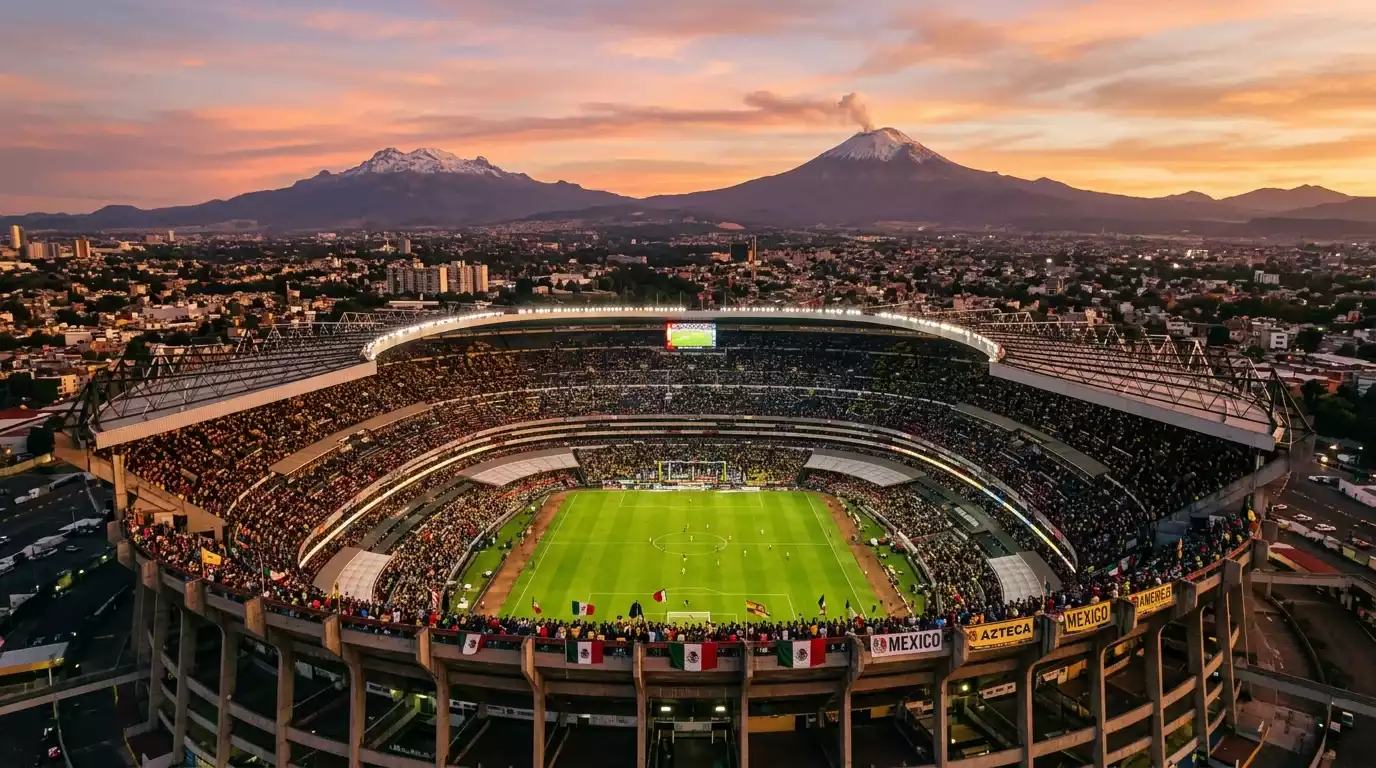
Tournament duration stretches to 39 days, running from June 11 through July 19. For comparison, Qatar 2022 lasted 29 days with 64 matches. Russia 2018 ran 32 days. The extended calendar creates rest disparities that smart bettors can exploit — teams with longer breaks between knockout matches historically perform better, and scheduling information becomes a legitimate edge.
Qualification paths also matter for tournament performance analysis. Europe sent 16 teams through a competitive qualifying cycle. Africa's nine representatives emerged from a continental system that rewards consistency. CONMEBOL's six South American sides survived the notorious gauntlet of away matches at altitude, in humidity, against desperate opponents. Meanwhile, CONCACAF's four qualifiers plus two co-hosts entered through a less grueling path.
The debutants deserve attention beyond novelty value. Curaçao, Jordan, Cape Verde, and Uzbekistan all qualified for their first World Cup. Historical data on how debutants perform suggests they either exceed expectations through fearlessness or collapse under tournament pressure — there's rarely a middle ground. Betting markets often misprice these sides in both directions.
Betting on the World Cup in Canada: Your Legal Options
A friend texted me on August 27, 2021, with a screenshot of his first legal single-game soccer bet. Bill C-218 had just taken effect, ending Canada's decades-old restriction that limited sports betting to parlays. The message read: "finally don't need three legs just to bet on a match." After years of Canadians crossing the border to Las Vegas or using offshore sites with varying degrees of legitimacy, single-game wagering became federally legal overnight.
The legal framework created a patchwork system that still confuses newcomers. Federal legalization transferred regulatory authority to the provinces, and each province charted its own course. Ontario launched iGaming Ontario in April 2022, becoming the only province with a competitive private market. The Alcohol and Gaming Commission of Ontario licenses operators including bet365, BetMGM, FanDuel, Caesars, DraftKings, and dozens of others. Ontario residents can shop lines across multiple regulated books — a genuine advantage for World Cup betting when odds vary by operator.
Outside Ontario, provincial lottery corporations control legal sports betting through government-run platforms. British Columbia operates PlayNow. Quebec manages Mise-O-Jeu. Alberta maintained a provincial monopoly through PlayAlberta until recently — Bill 48 passed in May 2025, setting up iGaming Alberta with a competitive market expected to launch in Q1 2026, potentially just before the World Cup kicks off.
The offshore question persists. Kahnawake Gaming Commission, an Indigenous regulatory body in Quebec, licenses operators accessible across Canada. These sites occupy legal gray space — not explicitly illegal for Canadians to use, but not provincially regulated either. During World Cup 2022, I noticed substantial action flowing through offshore books from Canadian bettors seeking better odds or wider market selection than provincial platforms offered.
Advertising restrictions tightened in 2024 when Ontario banned using celebrities and athletes in betting promotions. The Canadian Gaming Association's Code for Responsible Gaming Advertising took effect January 2026, establishing national standards around messaging. Bill S-211, currently under parliamentary review, could impose further federal restrictions. For bettors, this means fewer aggressive promotions but also fewer misleading claims — a reasonable trade-off.
Practical advice for World Cup 2026: if you're in Ontario, maintaining accounts across multiple licensed operators lets you line shop effectively. A half-point difference on a spread or ten cents on money-line juice compounds over 104 matches. If you're in BC, Alberta, or other provinces, your primary legal option remains the provincial platform, though the competitive dynamics may shift by tournament time if Alberta's market launches on schedule.
Line shopping — the practice of comparing odds across multiple sportsbooks before placing a bet, ensuring you receive the best available price for your position.
Odds format preference runs regional. Decimal odds dominate Canadian platforms and align with international standards — a 2.50 price means you receive C$2.50 for every C$1.00 wagered, including your stake. American odds using plus/minus notation appear on international operators like bet365 and DraftKings. Most platforms let you toggle between formats in settings. I run decimal by default because the math simplifies: multiply stake by odds, subtract stake for profit.
The 12 Groups: Stories Waiting to Unfold
The draw ceremony in Zurich delivered drama that I didn't expect from what's usually a procedural event. When Bosnia and Herzegovina landed in Group B with Canada instead of Italy — the result of Bosnia's stunning penalty shootout victory in the European playoffs — the entire complexion of Canada's path changed. Sometimes the betting gods smile on you before a single ball is kicked.
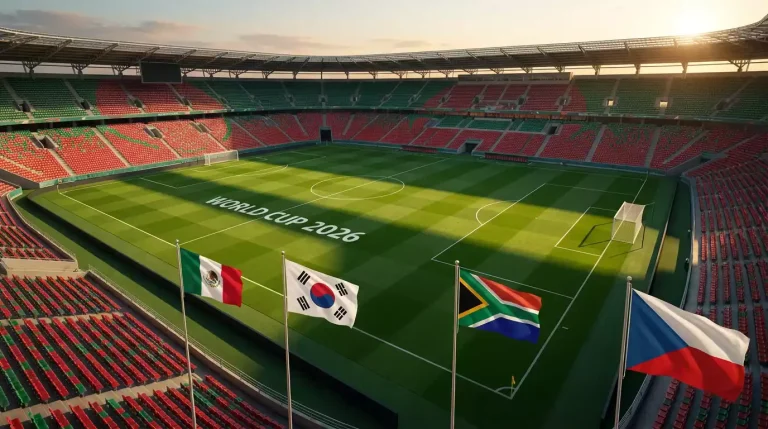
Group A opens the tournament with hosts Mexico facing South Africa at Estadio Azteca on June 11. El Tri carries the weight of Mexican expectations, seeking to finally break the Round of 16 curse that's haunted them since 1986. South Korea, Czechia, and the Bafana Bafana round out a group where Mexico should dominate but where upsets lurk. The Azteca altitude — 2,240 meters above sea level — historically affects European and African teams unused to the thin air.
Group B belongs to Canada's narrative, but Switzerland commands respect. The Nati reached the Euro 2024 quarterfinals, eliminated Italy along the way, and plays tournament football with discipline that frustrates opponents. Qatar underwhelmed catastrophically as 2022 hosts, losing all three matches without scoring. Bosnia's qualifying heroics against Italy demonstrated knockout-round resilience, but Edin Dzeko turned 40 in March, and the squad lacks consistent depth.
Group C puts Brazil alongside Morocco, Scotland, and Haiti in what looks like a two-horse race for top spot. Morocco's 2022 semifinal run shocked the world — the Atlas Lions became the first African team to reach that stage — but repeating against a motivated Seleção presents a different challenge. Scotland ends a 28-year World Cup absence, returning for the first time since France 1998. Haiti makes history as the smallest nation ever to qualify.
Group D features USA on home soil against Paraguay, Australia, and Türkiye. The Americans need a statement tournament to validate the hosting investment and growing soccer infrastructure. Christian Pulisic leads a young squad with European experience but limited tournament pedigree at the senior level. Türkiye's talented roster consistently underperforms at major tournaments — they've qualified for three of the last five European Championships without advancing past the group stage once.
Group E offers Germany a redemption arc after consecutive group-stage eliminations at the 2018 and 2022 World Cups. Die Mannschaft faces Ecuador, Ivory Coast, and debutants Curaçao. Florian Wirtz and Jamal Musiala represent the creative future, but defensive stability remains questionable. Ivory Coast won the 2024 Africa Cup of Nations on home soil, suggesting tournament-hardened preparation.
Group F might be the tightest quartet in the tournament. Netherlands, Japan, Sweden, and Tunisia all possess knockout-round quality on their day. Japan upset Germany and Spain in Qatar 2022 before exiting to Croatia on penalties. Sweden returns after missing that tournament entirely. The Oranje have reached semifinals in two of their last three World Cups but never quite finish the job.
Groups G through L continue the pattern of clear favorites alongside dangerous underdogs. Belgium's golden generation gets one last chance in Group G against Iran, Egypt, and New Zealand. Spain dominates Group H projections with Uruguay, Saudi Arabia, and debutant Cape Verde. France defends third-place finishes to Norway, Senegal, and Iraq — with Erling Haaland making his World Cup debut. Argentina protects their title in Group J alongside Austria, Algeria, and Jordan. Portugal faces Colombia in Group K's marquee matchup. England draws Croatia again — their 2018 semifinal opponents — in Group L with Ghana and Panama.
The 48-team format creates 12 distinct narratives. Host nations occupy favorable groups. Traditional powers face expansion-era challengers. Third-place scenarios add unpredictability that didn't exist at 32-team tournaments.
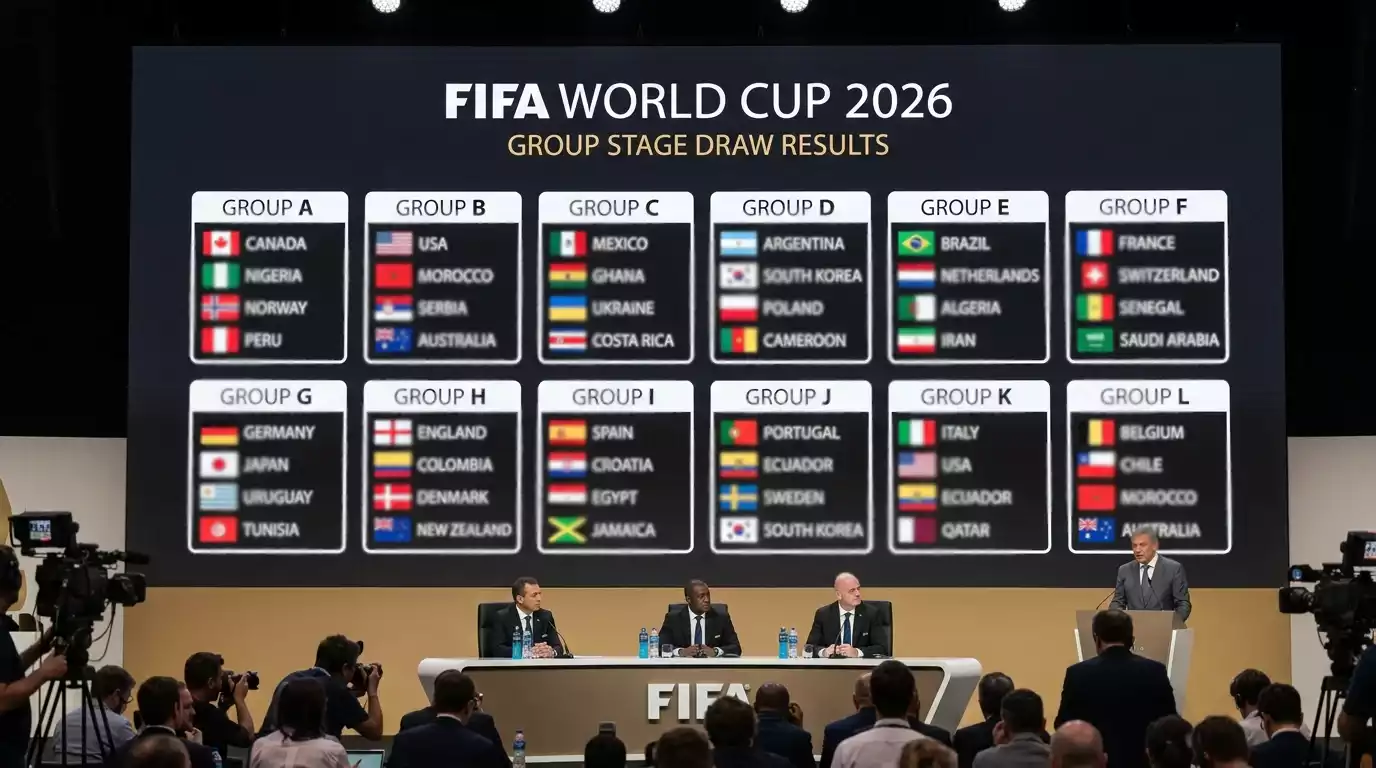
For complete analysis of every group including predicted standings, key matches, and betting angles, the World Cup 2026 groups breakdown covers all twelve in detail.








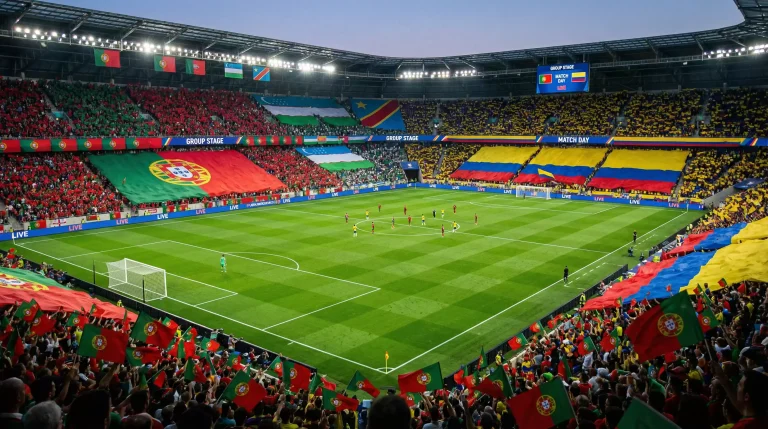
The Contenders: Who's Lifting the Trophy in New Jersey?
Lamine Yamal turned 17 during the Euro 2024 final. He'd already registered three assists and one goal in the tournament, earning Young Player honors while becoming the youngest to appear in a European Championship match. When I watched him shred French defenders in the semifinal, I adjusted my World Cup 2026 models to account for something statistics can't fully capture — generational talent accelerating beyond projections.
Spain enters as tournament favorite at +450, and the price reflects recent dominance rather than historical reputation alone. La Roja won Euro 2024 with commanding performances, not fortunate draws. The midfield trio of Rodri, Pedri, and Gavi controls possession against anyone. Yamal and Nico Williams attack from wide positions with terrifying pace. The squad's average age skews young enough that 2026 represents a peak window rather than a final chance.
England occupies second-favorite status at +550, and the Three Lions carry familiar baggage into their sixth consecutive major tournament semifinal or better appearance. The talent pool — Jude Bellingham, Bukayo Saka, Phil Foden, Cole Palmer — matches any nation on the planet. The tactical setup and in-game management continue to frustrate observers who see untapped potential. Two consecutive European Championship finals ended in penalty shootout losses. The psychological barrier feels real.
France and Brazil share +750 odds representing different trajectories. Les Bleus possess Kylian Mbappé, the planet's most dangerous player in transition, plus supporting talent that would start for any other national team. The 2022 final loss to Argentina — and the back-to-back hat trick from Mbappé that nearly saved it — demonstrated both France's quality and their capacity to fall just short. Brazil's 24-year title drought weighs heavily on a nation that considers World Cup trophies birthright. The Seleção rebuilt after 2022's disappointing quarterfinal exit to Croatia, with Vinícius Júnior now carrying the scoring burden Neymar once shouldered.
Argentina defending at +800 represents either value or trap depending on your view of Lionel Messi's status. The GOAT will be 38 by tournament time. His MLS performances suggest declining physical capacity even as tactical intelligence remains elite. No team has defended a World Cup title since Brazil in 1962. The squad around Messi — Julián Álvarez, Enzo Fernández, Alexis Mac Allister — should compete regardless, but the emotional narrative centers on whether Messi can bookend his career with back-to-back triumphs.
Germany, Portugal, and Netherlands cluster in the +1000 to +1500 range as legitimate dark horses. Die Mannschaft's youth movement under Julian Nagelsmann finally addresses the issues that caused consecutive group-stage exits. Portugal navigates the post-Cristiano Ronaldo transition with Bruno Fernandes assuming creative leadership. Netherlands brings trademark Total Football philosophy to a generation led by defensive anchor Virgil van Dijk.
| Team | Current Odds | Form Rating |
|---|---|---|
| Spain | +450 | Euro 2024 champions |
| England | +550 | Euro 2024 finalists |
| France | +750 | Euro 2024 semifinalists |
| Brazil | +750 | Copa América 2024 quarterfinalists |
| Argentina | +800 | Defending World Cup champions |
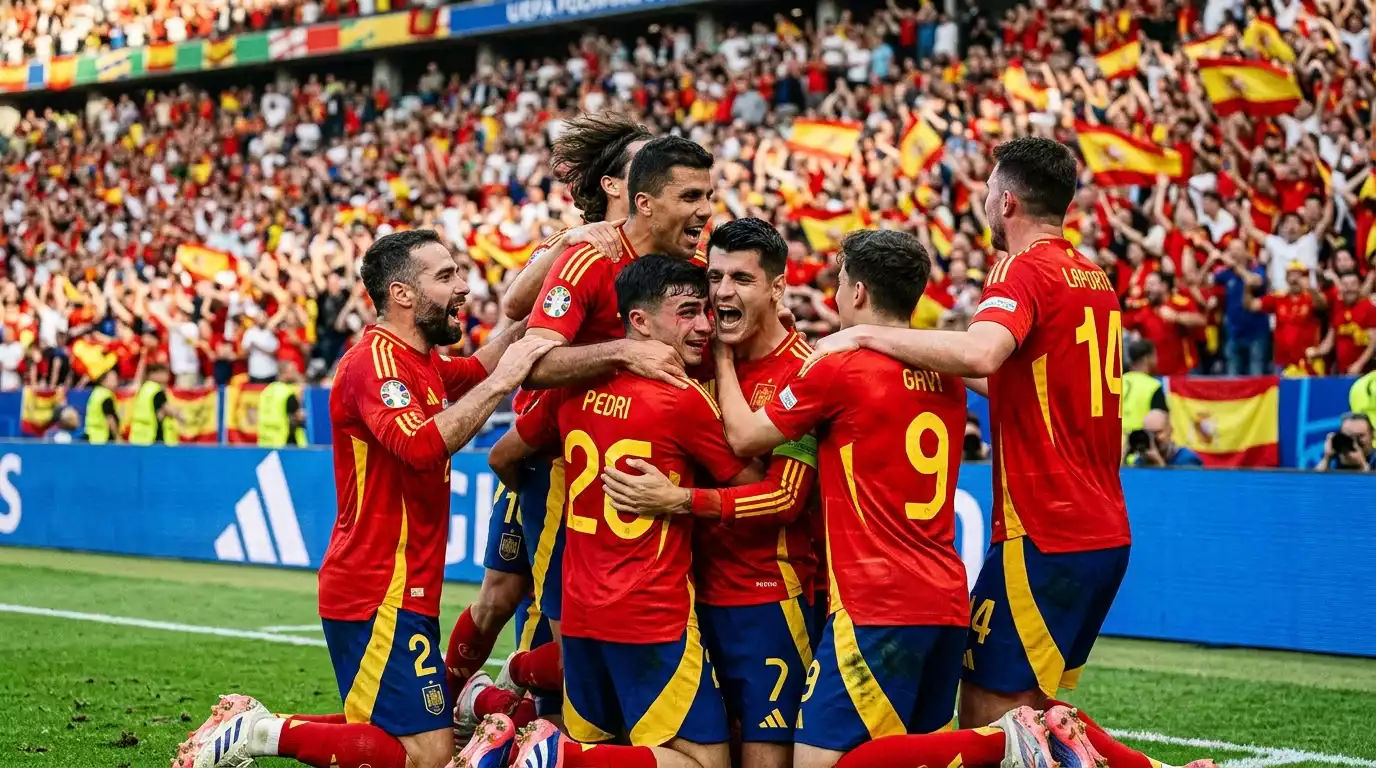
The full World Cup 2026 odds analysis examines every team across all 48 participants, including group winner prices, advancement odds, and elimination scenario projections.
Canada's Moment: Why Les Rouges Are the Story of 2026
Walk through any Toronto neighborhood in June and you'll see it — Canadian flags alongside soccer scarves in windows, Les Rouges jerseys on streetcars, conversations about Alphonso Davies happening at Tim Hortons. The cultural shift that began with the 2022 qualification run has accelerated into something that resembles genuine soccer nation status. This isn't just a host nation going through motions. Canada has arrived.
The squad depth represents the best collection of Canadian talent assembled for any sport except hockey. Start with Davies, whose pace down the left flank for Real Madrid terrifies defenders across La Liga and Champions League. His positional versatility — capable as left back, left winger, or even central midfielder — gives manager Jesse Marsch tactical flexibility. Davies wants redemption for that missed penalty against Belgium. Home soil provides the stage.
Jonathan David operates as the pure striker Les Rouges desperately needed during their scoring drought years. His move to Juventus cemented status among Europe's elite number nines. David scored 15 goals in Ligue 1 during his final Lille season before the transfer, demonstrating the consistency that previous Canadian strikers lacked. At 26 during the tournament, he enters prime years ready to carry offensive responsibility.
Stephen Eustáquio marshals midfield with intelligence that belies his relatively low profile outside Canadian soccer circles. Porto's system demands technical precision and tactical discipline — exactly what international tournaments require. Cyle Larin adds veteran experience from multiple European leagues. Tajon Buchanan provides pace off the bench or as a starter depending on matchup. The goalkeeper situation stabilized with Milan Borjan still capable and younger options pressing for time.
Group B circumstances amplify opportunity. Switzerland represents the clearest obstacle — Granit Xhaka commands midfield, the defensive structure frustrates opponents, and tournament experience runs deep. But the Nati aren't invincible. They lost to England, Spain, Germany, and Denmark in competitive matches during 2024 qualifying and Nations League play. On a specific afternoon in Vancouver or Toronto, with home crowd energy and players peaking, Canada can take points.
Qatar and Bosnia present different challenges. The Qataris collapsed entirely during home World Cup hosting, losing every match while scoring just one goal. Their squad hasn't meaningfully improved since. Bosnia qualified through heroics against Italy but relies heavily on aging stars. Edin Dzeko provides experience but limited mobility at 40. The supporting cast lacks consistent quality. Canada should be favored against both opponents in home matches.
Canada's FIFA ranking climbed from 94th in January 2020 to approximately 27th by April 2026 — the most dramatic rise of any CONCACAF nation during that period. The ranking reflects genuine improvement, not just methodological quirks.
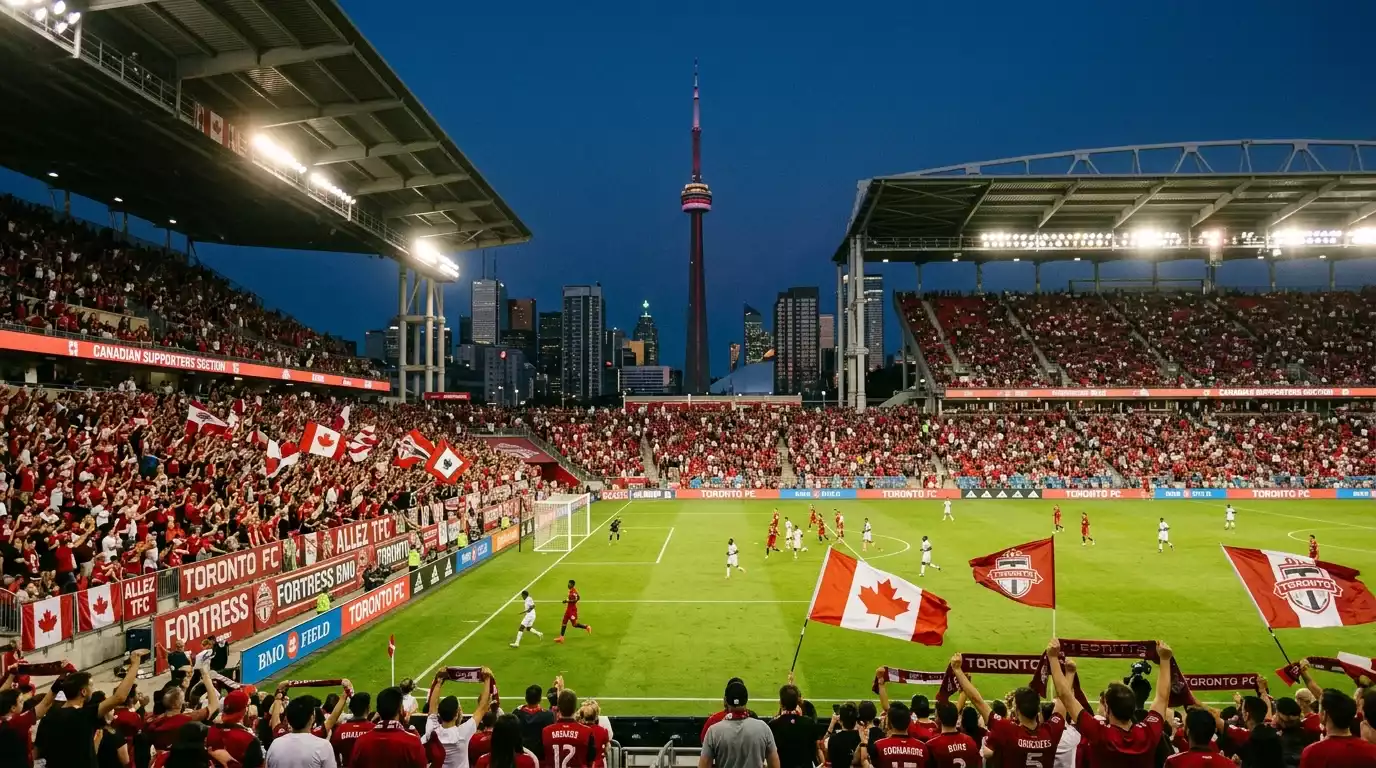
The betting line at +260 to win Group B acknowledges Switzerland's superiority while pricing Canada's realistic path. Advancing from the group should happen. The question becomes ceiling — can this squad reach quarterfinals or beyond?
Markets That Matter: From Outright Winners to Golden Boot
My first World Cup betting experience involved a five-leg parlay on match results during South Africa 2010. I needed draws in all five matches to cash. Four delivered. Spain-Switzerland ended 1-0. That afternoon taught me a lesson I've repeated to dozens of bettors since: understanding available markets matters as much as picking winners.
Outright winner markets draw the most action but rarely offer the best value. By tournament kickoff, the favorites have been dissected by analysts worldwide, and prices reflect consensus accurately. Finding mispriced teams requires either contrarian views on favorites or identifying undervalued mid-tier sides before the market corrects. Spain at +450 already prices in their Euro 2024 dominance. The edge disappeared months ago.
Group winner markets create more opportunities because fewer analysts scrutinize each group with equal depth. When I examine Group B pricing, Switzerland's -110 to finish first reflects appropriate favorite status. But Canada at +260 for the same outcome represents a different calculation — home advantage across three matches, favorable head-to-head timing, and a motivated squad peaks differently than road tournament grinding.
Match markets across 104 games provide the volume serious bettors need. Asian handicaps, goal totals, both teams to score, correct score, halftime results — each market offers different angles on the same fixture. Early group stage matches historically produce fewer goals than knockout rounds as teams prioritize defensive solidity before opening up. Draw percentages spike in dead rubber final matchday games where advancement is already settled.
Player props expand dramatically for World Cup tournaments. Golden Boot odds track tournament scoring leaders — Kylian Mbappé and Harry Kane typically lead early markets before adjustments reflect actual performance. Goal and assist totals for individual players, cards received, minutes played — bookmakers offer granular options that reward those who track specific player contexts.
Tournament specials fill gaps between standard markets. Which group produces the most goals? Will any team finish with zero points? Specific country props like "Canada to reach quarterfinals" or "USA to reach semifinals" let bettors target outcomes beyond outright winner or loser binaries. These markets often carry wider margins, so shop lines aggressively.
Asian handicap — a betting market that eliminates the draw outcome by applying fractional goal handicaps to teams, forcing a result for wagering purposes even in drawn matches.
Live betting during matches offers real-time opportunities but demands focus and quick decision-making. Lines shift after goals, red cards, injuries — sometimes creating value when overreaction occurs. The pace of 104 matches across 39 days means live betting can consume entire summer schedules if you let it. Pick your spots rather than chasing action constantly.
Understanding markets provides foundation. Applying that knowledge to identify specific value opportunities separates recreational bettors from those consistently growing bankrolls through tournament play.
Early Value: Where Smart Money Is Moving
The models I built for World Cup 2022 identified Morocco at +30000 to reach the semifinals as dramatically underpriced. They cashed at +1400 by the time the quarterfinals arrived. Finding that level of inefficiency in 2026 requires looking where casual bettors aren't — which increasingly means group-stage scenarios rather than outright markets the public hammers from draw day forward.
Host nation advantages historically produce measurable betting edges. South Korea reached the semifinals in 2002 on home soil. Germany reached the same stage in 2006. Brazil collapsed in 2014, but they also entered as prohibitive favorites carrying unrealistic expectations. USA at +3500 to win the tournament and +110 to win Group D presents a different profile — a squad talented enough to compete but undervalued by international markets that don't track MLS or American player development closely.
Third-place advancement scenarios remain underexplored in betting markets. Eight teams advance from third place across twelve groups. That structure rewards accumulating points rather than necessarily winning groups. A team that draws all three matches finishes with three points — often enough to qualify as a best third-place finisher if goal difference cooperates. Betting "to advance from group" rather than "to win group" captures this dynamic at more favorable prices.
Dark horse candidates cluster in specific regions. African nations Morocco, Ivory Coast, and Senegal all possess squads capable of knockout-round runs. Japan demonstrated giant-killing ability in Qatar 2022, beating both Germany and Spain before penalties ended their tournament. South Korea brings Son Heung-min and a tactical discipline that frustrates opponents. These teams price between +5000 and +15000 for outright markets — long enough to carry bankroll diversification value but short enough to suggest legitimate paths.
Golden Boot betting offers contrarian angles through squad context. Traditional favorites like Harry Kane and Kylian Mbappé lead markets, but tournament top scorers often come from teams that advance deep while playing expansive football. Spain's attacking structure distributes goals across multiple scorers rather than funneling through one striker. A dark horse like Germany's Florian Wirtz — creating chances at elite rates in a system that should dominate group stage possession — offers better odds than market pricing suggests.
Value exists where market attention doesn't — third-place scenarios, host nation edges, and player props within overlooked group matches. By tournament kickoff, outright winner markets will price efficiently. Current windows close quickly.
The comprehensive World Cup 2026 predictions section breaks down specific picks across multiple markets with confidence ratings and stake recommendations.
Key Dates: Mark Your Calendar
I keep a color-coded spreadsheet tracking every tournament I cover professionally. The World Cup 2026 version looks like a Jackson Pollock painting — matches scattered across time zones, overlapping kickoff times, rest day gaps that create scheduling edges for knockout predictions. For Canadian bettors, certain dates deserve priority attention.
June 11, 2026 marks the ceremonial beginning. Mexico hosts South Africa at Estadio Azteca in Mexico City for the tournament opener. That match kicks off at 5:00 PM ET — prime evening viewing across Canada. The opening day continues with additional group stage fixtures, but Azteca sets the tone as the only stadium ever to host three World Cup tournaments.
June 12 brings Canada into action against Bosnia and Herzegovina at BMO Field in Toronto. The 3:00 PM ET kickoff places the match during early evening European viewing hours while keeping Canadian audiences in afternoon timeslots. USA also debuts that day, facing Paraguay at SoFi Stadium in Los Angeles. The host nations enter within 24 hours of each other.
June 18 and June 24 complete Canada's group stage. The Qatar match at BC Place in Vancouver on the 18th carries must-win pressure if the opener doesn't produce points. Switzerland on the 24th — likely deciding group positioning — closes Canada's first phase. All three matches fall in the 3:00 to 6:00 PM ET window, accommodating both coasts without late-night viewing requirements.
The knockout bracket accelerates from June 28 through July 19. Round of 32 spans three days. Round of 16 takes four days. Quarterfinals happen July 9-10. Semifinals land July 13-14. The final at MetLife Stadium in New Jersey — just across the border from Ontario — kicks off July 19 at a time designed for global prime-time viewing.
| Date | Match | Venue | Time (ET) |
|---|---|---|---|
| June 11 | Mexico vs South Africa | Estadio Azteca | 5:00 PM |
| June 12 | Canada vs Bosnia | BMO Field | 3:00 PM |
| June 18 | Canada vs Qatar | BC Place | 6:00 PM |
| June 24 | Canada vs Switzerland | BC Place | 3:00 PM |
| July 19 | Final | MetLife Stadium | TBD |
These dates shape bankroll planning. The group stage volume — often four to six matches daily — creates both opportunity and fatigue. Knockout rounds compress decision-making into fewer fixtures with higher stakes. Plan your engagement level before the tournament starts rather than improvising through fatigue.
Frequently Asked Questions
Is World Cup betting legal in Canada?
Yes. Single-game sports betting became legal across Canada following the passage of Bill C-218 in August 2021. Each province regulates its own market — Ontario operates the only competitive private market with multiple AGCO-licensed operators, while other provinces use government-run platforms like PlayNow in British Columbia. Alberta's competitive market is expected to launch in early 2026.
Who are the main contenders for World Cup 2026?
Spain leads betting markets at +450 following their Euro 2024 triumph. England (+550) and France (+750) occupy the next tier as consistent semifinal contenders. Brazil (+750) and defending champion Argentina (+800) represent South American hopes. Germany, Portugal, and Netherlands price in the +1000 to +1500 range as legitimate dark horses.
How many teams are in World Cup 2026?
The 2026 World Cup expands to 48 teams from the previous 32-team format. Twelve groups of four teams produce 24 automatic qualifiers for the knockout rounds, plus eight best third-place finishers. This creates a 32-team Round of 32 before advancing to the Round of 16.
What cities host World Cup 2026 matches?
The tournament spans 16 venues across three countries. The United States hosts 11 stadiums including MetLife Stadium (final) in New Jersey, SoFi Stadium in Los Angeles, and Hard Rock Stadium in Miami. Mexico contributes Estadio Azteca (opening match), BBVA in Monterrey, and Akron in Guadalajara. Canada hosts at BMO Field in Toronto and BC Place in Vancouver.
When does World Cup 2026 start?
The tournament opens June 11, 2026 with Mexico facing South Africa at Estadio Azteca in Mexico City. The group stage runs through June 26. Knockout rounds begin June 28. The final takes place July 19, 2026 at MetLife Stadium in East Rutherford, New Jersey.
Where can Canadians bet on World Cup 2026?
Ontario residents can access multiple licensed operators including bet365, BetMGM, FanDuel, Caesars, and DraftKings through the iGaming Ontario framework. Other provinces use provincial lottery platforms — PlayNow in British Columbia, Proline across multiple provinces, and similar government-operated options. Alberta's competitive market may launch before the tournament.
What betting markets are available for World Cup 2026?
Markets span outright tournament winner, group winner, individual match results (moneyline, spread, totals), player props (goals, assists, cards), Golden Boot, tournament specials, and live in-play betting during matches. The expanded 48-team format creates additional markets around third-place advancement scenarios and new qualification pathways.
