
Croatia at World Cup 2026: The Vatreni’s Legacy Tournament
 Available in US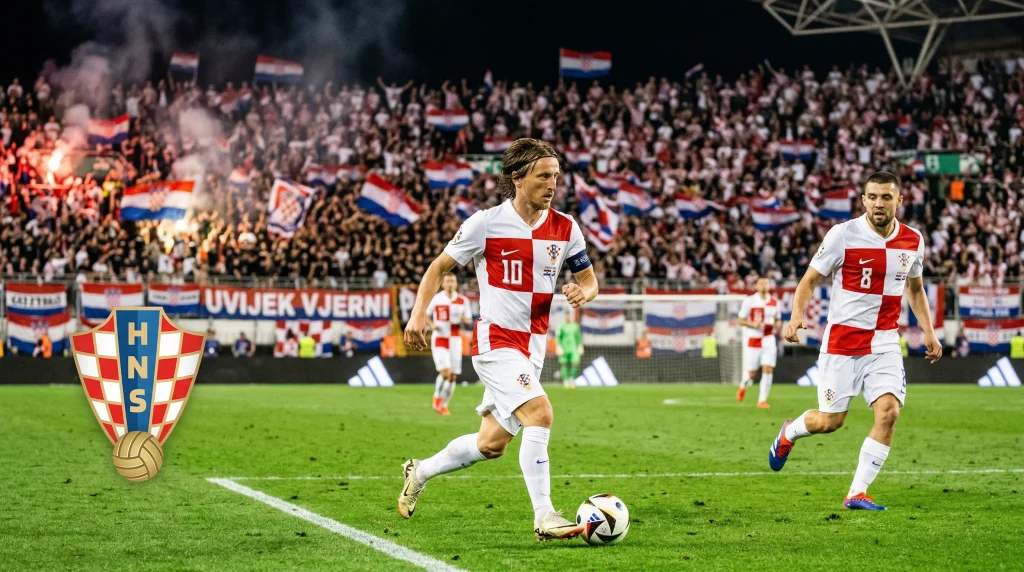
Table of Contents
Two World Cup finals in four years. Third place in 2022 after the final heartbreak of 2018. For a nation of four million people, Croatia’s tournament achievements rank among international football’s most improbable success stories. The Vatreni have punched above their demographic weight through collective spirit that transcends individual limitations — the embodiment of what unified teams can accomplish against superior resources.
Croatia World Cup 2026 arrives with the golden generation approaching its final act. Luka Modrić, approaching 41 during the tournament, cannot sustain 90-minute control as he did during his peak years. The supporting cast that reached two finals has similarly aged beyond optimal performance windows. What remains is experience, tactical intelligence, and the desperate motivation of knowing this represents the last opportunity for collective glory.
I’ve analyzed Croatian football through both finals and the bronze medal performances that bookended them. The consistency of reaching tournament late stages reflects structural qualities that transcend individual personnel. The coaching continuity, the squad harmony, the cultural emphasis on collective effort over individual stardom — these elements persist even as the players who embodied them require replacement.
Two Finals, One Bronze: Croatia’s Remarkable Run
Croatia’s World Cup record since 2018 defies probability. Defeating England in the 2018 semi-final required extra-time resilience that favored nations with deeper squads typically possess. Reaching the 2022 final, then losing to France, demonstrated that the initial success wasn’t variance but reflected genuine quality. The 2022 third-place finish confirmed sustained competitiveness even after the emotional devastation of final defeat.
The common thread across these campaigns involves midfield control that dictates match tempo. Modrić’s orchestration, supported by Ivan Rakitić initially and others subsequently, allowed Croatia to compete with larger nations through possession dominance. When Croatia controlled the ball, their limitations in other areas mattered less. This strategic identity has defined Vatreni football for nearly a decade.
What made Croatia dangerous extended beyond Modrić’s individual brilliance. The collective pressing, the coordinated movement, the understanding between players developed through years together — these elements created synergies that talent alone couldn’t produce. The squad’s chemistry reflected shared experiences across tournaments that built implicit communication beyond explicit instruction.
The Modrić Era: One Last Dance
Luka Modrić’s career trajectory provides template for footballing longevity that defies conventional wisdom about physical decline. His 2022 World Cup performances, at age 37, suggested minimal deterioration from his peak years. The positioning, the passing weight, the tempo manipulation remained elite. What changed involved recovery between matches — the accumulated fatigue that consecutive fixtures produce.
By World Cup 2026, Modrić will be 40 years old during the tournament. Even his remarkable physical maintenance cannot prevent aging’s inevitable effects. The question involves whether his reduced physical capacity can be managed through strategic deployment — starting when fresh, substituting earlier, prioritizing specific fixtures. His presence, even diminished, provides value that complete absence cannot replace.
The emotional significance of Modrić’s final World Cup extends beyond statistical contribution. His presence inspires teammates, intimidates opponents, and provides reference points for younger players who’ve never experienced tournament football without him. The captaincy he embodies transcends armband designation into leadership that shapes Croatian identity.
Squad Analysis: Transition Time
Croatian squad construction for World Cup 2026 reflects awkward generational overlap. The golden generation’s core remains present but diminished. The younger replacements have demonstrated quality without establishing tournament credentials. This transition creates uncertainty about identity — who anchors Croatian ambitions when the icons can’t maintain previous standards?
Goalkeeping provides stability through experienced options who’ve accumulated minutes across European leagues. The position offers reliability that allows defensive structures to function without requiring heroic intervention. This competence provides foundation that tournament progression requires.
Defensive personnel has evolved substantially from 2018’s final lineup. Younger center-backs bring pace and aggression; experienced options provide organization and communication. The balance between youth and experience determines whether defensive structures maintain the solidity that Croatian tournament success has required.
Midfield beyond Modrić features options who’ve developed through elite European environments. Mateo Kovačić’s Premier League career provides physical template that balances Modrić’s technical orientation. The depth allows tactical adjustments while maintaining quality that previous Croatian midfields possessed.
Key Players Beyond Modrić
Joško Gvardiol’s emergence as world-class center-back provides defensive foundation for Croatian football’s next era. His Manchester City development under Pep Guardiola refined abilities that Croatian academies couldn’t complete alone. At 24 during World Cup 2026, Gvardiol enters his physical prime with accumulated experience that defensive leaders require.
Mateo Kovačić’s midfield presence offers different profile than Modrić’s creative wizardry. His ball-carrying, his pressing resistance, and his progressive passing through central areas create opportunities that controlled tempo alone cannot. This complementary relationship allows Croatian midfield to function even when Modrić requires rest.
Attacking options have diversified beyond the limited profiles that previous Croatian teams sometimes featured. The variety — pace, aerial threat, creative unpredictability — provides tactical options that single-profile attack cannot offer. This evolution addresses limitations that elite opponents have historically exploited.
The attacking depth beyond headline names provides tournament resilience. Players who can contribute from substitute appearances, who offer different profiles for tactical adjustments, who maintain quality when starters require rest — these options enable Croatian football’s marathon approach to tournament football. The 2022 run featured Modrić playing every minute of knockout football; 2026 may require more strategic rotation that depth enables.
Defensive leaders beyond Gvardiol have developed through competitive European minutes. Their communication, their organization, and their composure under pressure create defensive foundation that Croatian tournament success requires. The back line that protects Modrić’s midfield control has evolved from the 2018 vintage while maintaining the reliability that tournament progression demands.
Group L Preview: England, Ghana, Panama
Croatia’s group draw delivered familiar faces and new challenges. England represents the rival that Modrić’s semi-final goal defeated in 2018. Ghana brings African competition with World Cup experience. Panama returns after missing 2022. The opposition profile suggests competitive group where advancement requires professional execution.
England versus Croatia represents Group L’s marquee fixture. The 2018 semi-final rematch carries emotional weight that ordinary group matches cannot match. England’s evolution since that defeat — reaching Euro finals, accumulating knockout experience — suggests different challenge than Croatian victory suggested possible. The tactical battle between English attacking depth and Croatian midfield control determines group positioning.
Ghana’s athletic profile and organized defensive approach create challenges that European assumptions sometimes dismiss. Their World Cup experience across multiple tournaments confirms quality that reaches beyond African continental context. Croatia must maintain concentration against opposition capable of punishment when focus lapses.
Panama’s CONCACAF qualification through expanded format reflects development rather than elite quality. Croatia should rotate against Panama, preserving fitness for knockout rounds while securing comfortable victory.
The scheduling of Group L fixtures creates preparation considerations. If England and Croatia meet early in the group stage, the result shapes subsequent fixture importance. Both teams should advance regardless of head-to-head outcome, but seeding implications affect knockout-round draws. Managing this balance between competitive effort and squad preservation reflects the coaching challenge that deep tournament runs require.
Croatia Odds: Value in Experience
Current World Cup 2026 odds place Croatia around +5000, reflecting both historic success and concerns about generational transition. This pricing positions Croatia as dark horse — capable of deep advancement but not expected to contend for championship. The market asks whether experience compensates for physical decline.
My assessment places Croatia’s actual probability of reaching semi-finals around 6-8%, translating to fair odds between +1150 and +1570. At +5000 for outright victory, you’re paying premium for championship possibility that requires favorable circumstances. Value lies in advancement propositions where Croatian experience translates more directly.
Group L advancement should price around -200 based on quality relative to Ghana and Panama. England complicates certainty, but Croatia should accumulate sufficient points across three matches. Croatia to advance from Group L captures baseline expectation.
The more speculative proposition involves Croatia reaching the semi-finals for the fourth consecutive major tournament. At approximately +600, this captures the pattern continuation that Croatian tournament football has established. Whether the aging golden generation can sustain this level remains uncertain, but their track record demands respect that long odds might undervalue.
The Vatreni Spirit
Croatia enters World Cup 2026 carrying both golden generation legacy and transition uncertainty. The tournament football that produced two finals cannot continue indefinitely with aging personnel. Yet the cultural elements that enabled Croatian success — collective spirit, tactical intelligence, tournament mentality — persist beyond individual players.
The question involves whether institutional knowledge transmits to emerging players who’ll eventually replace the icons. If Gvardiol, Kovačić, and younger options have absorbed what Modrić’s generation embodied, Croatian football’s future remains bright despite personnel change. If the magic was specific to this group, transition brings decline that success masked.
My tournament prediction places Croatia in the knockout rounds with genuine uncertainty about advancement ceiling. Group L should produce qualification through quality that Ghana and Panama cannot match. Beyond the group, England’s presence suggests Round of 16 rematch that determines Croatian tournament extent. Among the 48 teams competing, the Vatreni’s final act could produce historic fourth semi-final or confirm that generations cannot be extended indefinitely.
