
Belgium at World Cup 2026: The Last Dance of a Golden Generation
 Available in US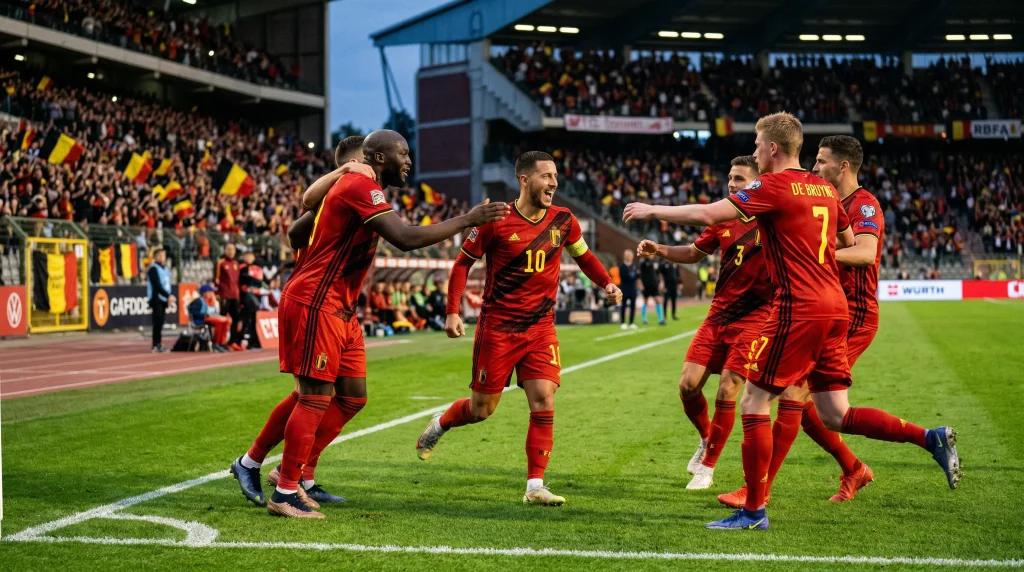
Table of Contents
For a decade, they were FIFA’s number one ranked team. Kevin De Bruyne, Romelu Lukaku, Eden Hazard, Thibaut Courtois — a generation that seemed destined to deliver Belgium’s first major trophy. Yet here we are, approaching World Cup 2026, and the cabinet remains empty. The golden generation’s final act arrives with more questions than certainty about whether talent squandered can still find redemption. Their neighbors Netherlands share similar near-miss narratives, while France demonstrates what Belgium’s generation could have achieved.
Belgium World Cup 2026 represents the last realistic opportunity for this core to achieve the success their individual brilliance seemed to guarantee. De Bruyne turns 35 during the tournament. Lukaku approaches 33. The physical prime that enabled their best performances has passed. What remains is experience, tactical intelligence, and the desperate motivation of knowing this is it — the final chance before generational transition demands different protagonists.
I’ve watched Belgian football’s golden generation accumulate near-misses that compound into collective failure. The 2018 World Cup third place, the Euro 2020 quarter-final exit, the 2022 group stage embarrassment — each chapter added weight to the burden of expectation they carry. Now, with North American stadiums awaiting, Belgium must answer whether their legacy will be defined by what they almost achieved or what they finally won.
The Unfulfilled Promise: Belgium’s Final Shot
Understanding Belgian football’s current moment requires appreciating the height from which they’ve gradually descended. The 2018 World Cup squad combined peak-form De Bruyne with Hazard’s creative wizardry and Lukaku’s physical dominance. They dismantled Brazil in the quarter-finals with football that announced Belgium among global elite. Third place seemed consolation prize for a team that deserved more.
What followed was not continued ascent but gradual erosion. Euro 2020 brought quarter-final defeat to eventual champions Italy — respectable but unsatisfying. The 2022 World Cup delivered humiliation, with Morocco and Croatia exposed Belgian decline that could no longer be denied. The ranking that once topped FIFA’s table has fallen significantly. The inevitability of success transformed into uncertainty about competitiveness.
The psychological burden of unfulfilled promise affects players differently. Some channel frustration into motivation; others carry accumulated disappointment as weight that slows performance. Managing these varying responses requires coaching sensitivity that extends beyond tactical instruction. Belgium’s manager must navigate egos shaped by individual greatness and collective failure simultaneously.
World Cup 2026 represents final opportunity while realistic hope still exists. Another cycle delays the question beyond the golden generation’s viability. This is the last tournament where De Bruyne, Lukaku, and supporting veterans can credibly pursue championship. The urgency that creates might spark brilliance or accelerate collapse.
The Golden Generation’s Last Hurrah
Labeling any group of players a “golden generation” invites eventual reckoning with results that justify or refute the designation. Belgium’s core earned the label through sustained individual excellence across Europe’s elite leagues. What they failed to achieve was collective success that transforms individual brilliance into shared glory.
De Bruyne’s Manchester City career has produced Premier League titles, domestic cups, and Champions League success. His individual credentials as one of football’s best midfielders remain intact despite age-related physical decline. The question involves whether his best performances — the vision, the passing range, the game control — can still emerge in tournament football’s compressed intensity.
Eden Hazard’s career trajectory provides cautionary tale about physical decline accelerating beyond recovery. His Real Madrid transfer, plagued by injuries, diminished the dynamic winger who tormented defenders during Chelsea’s peak years. His national team involvement has correspondingly decreased, with younger alternatives now preferred. The symbolic departure of Belgium’s former talisman reflects broader generational transition.
Romelu Lukaku’s goal-scoring reliability for Belgium — over 80 international goals — anchors attacking expectations regardless of club-level inconsistency. His physical presence, hold-up play, and finishing quality in the penalty area create focal point that Belgian tactics can orient around. Managing his fitness across tournament matches determines whether his impact sustains or diminishes through knockout rounds.
Squad Analysis: Veterans and Newcomers
Belgian squad construction for World Cup 2026 reflects awkward generational overlap. The veterans who defined the golden era remain present but diminished. The younger players who represent Belgian football’s future haven’t yet established tournament credentials. The blend creates uncertainty about identity — who anchors Belgian ambitions when the old guard can’t maintain previous standards?
Goalkeeping features Thibaut Courtois, whose Real Madrid career has produced Champions League heroics that confirm elite status. His shot-stopping and commanding presence provide defensive foundation that Belgium can rely upon. The position represents strength rather than concern, anchored by experience that tournament pressure cannot surprise.
Defensive personnel has transitioned substantially from the 2018 core. Younger center-backs bring pace and aggression that previous options sometimes lacked. Full-back positions feature attacking intent combined with defensive awareness in profiles that modern systems require. The overall defensive age profile suggests rebuilding rather than maintaining — energy compensating for the communication and understanding that veteran partnerships provide.
Midfield construction centers on De Bruyne’s continued presence when fitness allows. His creativity from central positions provides progressive passing that unlocks defenses. The supporting options offer different profiles — more defensive, more dynamic — that allow tactical adjustments. The depth has improved as younger midfielders developed through league competition that accelerated their readiness.
The attacking positions beyond Lukaku feature options who’ve emerged through European development pathways. Wide players provide pace and directness that counter-attacking systems require. Supporting strikers offer different profiles for tactical variation. The overall attacking depth exceeds what previous Belgian tournaments possessed, even if the peak quality of individual options falls below the Hazard-at-his-best standards that once seemed unlimited.
De Bruyne and the Remaining Stars
Kevin De Bruyne’s influence on Belgian football extends beyond statistics into the organizational intelligence he provides. His positioning, his movement, his demands on teammates all shape how Belgium operates. When De Bruyne controls possession in dangerous areas, Belgian attacks function at higher levels than personnel alone would suggest. His presence compounds individual quality into collective threat.
The injury concerns that have affected De Bruyne in recent seasons create availability uncertainty that Belgium cannot ignore. His history of missing significant periods through various ailments suggests managing his minutes becomes essential. Fresh De Bruyne in knockout rounds provides more value than fatigued De Bruyne from excessive group-stage deployment. This load management requires depth quality that previous Belgian squads sometimes lacked.
Jérémy Doku’s emergence provides attacking electricity that Belgium’s declining wingers no longer generate. His Manchester City development under Pep Guardiola refined abilities that raw talent alone couldn’t polish. The speed, the directness, the willingness to beat defenders one-on-one create matchup problems that structured defenses struggle to solve. Doku represents the next generation’s most exciting contribution.
Lukaku’s role has evolved from dynamic forward to target man whose physical presence creates opportunities for others. His hold-up play brings midfielders into attacks; his aerial threat demands defensive attention that frees teammates. The goals he scores matter less than the space he creates and the defensive resources he occupies. This evolution suits Belgium’s current needs even if it reflects individual physical limitations.
The tactical system that accommodates these players has evolved toward pragmatism. Counter-attacking sequences that exploit De Bruyne’s vision and Doku’s pace create Belgium’s most dangerous moments. Possession phases serve to control tempo rather than create from dominance. This practical approach suits the personnel available while acknowledging that peak-form Belgium football — the 2018 variant that destroyed Brazil — requires physical attributes the current squad no longer possesses.
Group G Preview: Iran, Egypt, New Zealand
Belgium’s group draw provided favorable circumstances for advancement without competitive tests that reveal true ceiling. Iran represents Asian quality with organized defensive structure. Egypt features Mohamed Salah’s individual brilliance. New Zealand participates through Oceania’s automatic allocation. The opposition profile suggests comfortable advancement should Belgian quality function competently.
Iran’s tactical discipline can frustrate opponents expecting easy domination. Their defensive organization, developed through competitive Asian qualification, limits scoring opportunities that careless opponents assume will materialize. Belgium must remain patient against Iranian resistance, creating chances through sustained pressure rather than expecting quick breakthroughs.
Egypt’s presence means Mohamed Salah — Liverpool’s prolific scorer and Belgium’s most dangerous group-stage opponent. His movement, finishing, and big-game experience create individual threat that defensive planning must account for specifically. The Belgium versus Egypt fixture likely determines group positioning; Salah’s influence could produce upset result if Belgian defense loses concentration.
New Zealand returns to World Cup football representing Oceania’s lone automatic berth. Their squad development has progressed through increased exposure for key players, but the gap to European elite remains substantial. Belgium should rotate freely against New Zealand, preserving fitness while securing comfortable victory through depth options.
The scheduling of Group G matches benefits Belgian preparation. Favorable early opposition allows rhythm establishment before the Egypt challenge. The final group match, likely with advancement secured, permits lineup management ahead of knockout rounds. This structure supports fitness preservation that golden generation’s aging legs particularly require.
The expected goal differential across Group G fixtures should allow Belgium comfortable qualification regardless of the Egypt result. Iran and New Zealand lack the offensive quality to threaten Belgian defensive organization. Even a narrow loss to Egypt wouldn’t necessarily prevent advancement if points are secured elsewhere. This margin for error reduces pressure that might otherwise compound psychological burden.
Belgium Odds: Fading Star or Value?
Current World Cup 2026 odds place Belgium around +2500, reflecting both historical quality and recent decline. This pricing positions Belgium well behind the primary favorites, acknowledging the gap between golden generation’s reputation and current competitive reality. The market essentially asks: can experience and desperation overcome physical limitations and diminished form?
My assessment places Belgium’s actual championship probability around 3-5%, translating to fair odds between +1900 and +3230. At +2500, you’re getting approximately fair value — perhaps slight edge if De Bruyne stays healthy and the veteran core produces one final surge. The uncertainty creates opportunity for those who believe farewell motivation compensates for physical decline.
Group G advancement should price around -450 based on the quality differential between Belgium and their opponents. Egypt’s Salah threat complicates certainty slightly, but Belgium should accumulate sufficient points across three matches. Belgium to win Group G at approximately -180 captures the expectation of comfortable positioning despite Salah’s individual danger.
The more speculative proposition involves Belgium reaching the quarter-finals. At approximately +180, this captures tournament progression possibility without requiring deep advancement. If knockout draws provide favorable opponents in the Round of 32, Belgian experience could produce advancement that physical limitations might otherwise prevent. The price reflects appropriate risk-reward for a team still capable of competitive performances.
Our Take on Belgium
I’m taking Belgium to advance from Group G and Egypt to finish second as exact group outcome at +150. This parlay captures the most likely scenario while offering better value than backing Belgium alone at heavy chalk. Egypt’s Salah-led quality should see them past Iran and New Zealand even if Belgium defeats them head-to-head.
For individual match betting, Belgium versus Egypt presents the most actionable group fixture. The spread likely opens around Belgium -0.5, capturing expectation of narrow Belgian victory. Taking Belgium on the moneyline at approximately -160 offers reasonable return for the risk that Salah’s influence introduces.
De Bruyne’s tournament involvement deserves attention in player markets. His assist potential, chances created, and overall contribution statistics should accumulate if Belgium advances beyond the group stage. Player props that capture De Bruyne’s creative output provide exposure to Belgian success without requiring championship achievement.
Now or Never
Belgium enters World Cup 2026 carrying both golden generation legacy and accumulated failure weight. The talent that produced FIFA’s top ranking has aged beyond peak performance. The opportunities squandered across previous tournaments cannot return. What remains is one final chance to convert individual brilliance into collective glory before time forces different protagonists.
The motivation that farewell tours generate could spark performances that regular tournaments cannot produce. De Bruyne, Lukaku, and supporting veterans know this represents their last realistic opportunity. That awareness might create desperation that drives extraordinary effort or pressure that produces paralysis. The outcome depends on psychological factors that analysis cannot predict.
My tournament prediction places Belgium in the Round of 16 with realistic chance of quarter-final advancement if bracket positioning cooperates. Group G should produce comfortable advancement. Beyond that, the physical and psychological uncertainties multiply. Among all 48 teams, the golden generation’s final act could produce belated glory or confirm that brilliance alone doesn’t guarantee championship. Either way, this is goodbye.
What seems certain is that Belgian football’s next era requires different protagonists. The players who will define the late 2020s and early 2030s have begun emerging through domestic development and European exposure. Whether they inherit a legacy of finally achieving major success or continuing the pattern of near-misses depends entirely on what happens in North America. The golden generation’s final chapter remains unwritten until June.
