
World Cup 2026 FAQ: Everything Canadian Bettors Need to Know
 Available in US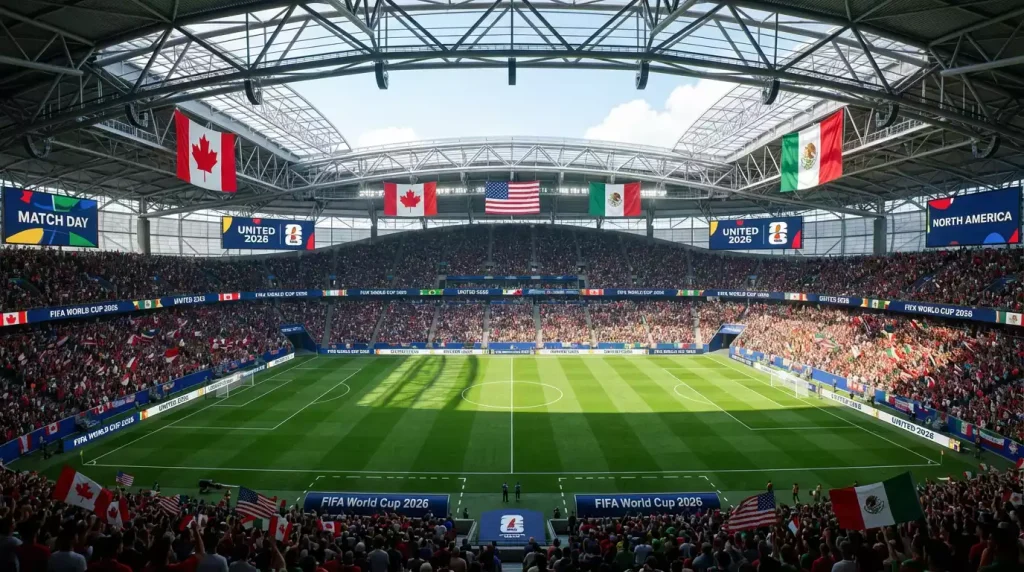
Table of Contents
Over the past few months, my inbox has been flooded with questions about World Cup 2026. From tournament basics to betting regulations, from Canada’s chances to ticket logistics, Canadian fans are hungry for clarity on what promises to be the most significant sporting event ever held on our soil.
I’ve spent nearly a decade analyzing international soccer tournaments, and I can tell you this: the 2026 World Cup will be unlike anything we’ve seen before. The expanded format, the tri-nation hosting arrangement, and Canada’s historic participation as a host nation create a unique set of circumstances that deserve careful explanation.
Below, I’ve compiled the twenty-eight questions I receive most frequently, organized into logical categories. Whether you’re a lifelong soccer fan or someone just discovering the sport through Canada’s remarkable journey, these answers will give you the foundation you need to fully engage with this summer’s festivities.
Tournament Basics
How many teams are competing in World Cup 2026?
World Cup 2026 features forty-eight nations, a significant expansion from the thirty-two team format used since 1998. This increase represents FIFA’s most dramatic restructuring of the tournament since the competition expanded to twenty-four teams in 1982. The larger field means more countries experience the World Cup dream, though it also creates new challenges for scheduling and logistics across three host nations.
What is the group stage format for this tournament?
The forty-eight teams are divided into twelve groups of four teams each. Every team plays three group stage matches, with the top two finishers in each group advancing automatically to the Round of 32. Additionally, the eight best third-place finishers also progress, meaning thirty-two of forty-eight teams reach the knockout rounds. This format balances competitive integrity with the expanded field while ensuring that even a single group stage loss doesn’t necessarily eliminate a team from contention.
When does the tournament begin and end?
The opening ceremony and first match take place on June 11, 2026, when Mexico faces South Africa at the legendary Estadio Azteca in Mexico City. The tournament then unfolds across thirty-nine days, with the final scheduled for July 19, 2026, at MetLife Stadium in East Rutherford, New Jersey. The group stage runs through June 26, followed by knockout rounds that progressively narrow the field to the last two standing.
How many matches will be played in total?
One hundred and four matches will be contested across the tournament, compared to sixty-four in previous editions. The group stage accounts for seventy-two matches, while the knockout rounds contribute thirty-two more. This expanded slate means more opportunities for memorable moments, dramatic upsets, and betting angles that weren’t available in smaller tournaments.
Which countries are hosting the tournament?
Three North American nations share hosting duties in an unprecedented arrangement. The United States hosts the lion’s share with eleven venues and seventy-eight matches, including the final and both semifinals. Mexico contributes three stadiums and thirteen matches, including the tournament opener at Azteca. Canada hosts thirteen matches across two venues: BMO Field in Toronto and BC Place in Vancouver. This tri-nation format means the tournament spans five time zones and offers diverse cultural experiences for traveling fans.
Who are the tournament favorites according to current odds?
Spain enters as the consensus favorite following their commanding Euro 2024 triumph, with most sportsbooks pricing them around +450. England and France follow as the next tier of contenders, both typically found between +550 and +750. Brazil and Argentina complete the top five, with the defending champions generally priced around +800. Germany, Portugal, and the Netherlands occupy the next tier, while host nation USA typically sits around +2500, reflecting both their talent and home advantage. Canada’s odds hover around +15000, positioning Les Rouges as a romantic long shot with genuine upset potential in their group.
Betting in Canada
Is online sports betting legal across Canada?
Yes, single-event sports betting became legal nationwide in August 2021 when Bill C-218 received royal assent. However, the practical landscape varies significantly by province. Each provincial government determines how betting operates within its borders, creating a patchwork of regulatory environments. Some provinces have embraced competitive private markets, while others maintain government-run monopolies. Understanding your specific province’s regulations is essential before placing any wagers on World Cup 2026.
What are the differences between Ontario and other provinces?
Ontario stands alone as Canada’s competitive betting market, launching in April 2022 under the Alcohol and Gaming Commission of Ontario (AGCO). Residents can choose from numerous licensed operators including bet365, BetMGM, FanDuel, Caesars, and DraftKings, each competing for customers with different odds, promotions, and features. Other provinces rely on provincial lottery corporations: PlayNow in British Columbia, Proline+ in Quebec and Ontario, and similar government platforms elsewhere. These provincial options are legal and safe but offer less competitive odds and fewer features than Ontario’s private operators.
When does Alberta’s new betting market launch?
Alberta passed the iGaming Alberta Act (Bill 48) in May 2025, establishing the framework for a competitive private market similar to Ontario’s. The launch is anticipated in the first quarter of 2026, potentially arriving just in time for World Cup betting. Albertans should watch for announcements from the Alberta Gaming, Liquor and Cannabis Commission regarding licensed operators. If the timeline holds, this could transform the betting landscape for western Canadian fans right as the tournament kicks off.
What restrictions exist on betting advertising in Canada?
Advertising regulations have tightened considerably in recent years. Ontario banned the use of celebrities and active athletes in betting advertisements starting in 2024, following concerns about influencer marketing targeting younger demographics. The Canadian Gaming Association’s Code for Responsible Gaming Advertising took effect in January 2026, establishing national standards that include mandatory responsible gambling messaging and transparent disclosure of bonus terms. A federal bill, S-211, is currently under parliamentary review and could impose additional national restrictions. For bettors, these regulations mean clearer information about promotional offers but potentially fewer flashy marketing campaigns.
What odds format do Canadian sportsbooks use?
Decimal odds dominate the Canadian market, appearing as the default on most provincial platforms and many private operators. You might see odds displayed as 2.50, meaning a winning $100 bet returns $250 total (your $150 profit plus your $100 stake). American odds (+150 or -200 format) are also common, particularly on international platforms like bet365 and DraftKings. Most sites allow you to toggle between formats in your account settings. I recommend becoming comfortable with both, as odds comparisons across different sportsbooks often require quick mental conversions.
Canada at World Cup 2026
How did Canada qualify for the tournament?
Canada earned automatic qualification as one of three host nations, bypassing the grueling CONCACAF qualifying campaign. This hosting berth represents a historic moment: Canada’s men hadn’t appeared at a World Cup since 1986, when they failed to score a goal in three group stage defeats. The 2026 tournament offers redemption for that difficult memory, and the automatic berth allowed coach Jesse Marsch to focus entirely on tactical development rather than the stress of qualification matches.
Which teams are in Canada’s group?
Group B pairs Canada with Switzerland, Qatar, and Bosnia and Herzegovina. Switzerland enters as the clear favorite, ranked approximately fifteenth globally and fresh off a Euro 2024 quarterfinal appearance. Qatar, the 2022 host nation that lost all three of their home tournament matches, presents a different challenge as a team seeking redemption after public disappointment. Bosnia and Herzegovina pulled off a stunning upset by defeating Italy in qualification playoffs, bringing veteran striker Edin Džeko and an attack-minded mentality to the group. The draw became considerably more favorable for Canada when Italy fell to Bosnia, removing a European heavyweight from the equation.
Where are Canada’s group stage matches being played?
All three of Canada’s group matches take place on home soil, maximizing the host advantage. The opener against Bosnia and Herzegovina is scheduled for June 12 at BMO Field in Toronto, a venue that has hosted Canada’s most memorable recent international matches. The remaining two group games, against Qatar on June 18 and Switzerland on June 24, both take place at BC Place in Vancouver. This split allows fans across the country to participate while giving the team the energy of passionate home crowds for every match.
What are Canada’s realistic chances of advancing?
Canada’s prospects of reaching the Round of 32 are genuinely strong, perhaps the best opportunity the program has ever had. The combination of home advantage, a favorable group draw following Italy’s elimination, and a talented squad led by Alphonso Davies and Jonathan David creates legitimate hope. Most analysts see Canada battling Switzerland for the group’s top two positions, with Qatar and Bosnia as beatable opponents. Current betting markets reflect this optimism: Canada is priced around -225 to advance from the group, implying roughly a 69% probability. Winning the group is more challenging at +260, but certainly within reach if the team performs to its potential.
Tickets and Travel
How can Canadian fans purchase World Cup tickets?
FIFA manages all official ticket sales through their dedicated 2026 World Cup website. Sales occur in phases, with the initial lottery completed in early 2026 and additional sales windows scheduled closer to the tournament. For Canada’s matches specifically, demand has been extraordinary, so prepare for competitive pricing on the secondary market if official channels sell out. Always purchase through FIFA’s official channels or verified resale partners to avoid counterfeit tickets, which have plagued previous World Cups.
What are the best travel options from Toronto to US venues?
MetLife Stadium in New Jersey, host of the final and several knockout matches, sits approximately an eight-hour drive from Toronto or a ninety-minute flight to Newark Liberty International Airport. Philadelphia’s Lincoln Financial Field offers a similar drive time. For West Coast venues like Seattle’s Lumen Field, the distance from Toronto makes flying essential, with direct flights taking roughly five hours. Many Canadian fans are planning road trips to nearby American venues, creating a festival atmosphere along border crossings during the tournament.
Do Canadians need visas to attend matches in the United States or Mexico?
Canadian citizens can enter the United States without a visa for tourism purposes up to six months, though a valid passport is required. For Mexico, Canadians can stay up to 180 days as tourists without a visa, needing only a valid passport and completion of an immigration form upon arrival. Given the expected crowds and potential for border delays during the tournament, I strongly recommend ensuring your passport is valid well beyond July 2026 and allowing extra time for any border crossings.
What accommodation options exist near Canadian venues?
Both Toronto and Vancouver offer extensive hotel infrastructure, though prices will surge during Canada’s matches. In Toronto, downtown hotels provide excellent transit access to BMO Field via the 509 or 510 streetcar lines, while Airbnb options in Liberty Village offer proximity to the stadium. Vancouver’s BC Place sits in the heart of downtown, making most central hotels walkable. I recommend booking accommodation as early as possible once match dates are confirmed, as the combination of World Cup demand and peak tourist season will strain availability in both cities.
Betting Markets Explained
What is a moneyline bet in soccer?
A moneyline bet is the simplest wager: you’re picking one team to win the match outright. Unlike some sports where ties aren’t possible, soccer’s frequent draws mean moneyline markets typically offer three options: Team A to win, Team B to win, or the draw. The draw often presents interesting value, as casual bettors tend to underestimate its frequency in international tournament play. When analyzing moneylines, remember that knockout round matches require a winner, so those markets function differently than group stage games.
How do over/under totals work for World Cup matches?
Over/under markets let you bet on the combined goals scored by both teams. A line of 2.5 goals means you’re betting whether the match will feature three or more goals (over) or two or fewer goals (under). World Cup group stages historically produce fewer goals than club competitions, as teams play cautiously to avoid early elimination. Knockouts tend to see even tighter defending, though extra time can push totals higher. Understanding these tournament dynamics helps identify when sportsbooks misprice totals based on team reputations rather than tactical realities.
What are the most popular futures markets for World Cup betting?
Outright winner represents the marquee futures market, allowing you to bet on which nation lifts the trophy before the tournament begins. Other popular futures include Golden Boot (top scorer), Golden Ball (best player), and group winner markets. More granular options include exact finish positions, top scorer by nationality, and proposition bets on milestones like total goals or red cards throughout the tournament. Futures typically offer better value than match-by-match betting, as you’re being compensated for the risk of holding a position across multiple weeks.
Can I bet on individual player performances?
Player proposition markets have exploded in popularity, covering everything from goalscorers to assists to shots on target. You can bet whether Kylian Mbappé will score in a specific match, how many goals Harry Kane will net across the tournament, or whether Alphonso Davies will record an assist against Bosnia. These markets require careful research into playing time, set-piece roles, and tactical systems. The best value often appears on secondary players whose contributions get overlooked by markets focused on superstar names.
What is a parlay and should I consider them for World Cup betting?
A parlay (called an accumulator in British terminology) combines multiple selections into a single bet, with all legs needing to win for the bet to pay. The appeal is obvious: linking several favorites can generate significant returns from modest stakes. However, the math works against you. Sportsbooks build their edge into each leg, meaning that edge compounds exponentially across your parlay. For the World Cup, I recommend limiting parlays to two or three carefully researched legs rather than building elaborate six-team accumulators that look attractive but rarely hit.
Schedule and Venues
What time zone considerations affect Canadian viewers?
The tri-nation hosting arrangement works exceptionally well for Canadian fans. Matches will kick off primarily in afternoon and evening time slots across North American time zones, meaning no early morning wake-ups required for group stage action. Eastern Time viewers will see matches ranging from roughly noon to 9 PM local time, while Pacific Time fans can expect kicks from 9 AM to 6 PM. Compare this to previous World Cups in Russia, Qatar, or Brazil, where Canadian fans endured significant time differences, and you’ll appreciate how favorable this tournament’s scheduling truly is.
Which stadium hosts the World Cup final?
MetLife Stadium in East Rutherford, New Jersey, hosts the championship match on July 19, 2026. The venue, home to both the New York Giants and New York Jets of the NFL, can accommodate over 80,000 fans in World Cup configuration. Located just miles from Manhattan, it offers the global visibility FIFA desires for its showcase event. For Canadian fans, MetLife represents one of the closer American venues, reachable by car from Toronto in approximately eight hours or via a short flight to Newark.
How many matches will each host country stage?
The United States dominates the schedule with seventy-eight matches across eleven venues, including the final, both semifinals, two quarterfinals, and a Round of 16 game. Mexico hosts thirteen matches at three venues, including the prestigious tournament opener at Azteca. Canada also stages thirteen matches across Toronto and Vancouver, with all of them occurring during the group stage. This distribution reflects stadium capacity, infrastructure, and commercial considerations rather than any reflection on the host nations’ football cultures.
Are there any matches scheduled specifically for Canadian time zones?
Yes, FIFA has specifically scheduled matches at Canadian venues to maximize local viewership and stadium atmosphere. Canada’s three group matches all kick off at times convenient for both coasts: the Bosnia match at 3 PM Eastern (noon Pacific), and the Qatar and Switzerland matches at 6 PM Eastern (3 PM Pacific). Additional matches at BMO Field and BC Place follow similar patterns. The intent is clear: FIFA wants packed stadiums and engaged television audiences, and the scheduling reflects that priority.
Still Have Questions?
This FAQ covers the most common inquiries I receive, but World Cup 2026 presents such a unique situation that new questions emerge constantly. The expanded format, the North American hosting arrangement, and Canada’s involvement as both host and competitor create unprecedented circumstances that even veteran analysts are still unpacking.
For deeper exploration of betting strategies, odds analysis, and match-by-match breakdowns, our comprehensive coverage continues throughout the tournament. The World Cup 2026 Betting Guide provides detailed tactical frameworks for maximizing your edge across all forty-eight teams and one hundred and four matches.
This is Canada’s moment. Understanding the tournament fully allows you to appreciate it completely, whether you’re watching from the stands in Toronto, cheering from a Vancouver pub, or following every match from your living room. June 11 approaches quickly, and with it arrives the biggest soccer event our country has ever hosted.
