
Senegal at World Cup 2026: Africa’s Rising Power
 Available in US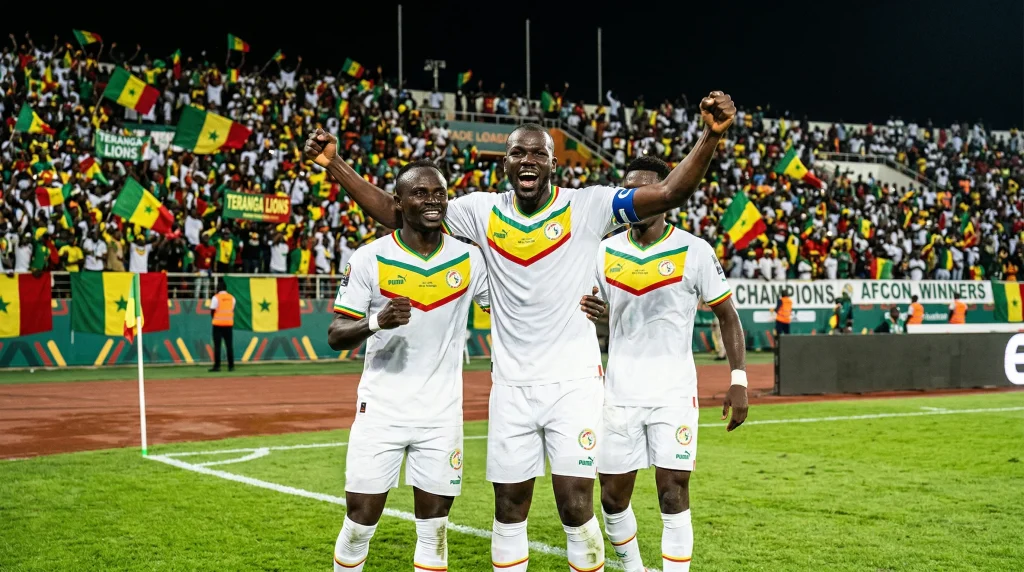
Table of Contents
When Senegal lifted the Africa Cup of Nations trophy in 2022, it marked culmination of development that Premier League observers had witnessed across multiple seasons. The Teranga Lions roster reads like an English football scouting report — Liverpool, Chelsea, Everton, and other top-flight clubs have employed Senegalese talent that now converges at World Cup 2026. This Premier League concentration creates a squad prepared for the intensity that tournament football demands.
Senegal World Cup 2026 arrives in Group I with France — the assignment that only genuine contenders receive. The Teranga Lions cannot avoid elite opposition; they must confront it directly. This challenge reveals whether Senegalese football has reached sustainable elite level or whether the AFCON triumph and 2022 World Cup knockout appearance represented isolated peaks.
I’ve tracked African football’s evolution toward European technical standards while maintaining the athletic qualities that define African playing styles. Senegal embodies this hybrid approach better than most continental rivals. The tactical sophistication absorbed through Premier League minutes combines with the physical capacity and collective spirit that African football emphasizes. The resulting product can compete with anyone on favorable days.
AFCON Champions on the World Stage
The 2022 Africa Cup of Nations victory validated Senegalese football’s emergence from perennial contender to continental champion. The tournament progression — competitive group stage, difficult knockout path, final victory on penalties against Egypt — demonstrated the composure under pressure that previous Senegalese generations sometimes lacked.
What distinguished that AFCON triumph involved the collective quality that supplemented individual stars. While Sadio Mané’s absence through injury created uncertainty, other players elevated their contributions. This depth and adaptability — the ability to win without depending entirely on single players — reflects squad construction that sustains through inevitable personnel disruptions.
The World Cup 2022 performance confirmed that AFCON success wasn’t domestically isolated. Senegal reached the knockout rounds before falling to England in competitive Round of 16 defeat. The margin — narrow enough to suggest competitiveness, clear enough to confirm English superiority — provided realistic assessment of Senegalese ceiling against elite opposition.
Squad Analysis: Premier League Talent
Senegalese squad construction for World Cup 2026 reflects remarkable Premier League concentration. Multiple starting positions feature players who compete weekly in English football’s demanding environment. This exposure provides tactical education and physical conditioning that African domestic leagues cannot replicate.
Goalkeeping has evolved through competitive European opportunities. The position provides reliability that allows defensive structures to function without requiring heroic intervention. Édouard Mendy’s Chelsea career established elite credentials that subsequent seasons have maintained.
Defensive personnel combines Premier League experience with players developed through French and other European leagues. The center-back positions feature aerial presence and recovery speed. Full-back options balance defensive responsibility with attacking contribution. The overall defensive organization reflects coaching emphasis on collective structure.
Midfield construction emphasizes physicality and progressive passing. The profiles reflect Premier League demands — covering ground, competing aerially, contributing defensively and offensively. This complete midfield approach suits the intensity that World Cup football generates.
The depth beyond starting eleven has expanded through development pathways that produced options at various positions. Players who can contribute from substitute appearances offer different profiles for tactical adjustments late in matches. This depth creates tournament resilience that previous Senegalese squads sometimes lacked when key players faced fitness issues or accumulated yellow cards.
Attacking options beyond headline names provide tactical variety. Some offer pace behind defenses; others provide target presence for direct play; others bring creative vision for combination attacks. This diversity allows tactical adjustments that respond to opponent defensive structures rather than requiring identical approaches regardless of context. The variety that modern attacking football requires exists within Senegalese personnel options.
Key Players to Watch
The Senegalese attacking options have developed through competitive European environments. The combination of pace, power, and technical quality creates matchup problems that organized defenses struggle to solve through positional adjustments alone. This attacking variety provides tactical flexibility that single-profile systems cannot offer.
The Premier League education these players receive transfers directly to international football. The intensity, the defensive attention, the pace of play — all match World Cup demands because English football operates at similar levels. Senegalese players arrive at tournaments pre-adapted rather than requiring adjustment periods that domestically-based competitors sometimes need.
Leadership has emerged through players who’ve accumulated experience across tournaments. Their composure under pressure, their communication, and their example through effort provide stability that younger teammates can rely upon. This veteran presence anchors Senegalese ambitions without requiring those individuals to produce exceptional individual performances.
Group I Preview: France, Norway, Iraq
Senegal’s group draw presented both challenge and opportunity. France represents the elite opposition that tests Senegalese capability against genuine contenders. Norway brings Erling Haaland’s individual threat. Iraq returns to World Cup football after 40-year absence. The group structure means advancement likely requires results against France that competitive history suggests possible.
The France versus Senegal fixture determines group positioning for both teams. French quality suggests favorites, but Senegalese physicality and counter-attacking threat could produce competitive match. The Premier League education that Senegalese players receive provides familiarity with French players they face in domestic competition. This relationship cuts both ways — opponents understand each other through weekly Premier League observation.
Norway’s presence means Erling Haaland — individual threat that defensive planning must address specifically regardless of surrounding quality. Senegalese defenders have experience against elite strikers through Premier League competition. Managing Haaland’s movement and finishing requires concentration across 90 minutes without single lapse that produces decisive goal.
Iraq’s return to World Cup football after four decades provides ceremonial significance without threatening Senegalese advancement. The Lions should secure comfortable victory while rotating players for knockout readiness.
The scheduling of Group I fixtures affects tactical priorities. If the France match occurs early, subsequent fixtures against Norway and Iraq may proceed with advancement already determined or denied. The emotional investment of facing France — former colonial power with complicated historical relationship — adds dimension that ordinary group fixtures cannot replicate. Managing these psychological factors requires coaching attention beyond tactical preparation.
Senegal Odds and Betting Picks
Current World Cup 2026 odds place Senegal around +10000, reflecting both African achievement and the quality gap to tournament favorites. This pricing positions Senegal as capable group-stage competitor but not deep advancement threat. The market asks whether AFCON success translates to World Cup progression against elite opposition.
My assessment places Senegal’s actual probability of reaching knockout rounds around 35-40%, translating to fair odds between +150 and +185. At +10000 for outright victory, you’re paying for possibility that requires extraordinary circumstances. Value lies in group-stage propositions.
Group I advancement pricing depends on France fixture expectations. If markets offer Senegal advancement around +200, value exists given their quality relative to Norway and Iraq.
Teranga Lions’ Potential
Senegal enters World Cup 2026 carrying AFCON champion credentials and Premier League talent concentration. The challenge in Group I — facing France directly — tests whether Senegalese football has reached sustainable competitiveness or whether continental success represents ceiling.
The Premier League education provides foundation that previous African generations lacked. The physical preparation, the tactical sophistication, and the composure under pressure all reflect weekly competition at elite levels. This preparation positions Senegal as Africa’s best hope for deep World Cup progression.
My projection places Senegal competing for knockout-round qualification through competitive results against France and comfortable victories over Norway and Iraq. Whether they advance depends on the France fixture specifically. Among the 48 teams competing, the Teranga Lions represent African football’s evolution; their World Cup 2026 performance demonstrates how far that evolution has progressed.
What African football needs from Senegal involves not merely results but the manner of achieving them. Competitive performances against France — regardless of outcome — demonstrate that African nations can match European elite through organization and preparation rather than depending on fortunate circumstances. This validation matters for continental pride and for practical implications regarding respect that African football receives in future tournament preparations and media coverage.
