
Uruguay at World Cup 2026: La Celeste’s North American Challenge
 Available in US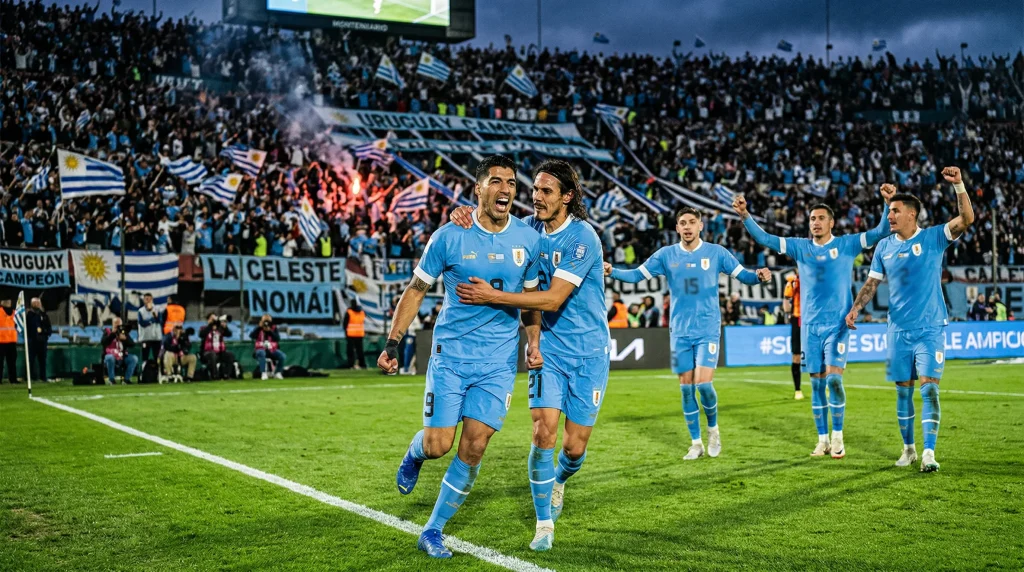
Table of Contents
Two World Cup titles hang in Uruguayan football’s past — 1930 and 1950, when La Celeste stood atop the global game. The decades since have brought semifinals, quarterfinals, and the perpetual reputation as small nation that punches above its demographic weight. Three and a half million people producing competitive international football generation after generation. The Uruguayan formula — technical skill fused with physical intensity — persists across eras.
Uruguay World Cup 2026 arrives with generational transition nearly complete. The era of Suárez and Cavani has yielded to Darwin Núñez and Federico Valverde. The new protagonists have established themselves at European elite — Liverpool and Real Madrid respectively — bringing credentials that validate continued Uruguayan competitiveness. The question involves whether the young core can produce tournament results that match their club-level achievements.
I’ve tracked Uruguayan football through the cycles of renewal that sustain their international relevance. Each generation fears it cannot match predecessors; each generation eventually proves competitive through the garra charrúa — the fighting spirit that defines Uruguayan sporting identity. The current version must demonstrate this quality against Group H opponents that include tournament favorite Spain.
Two-Time Champions in Transition
Uruguay’s World Cup history deserves appreciation beyond the two ancient titles. The 2010 semifinals, featuring Diego Forlán’s brilliance and Luis Suárez’s infamous handball against Ghana, demonstrated that modern Uruguayan football could produce tournament runs. The subsequent quarter-final appearances confirmed sustained competitiveness that population size shouldn’t allow.
The transition from the Suárez-Cavani era to the Núñez-Valverde era proceeded more smoothly than skeptics anticipated. The new attacking partnership immediately produced goals while maintaining the physical intensity that opponents expect from Uruguayan teams. This continuity of identity across generational change reflects the cultural emphasis on fighting spirit that transcends specific personnel.
What defines current Uruguayan football involves the balance between technical sophistication and traditional intensity. The European-based players bring tactical understanding from elite club environments. The Uruguayan identity provides the mentality that sustains effort when matches become physical battles. This combination creates teams that opponents dislike facing regardless of quality differentials.
CONMEBOL Qualifiers: Uruguay’s Path
South American qualification for World Cup 2026 proceeded competitively for Uruguay without the dominance their talent might suggest. The CONMEBOL path features altitude challenges, hostile atmospheres, and opponents who understand Uruguayan style through regional familiarity. This competitive environment provides tournament preparation that comfortable qualification cannot replicate.
The altitude match in Bolivia tested Uruguayan resilience in conditions that defeat unprepared teams. These fixtures matter beyond point accumulation — they simulate physical and environmental challenges that World Cup venues sometimes present. Players who succeed at 3,600 meters carry confidence into any subsequent atmosphere.
What qualification revealed involved the emerging partnerships that will define Uruguayan football through 2026 and beyond. The combinations between Núñez and Valverde, the defensive partnerships, the midfield coordination — all developed through competitive minutes that friendly fixtures cannot replicate.
Squad Analysis: New Generation Rising
Uruguayan squad construction for World Cup 2026 reflects transition’s completion. The young stars have become established leaders. The supporting cast has accumulated experience through competitive seasons. The blend creates squad capable of tournament progression without relying on aging players whose peaks have passed.
Goalkeeping provides reliability through options developed in competitive European and South American environments. The position offers competence that defensive structures require without representing exceptional strength.
Defensive personnel combines experienced organization with youthful energy. The center-back positions feature players who’ve developed through competitive minutes at European clubs. Full-back options balance defensive responsibility with attacking contribution. The overall defensive profile suggests solidity that Uruguayan tournament success has required.
Midfield construction centers on Valverde’s dynamic presence. His box-to-box capabilities — covering ground, contributing defensively, arriving dangerously in attack — create matchup problems that single-role midfielders cannot produce. The supporting options provide different profiles that complement his energy.
The depth beyond starting eleven has improved through development cycles that produced competitive options at various positions. Players who can contribute from substitute appearances offer different profiles for tactical adjustments late in matches. This depth creates tournament resilience that single-gear teams cannot sustain across seven potential matches.
Attacking options beyond Núñez provide tactical variety that head coaches require. Some offer pace behind defenses; others provide target presence for direct play; others bring creative vision for combination attacks. This diversity allows tactical adjustments that respond to opponent defensive structures rather than requiring identical approaches regardless of context.
Darwin Núñez and Federico Valverde
Darwin Núñez’s Liverpool career has produced the goal-scoring credentials that international football demands. His movement, his physical presence, and his finishing variety create constant threat that defensive planning must address specifically. The raw chaos that characterized his early career has refined into more consistent output without losing the unpredictability that makes him dangerous.
At 27 during World Cup 2026, Núñez enters his athletic prime with accumulated Premier League experience. The education that English football provides — physical intensity, match congestion, defensive attention — has refined abilities that Uruguayan development began but couldn’t complete alone.
Federico Valverde’s Real Madrid career has established him among the world’s most complete midfielders. His athletic capacity covers ground that two players might struggle to match. His technical quality maintains composure under pressure. And his finishing ability — demonstrated through crucial goals in Champions League finals — provides goal threat from deeper positions.
The Núñez-Valverde partnership represents Uruguayan football’s attacking future. Their combination provides the physical and technical quality that Suárez and Cavani demonstrated at their peaks. Whether they can produce equivalent tournament moments remains to be demonstrated, but the tools exist for elite-level output.
Group H Preview: Spain, Saudi Arabia, Cape Verde
Uruguay’s group draw presented clear hierarchy. Spain represents the tournament favorite that Uruguay must match or defeat to claim first place. Saudi Arabia and Cape Verde offer opposition that Uruguayan quality should handle comfortably. The group structure means Uruguay likely advances regardless of Spain result, but positioning matters for knockout seeding.
The Spain versus Uruguay fixture represents Group H’s marquee match. Spanish possession dominance against Uruguayan physical intensity creates tactical contrast that produces compelling football. Uruguay’s best hope involves disrupting Spanish rhythm through aggressive pressing, forcing turnovers that transition into scoring opportunities.
Saudi Arabia’s 2022 victory over Argentina created shock that hasn’t translated into sustained competitiveness. Their organized approach can frustrate opponents expecting easy domination, but Uruguayan physical intensity should prove decisive over 90 minutes.
Cape Verde participates in their first World Cup, representing Africa’s expanded allocation. Uruguay should rotate against Cape Verde, preserving fitness for knockout rounds while securing comfortable victory.
The scheduling of Group H fixtures affects tactical priorities. If Spain proves dominant in early matches, Uruguay may face reduced pressure when they meet — first place potentially decided regardless of outcome. Alternatively, competitive early results could make the Spain fixture genuinely decisive. This uncertainty shapes preparation without determining it.
Uruguay Odds: Underdog Value
Current World Cup 2026 odds place Uruguay around +6000, reflecting both historical pedigree and the quality gap to tournament favorites. This pricing positions Uruguay as capable knockout-round participant but not championship threat. The market asks whether the new generation can produce tournament runs that predecessors achieved.
My assessment places Uruguay’s actual probability of reaching quarter-finals around 20-25%, translating to fair odds between +300 and +400 for that achievement. At +6000 for outright victory, you’re paying for possibility that requires favorable circumstances. Value lies in advancement propositions.
Group H advancement should price around -300 based on quality relative to Saudi Arabia and Cape Verde. Spain complicates first place, but Uruguay should accumulate sufficient points for advancement.
Garra Charrúa Lives
Uruguay enters World Cup 2026 carrying two-time champion legacy and emerging generation promise. The transition from Suárez-Cavani to Núñez-Valverde has produced competitive continuity that skeptics doubted possible. The fighting spirit that defines Uruguayan sporting identity persists through personnel change.
The Group H challenge against Spain represents the measuring stick for Uruguayan ambitions. Matching or defeating the tournament favorite would announce that the new generation has arrived. Comfortable advancement past Saudi Arabia and Cape Verde merely confirms baseline expectations.
My projection places Uruguay in the knockout rounds with genuine chance at quarter-final advancement. The Spain match determines group positioning; bracket draws determine knockout ceiling. Among the 48 teams competing, La Celeste’s tradition demands competitive effort regardless of opponent quality. The new generation must demonstrate they’ve inherited that tradition.
What seems certain is that Uruguayan football’s cultural identity persists through generational change. The garra charrúa — the fighting spirit — that defined previous eras cannot be taught through coaching alone. It transmits through cultural emphasis, through expectations that Uruguayan footballers embrace rather than resent. The current generation carries this inheritance; World Cup 2026 provides opportunity to demonstrate its continued vitality.
