
Portugal at World Cup 2026: The Post-Ronaldo Era Begins
 Available in US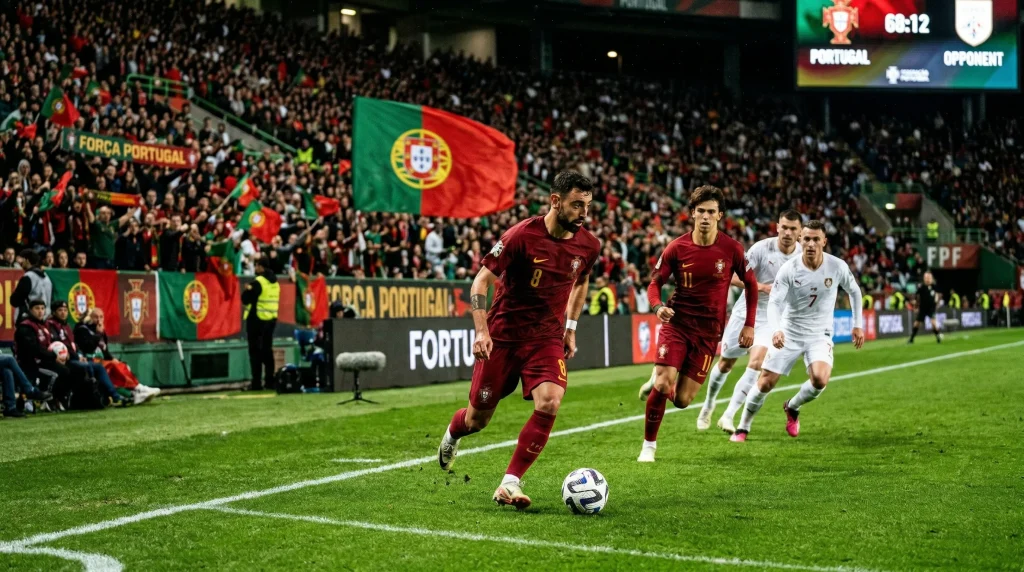
Table of Contents
For twenty years, Portuguese football revolved around a single gravitational center. Cristiano Ronaldo’s goals, his intensity, his physical defiance of aging defined how the world viewed A Seleção. Now, at 41 years old, his national team influence has faded to ceremonial status. The question that haunted Portuguese football’s future has arrived as present reality: who fills the void?
Portugal World Cup 2026 represents the first major tournament where Ronaldo’s presence isn’t assumed or expected. The Saudi Pro League chapter, while lucrative, removed him from elite European competition that national team selection traditionally demands. Whether he receives a squad spot as legacy acknowledgment or whether Roberto Martínez builds entirely toward the future determines Portugal’s tactical identity for the tournament.
I’ve analyzed Portuguese teams throughout the Ronaldo era, including the Euro 2016 triumph that seemed to validate everything. What’s remarkable about the current squad is the depth of attacking talent that accumulated while Ronaldo commanded attention. Rafael Leão, João Félix, Diogo Jota, and emerging prospects create offensive possibilities that previous Portuguese generations lacked. The transition, if managed correctly, could unleash rather than diminish A Seleção’s attacking potential.
New Chapter: Portugal After the Ronaldo Era
Every era’s end creates narrative uncertainty. The players who defined previous success cannot replicate it forever; the system that worked eventually requires evolution. Portuguese football faces this inflection point with both trepidation and possibility. The Ronaldo dependency shaped tactical choices, squad dynamics, and public expectations for two decades. Liberating from those constraints allows fresh approaches previously unavailable.
Roberto Martínez’s management reflects this transitional moment. His tenure has featured gradual reduction of Ronaldo’s involvement, integrating younger players into central roles while maintaining diplomatic relationships with the legend. This careful navigation required political skill alongside tactical competence. The process of de-centering without alienating demanded sensitivity that not all managers possess.
The attacking options now available create selection headaches that Martínez welcomes. Rafael Leão’s Milan emergence provides left-wing threat that demands defensive attention. João Félix’s creative unpredictability adds dimensions that structured opponents cannot easily contain. Diogo Jota’s movement and finishing from various positions diversify goal-scoring responsibility. These options existed alongside Ronaldo; they now replace him.
The question of whether Ronaldo receives a World Cup 2026 roster spot remains unresolved. His goal-scoring instincts haven’t disappeared despite physical decline. His experience in tournament pressure situations provides value that statistics cannot capture. But his presence also shapes tactical decisions in ways that may not optimize the current squad’s strengths. Martínez must weigh legacy considerations against competitive optimization.
The psychological aspect of moving beyond Ronaldo affects players differently. Some will embrace the freedom to express themselves without deferring to a legend’s needs. Others may miss the security of knowing that a proven match-winner exists for decisive moments. Managing these varying responses requires Martínez to understand individual personalities and motivations — coaching that extends beyond tactical instruction into psychological support.
Portuguese Qualifiers: Smooth Sailing
European qualification for World Cup 2026 confirmed Portuguese quality without revealing much about their ultimate ceiling. The group featured Slovakia, Ireland, Luxembourg, and Azerbaijan — opponents who provided competitive minutes without genuine threat to Portuguese advancement. Eight wins from eight matches demonstrated professional efficiency rather than tournament-level intensity.
What qualifying revealed was the goal-scoring distribution that post-Ronaldo football enables. Multiple players contributed to the tally rather than single-player dependency. This distributed threat creates tactical problems for opponents who cannot focus defensive resources on stopping one individual. The attacking balance that emerged through necessity may prove advantageous once tournament football begins.
Defensive stability during qualification merited attention alongside attacking production. Portugal conceded minimal goals across the campaign, suggesting organizational improvements that Martínez prioritized. Clean sheets compound the value of scoring opportunities, creating comfortable margins that reduce pressure on finishing conversion. This defensive foundation provides insurance when attacking brilliance doesn’t immediately materialize.
The integration of younger players during qualification accelerated development timelines. Beyond established stars, additional options earned competitive minutes that friendly fixtures cannot replicate. By tournament time, the next generation will have accumulated experience in meaningful matches. This depth-building creates tournament resilience that Portuguese squads have sometimes lacked when injuries or suspensions affected key players.
The Squad: Depth and Quality
Portuguese squad construction for World Cup 2026 reflects both transition and abundance. The older generation — players who experienced Euro 2016 triumph and subsequent tournament disappointments — provides experience and standards. The emerging generation provides the energy, technical quality, and hunger that tournament football demands. The blend creates potential synergy if Martínez manages the integration correctly.
Goalkeeping features established quality through Diogo Costa, whose Porto performances have attracted interest from Europe’s elite clubs. His shot-stopping reliability and distribution quality match modern goalkeeper requirements. The position that Portugal has filled competently for decades continues to produce options that don’t represent weakness relative to tournament competitors.
Defensive personnel has evolved through natural transition. Center-back partnerships now feature younger players who bring pace and aggression that previous options sometimes lacked. Full-back positions combine attacking intent with defensive awareness in profiles that modern systems demand. The overall defensive age profile suggests players entering peak years rather than managing decline — energy and recovery speed that accumulated tournament matches require.
Midfield depth reaches almost absurd levels. Bruno Fernandes’ creativity from deeper positions provides progressive passing that unlocks defenses. Vitinha and Rúben Neves offer different profiles — one more dynamic, one more controlling — that suit different tactical requirements. João Palhinha’s defensive screening protects the back line while allowing more attacking midfielders to push forward. The options available create selection dilemmas that reflect squad quality rather than positional weakness.
The Next Generation
Rafael Leão’s emergence as Portugal’s primary attacking threat occurred alongside Ronaldo’s decline rather than because of it. His development at Milan produced a complete left winger capable of beating defenders through pace, power, and technical quality. The combination of attributes creates matchup problems that few defenders can solve individually. Leão demands double-teaming, which frees teammates for opportunities elsewhere.
At 26 during World Cup 2026, Leão enters his physical prime with accumulated experience from Champions League and Serie A competition. The consistency questions that plagued his earlier career have diminished through maturation and coaching intervention. His performances now maintain levels across entire seasons rather than fluctuating between brilliance and anonymity. This reliability transforms potential into production.
João Félix represents different attacking qualities. His creative unpredictability, his ability to drift between positions and find space in unusual areas, adds dimensions that structured systems cannot easily accommodate. Where Leão destroys through directness, Félix destabilizes through irregularity. Opponents cannot prepare for what he does because he doesn’t repeat patterns that scouting can anticipate.
Diogo Jota’s Liverpool career has developed finishing instincts that few Portuguese forwards historically matched. His movement in the box, his timing of runs, and his variety of finishing techniques create goal-scoring reliability from multiple positions. Jota can operate centrally or wide, as primary striker or supporting runner. This versatility adds tactical options that rigid players cannot provide.
Bruno Fernandes and Experience
The senior core that anchors Portuguese ambitions features players who’ve accumulated experience at Europe’s highest levels. Bruno Fernandes’ Manchester United tenure, despite the club’s struggles, developed his game in competitive environments that less demanding leagues cannot replicate. His creative output, his set-piece delivery, and his competitive intensity provide leadership qualities that young squads require.
Fernandes’ positional flexibility allows deployment in multiple formations. He can operate as number ten, as box-to-box midfielder, or as deeper playmaker depending on tactical requirements. This versatility creates options for Martínez that specialized players cannot match. When specific opponents demand particular approaches, Fernandes adapts rather than restricting system possibilities.
The captaincy transition from Ronaldo represents symbolic and practical leadership evolution. Fernandes’ vocal personality, his willingness to demand standards from teammates, and his example through effort mirror qualities that effective captains demonstrate. Whether he wears the armband officially or simply leads through presence, his influence shapes squad culture in ways that statistics don’t capture.
Roberto Martínez’s Attack-First Philosophy
The tactical identity that Martínez has developed prioritizes attacking expression over defensive caution. Portuguese teams under his management seek to dominate possession, create numerous chances, and outscore opponents rather than grinding out minimal victories. This approach suits the personnel available — attacking abundance combined with defensive competence suggests maximizing offensive output makes sense.
The formation typically features 4-3-3 or variations that maintain three forward positions. The wide players stay high to stretch defenses horizontally while the central striker occupies center-backs. Midfield triangles control tempo through possession phases, with full-backs providing width when wingers move narrow. The system creates overloads in attacking areas that opponents struggle to match without abandoning defensive shape.
Pressing intensity under Martínez has increased from previous Portuguese iterations. The triggers that initiate pressure, the coordination between lines, and the recovery patterns when pressing fails all reflect deliberate coaching rather than chaotic chasing. This organized approach creates turnovers in dangerous areas more frequently than earlier Portuguese systems achieved.
Defensive organization receives attention despite attacking emphasis. Martínez understands that tournament football often requires low-scoring matches against quality opponents. The ability to defend competently when attacking dominance isn’t available distinguishes genuine contenders from hopeful participants. Portuguese defensive structure has improved without sacrificing the offensive intent that defines the team’s identity — a balance that Spain has mastered under De la Fuente.
Set-piece preparation has become a particular focus under Martínez’s coaching staff. Bruno Fernandes’ delivery quality and the aerial presence of Portuguese defenders create scoring opportunities from dead-ball situations. Both attacking routines and defensive assignments receive detailed attention that converts marginal situations into goals scored and prevents goals conceded. These details compound across tournament progression.
Group K Preview: Colombia, Uzbekistan, DR Congo
Portugal’s group draw provided manageable opposition without completely avoiding competitive challenge. Colombia represents South American quality that demands respect. Uzbekistan and DR Congo participate through expanded format allocation, creating substantial quality gaps that Portugal should exploit comfortably.
Colombia’s resurgence under current management has restored their competitive status after a period of relative decline. James Rodríguez’s continued influence, combined with emerging talents, creates attacking threat that unprepared opponents underestimate. Their physical profile and tactical discipline will test Portuguese patience — quick solutions may not appear against organized Colombian defense.
The Portugal versus Colombia fixture represents Group K’s marquee match. Both teams should advance comfortably, but group positioning depends on this head-to-head result. Winning allows lineup rotation in subsequent fixtures; losing creates pressure to accumulate goal difference against lesser opponents. The tactical approach Martínez selects for this match will reveal his tournament management philosophy.
Uzbekistan makes their World Cup debut through Asian qualification success. Their squad development has accelerated through increased European exposure for key players, but the gap to elite opposition remains substantial. Portugal should rotate against Uzbekistan, preserving fitness while still securing comfortable victory.
DR Congo similarly participates through Africa’s expanded allocation. Their squad features several players with European league experience, but overall depth cannot challenge Portuguese quality. The fixture provides opportunity for fringe players to demonstrate World Cup readiness while first-choice options rest ahead of knockout rounds.
The scheduling of Group K matches benefits Portuguese preparation strategy. Facing Colombia early establishes group hierarchy, allowing subsequent fixture management with clearer advancement pictures. The ability to rest key players in later group matches while maintaining competitive output through depth separates tournament-ready squads from those with shallow rosters. Portugal’s depth should enable this strategic rotation.
Portugal Odds Analysis
Current World Cup 2026 odds place Portugal around +1400, positioning them in the tier below primary favorites. This pricing reflects both the attacking talent available and the uncertainty surrounding post-Ronaldo identity. The market essentially asks: can Portugal function at championship level without the player who defined their recent tournament successes?
My assessment places Portugal’s actual championship probability around 6-8%, translating to fair odds between +1150 and +1570. At +1400, you’re getting approximately fair value — perhaps slight edge if Leão performs at Ballon d’Or levels and the attacking depth delivers consistently. The transition uncertainty creates opportunity for those confident in Portuguese evolution.
Group K advancement should price around -550 based on the quality differential between Portugal and their opponents. Colombia complicates certainty, but Portugal should accumulate sufficient points across three matches. Portugal to win Group K at approximately -130 captures the expectation that the Colombia fixture proves decisive.
The more speculative proposition involves Portugal reaching the semi-finals. At approximately +300, this captures tournament progression possibility without requiring championship to generate return. Portugal’s attacking quality could produce deep runs if knockout draws cooperate. The price reflects appropriate risk-reward for a team capable of matching any opponent on a given day.
Player markets offer additional angles worth consideration. Rafael Leão’s tournament involvement, Bruno Fernandes’ assist totals, and Portugal’s group-stage goals all provide positions where assessment might differ from market consensus. The attacking freedom that Martínez’s system provides should generate statistical output that favors offensive players. Individual props capture this potential without requiring championship-level achievement.
Value Markets for Portugal
I’m taking Portugal to advance from Group K and Colombia to finish second as the exact group outcome at +160. This parlay captures the most likely scenario while offering better value than backing Portugal alone at heavy chalk. Colombia’s quality should see them past Uzbekistan and DR Congo even if Portugal defeats them head-to-head.
For individual match betting, Portugal versus Colombia presents the most actionable group fixture. The head-to-head spread likely opens around Portugal -0.5, capturing the expectation of narrow Portuguese victory. Taking Portugal on the moneyline at approximately -150 offers reasonable return for moderate risk.
Rafael Leão’s tournament goal total deserves attention at current odds. If Portugal advances to knockout rounds, Leão’s involvement should accumulate through the attacking freedom Martínez’s system provides. Over 2.5 goals for Leão at approximately +120 seems achievable given group-stage fixtures against modest defensive opposition. See our full Golden Boot odds analysis for more on Leão’s candidacy.
Ready for the Spotlight
Portugal enters World Cup 2026 at a fascinating transitional moment. The Ronaldo era that defined Portuguese football for two decades has concluded in everything but official announcement. The generation that accumulated alongside his presence now inherits responsibility for national team success. Whether they embrace that weight or crumble beneath it determines Portugal’s tournament ceiling.
The attacking depth that Martínez possesses creates genuine optimism about Portuguese potential. Leão, Félix, Jota, and supporting options provide goal-scoring variety that previous Portuguese squads lacked even during their most successful periods. If these pieces combine effectively under tournament pressure, Portugal could threaten any opponent they encounter.
My tournament prediction places Portugal in the quarter-finals with realistic path to deeper advancement if matchups cooperate. The transition period carries risk that settled programs don’t face, but it also creates opportunity for breakthrough performances from players no longer operating in another’s shadow. Among all 48 teams, Portugal’s ceiling may be the hardest to project. The spotlight now shines on the next generation. Their response determines how this chapter of Portuguese football is remembered.
