Morocco at World Cup 2026: Can the Atlas Lions Repeat Their Magic?
 Available in US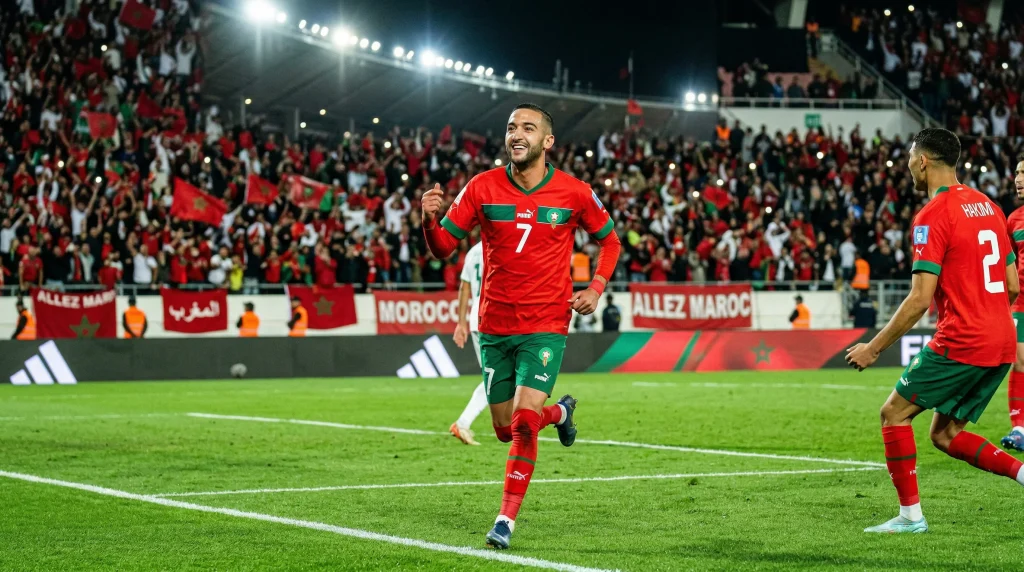
Table of Contents
December 10, 2022 — Morocco defeats Portugal 1-0 to become the first African nation in World Cup history to reach the semi-finals. The Atlas Lions, dismissed as fortunate after group stage success against Belgium, proved their knockout victories over Spain represented genuine quality rather than variance. A continent celebrated as Morocco wrote history that seemed impossible before the tournament began.
Morocco World Cup 2026 carries expectations that no African nation has previously shouldered entering a World Cup. The semi-final precedent transforms them from hopeful participants into genuine contenders. The question that defines their campaign isn’t whether Morocco can compete — Qatar answered that definitively — but whether they can sustain elite performance across consecutive tournaments.
I’ve analyzed enough tournament football to understand that repeating breakthrough success proves more difficult than achieving it initially. The element of surprise disappears. Opponents prepare specifically for threats they previously underestimated. And the players themselves must manage psychological weight that underdog freedom previously avoided. Morocco’s 2026 campaign tests whether their rise represents sustainable development or isolated peak.
From Semi-Finalists to Contenders
The 2022 run transformed perceptions of African football’s ceiling at World Cups. Previous African semi-finalists didn’t exist — Ghana’s 2010 quarter-final represented the continent’s previous best. Morocco didn’t merely match that achievement; they surpassed it decisively, defeating World Cup regulars rather than benefiting from favorable draws. The performance demanded respect that African football has historically been denied.
What distinguished Morocco from previous African campaigns involved tactical sophistication that matched European standards. Their defensive organization under Walid Regragui proved nearly impenetrable — conceding just one goal from open play across the entire tournament. This wasn’t lucky; it was coached. The system that produced those results remains intact, with many key personnel still available for 2026.
The European-based spine that anchored Moroccan success continues developing at elite club levels. Achraf Hakimi’s PSG career maintains his status among the world’s best full-backs. The defensive options have gained experience through competitive league minutes. And the attacking players have improved through consistent exposure to top-flight competition.
Regragui’s continued management provides tactical continuity that squad transitions sometimes disrupt. The principles that produced semi-final success remain foundation for 2026 preparation. Players understand expectations, positional responsibilities, and behavioral standards from their first call-up. This institutional knowledge accelerates tournament readiness that newly appointed managers cannot replicate quickly.
The Qatar 2022 Miracle Run
Morocco’s tournament progression deserves detailed examination because the pattern reveals deliberate strategy rather than fortunate outcomes. Group stage victories over Belgium (2-0) and Canada (2-1), plus a draw against Croatia (0-0), demonstrated defensive discipline that absorbed pressure while converting limited opportunities. The approach prioritized clean sheets over goal accumulation.
The Round of 16 victory against Spain represented the tactical template at its most effective. Spain dominated possession statistics — over 75% — while generating minimal quality chances against organized Moroccan defense. The penalty shootout victory confirmed what the 120 minutes of play suggested: Morocco could neutralize elite attacking teams through positional discipline and collective effort.
Portugal in the quarter-finals expected different treatment than Spain received. Instead, Morocco replicated the template — absorbing pressure, defending the box, and striking through transition when opportunities appeared. Youssef En-Nesyri’s header provided the decisive goal; Moroccan defensive organization protected the lead through desperate Portuguese attacks.
The semi-final against France revealed Morocco’s limitations against the tournament’s best. Theo Hernández’s early goal forced Morocco to chase the game, disrupting the defensive template that previous matches employed. The 2-0 defeat demonstrated that while Morocco could neutralize opponents through organization, they struggled to overturn deficits against elite teams. This limitation informs 2026 preparation priorities.
The Squad: Building on Success
Moroccan squad construction for World Cup 2026 reflects the dual challenge of maintaining successful core while integrating necessary evolution. The defensive organization that produced semi-final success requires experienced players who understand responsibilities instinctively. Yet the attacking improvement that semifinal deficit revealed demands fresh personnel with different profiles.
Goalkeeping provides the foundation that Moroccan defensive identity requires. Yassine Bounou (Bono) established himself among the tournament’s best goalkeepers in 2022, with performances that combined shot-stopping brilliance and commanding presence. His continued availability anchors expectations that defensive standards will maintain.
The defensive personnel that produced historic clean sheet record remains largely available. Center-back partnerships developed understanding through club and international minutes that sustains coordination. Full-back positions feature Hakimi’s world-class quality on one side with reliable options elsewhere. The overall defensive age profile suggests peak years rather than decline — the 2026 vintage may prove stronger than 2022’s historic unit.
Midfield construction has evolved since Qatar. The balance between defensive screening and progressive passing has shifted toward more attacking intent without abandoning protective responsibilities. This evolution reflects Regragui’s assessment that improvement requires goal-scoring capacity beyond defensive excellence alone.
Achraf Hakimi and the Key Men
Achraf Hakimi operates at a level that few full-backs globally can match. His combination of pace, technical quality, and attacking intelligence creates overloads that opponents cannot solve through simple positional adjustments. When Hakimi advances, defenses must commit resources that create space elsewhere. This dynamic defined Morocco’s counterattacking threat in 2022 and will remain central to 2026 success.
At 27 during World Cup 2026, Hakimi enters his physical prime with accumulated experience from PSG’s Champions League campaigns. The education that elite European football provides has refined abilities that Moroccan development alone couldn’t complete. His leadership extends beyond statistical contribution into the confidence he provides teammates who benefit from his presence.
The defensive core surrounding Hakimi has developed through competitive minutes since 2022. Center-backs who performed at the World Cup have gained additional experience at European clubs. This accumulated tournament and league exposure creates resilience that younger or domestically-based defenders might lack against elite opposition pressure.
Attacking options have diversified beyond the limited profiles that 2022 featured. The addition of players with different characteristics — speed, creativity, aerial threat — provides tactical variety that Regragui lacked when France forced Morocco to chase. This evolution addresses the specific limitation that semi-final defeat exposed.
Group C Preview: Brazil, Scotland, Haiti
Morocco’s group draw produced the most challenging path possible while creating opportunity for statement victory. Brazil represents the quality test that 2026 advancement requires. Scotland and Haiti offer competitive but manageable opposition. The group structure means Morocco likely needs victory or draw against Brazil to claim first place — exactly the challenge their 2022 credentials earned.
The Brazil versus Morocco fixture represents Group C’s marquee match. Both teams should advance comfortably past Scotland and Haiti; their head-to-head determines group positioning and knockout-round seeding. For Morocco, matching or defeating Brazil would validate that 2022 wasn’t aberration. For Brazil, Morocco represents the African quality they historically dismiss but increasingly must respect.
Scotland returns to World Cup football with expectations shaped by the Tartan Army’s passionate support rather than realistic squad assessment. Their organized approach and physical profile could trouble opponents expecting easy domination, but the quality gap to Morocco seems clear. Professional performance should secure Moroccan victory without requiring maximum intensity.
Haiti participates in their first World Cup since 1974, representing CONCACAF’s expanded allocation. Their development has accelerated through diaspora players with European and North American experience, but tournament readiness against elite opposition remains uncertain. Morocco should rotate against Haiti, preserving fitness while securing comfortable victory.
Morocco as Dark Horse: Odds Analysis
Current World Cup 2026 odds place Morocco around +3500, reflecting both the 2022 breakthrough and skepticism about repetition. This pricing positions Morocco as genuine dark horse — capable of deep advancement but not expected to contend for championship. The market asks whether the semi-final run represented peak performance or baseline for sustained competitiveness.
My assessment places Morocco’s actual probability of reaching the semi-finals again around 8-10%, translating to fair odds for that specific achievement between +900 and +1150. At +3500 for outright victory, you’re paying premium for championship possibility that 2022 demonstrated as conceivable but not probable. The value lies in shorter propositions where Morocco’s defensive quality translates more directly.
Group C advancement should price around -180 based on quality relative to Scotland and Haiti. Brazil complicates certainty, but Morocco’s defensive template should accumulate sufficient points across three matches. Morocco to advance from Group C captures the baseline expectation that their 2022 credentials confirm.
Our Morocco Betting Picks
I’m taking Morocco to reach the quarter-finals at approximately +180 as my primary position. Group C advancement seems likely, and the Round of 32 opponent will come from a weaker group seeding. Morocco’s defensive organization should prove sufficient against Round of 32 quality, setting up the quarterfinal test that determines whether 2022 repeats.
For group-stage betting, Morocco versus Brazil presents the most interesting fixture. Taking Morocco Draw No Bet at approximately +220 captures the possibility that defensive organization neutralizes Brazilian attack without requiring outright victory. The 2022 template produced results against Spain and Portugal; Brazil isn’t necessarily superior to those opponents.
Morocco’s clean sheet prop across group stage matches deserves attention. Their defensive identity suggests at least two clean sheets against Scotland and Haiti. Over 1.5 clean sheets in the group stage at approximately +110 seems achievable given personnel quality and tactical approach.
Lightning Strikes Twice?
Morocco enters World Cup 2026 as the tournament’s most fascinating unknown. Their 2022 success created expectations that no African nation has previously faced. The defensive organization that produced semi-final advancement remains intact. The key personnel continue developing at elite European levels. And the coaching continuity provides tactical stability that transitioning programs lack.
What 2026 tests involves Morocco’s ability to succeed when opponents prepare specifically for their strengths. The element of surprise that 2022 provided cannot recur. Teams now understand Moroccan defensive principles and will prepare counter-measures. Whether Morocco has evolved beyond that template — while maintaining its effectiveness — determines their tournament ceiling.
My tournament prediction places Morocco in the knockout rounds with realistic chance of quarter-final advancement. Group C presents challenging but manageable circumstances. Beyond the group, bracket positioning determines whether Morocco faces opposition their template can neutralize or requires attacking evolution that remains unproven. Among the 48 teams competing, the Atlas Lions have earned the right to enter as contenders. Whether they exit as historic repeat performers depends on execution under pressures that underdog status previously avoided.
