
Mexico at World Cup 2026: El Tri’s Quest to Break the Curse
 Available in US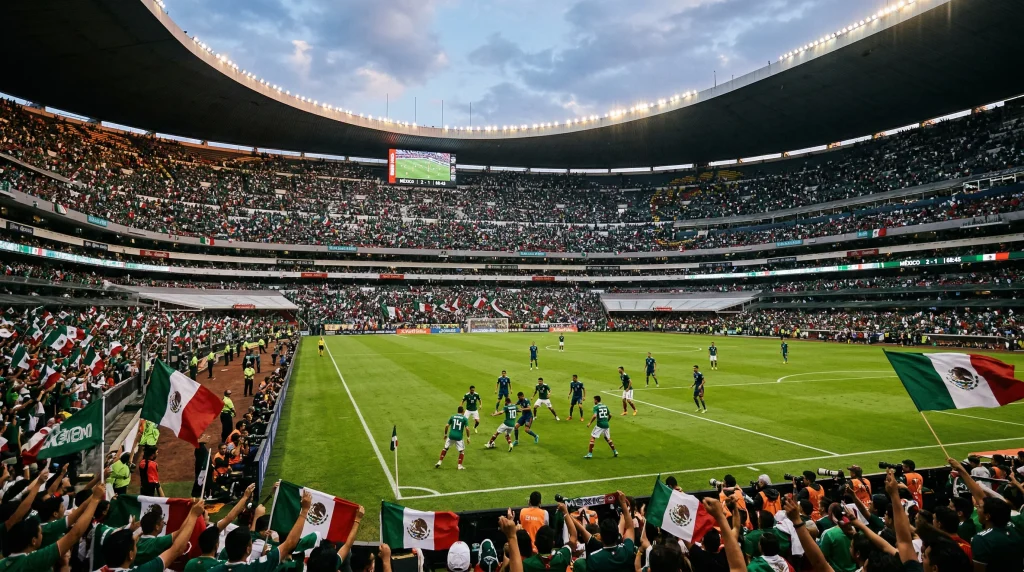
Table of Contents
Seven consecutive World Cups. Seven Round of 16 exits. The pattern that defines Mexican football’s modern era has become so predictable that the term “quinto partido” — the fifth game — carries almost mystical significance. El Tri reaches the knockout rounds with reliable consistency, then loses. Brazil 2014, Russia 2018, Qatar 2022 — different opponents, identical outcomes. The fifth game remains unwinnable.
Mexico World Cup 2026 arrives with home advantage that previous generations couldn’t access. The opening match at Estadio Azteca reconnects Mexican football with its most sacred venue. Three Mexican cities host tournament fixtures, ensuring El Tri plays before passionate crowds who’ve waited decades for this opportunity. Alongside co-hosts USA and Canada, Mexico shares the continental spotlight — but the opening ceremony belongs to them alone.
I’ve tracked Mexican tournament performance through the cycles of optimism and familiar disappointment. The talent has always existed — Cuauhtémoc Blanco, Rafa Márquez, Javier Hernández wore the green shirt with genuine distinction. What’s been missing involves the psychological fortitude that quarterfinal advancement requires. The current generation must prove that home support can provide what previous squads couldn’t manufacture internally.
The Fifth Game: Can Mexico Finally Reach Quarter-Finals?
Understanding the quinto partido curse requires examining its psychological dimensions beyond simple results. Mexican teams don’t lose the fifth game through lack of effort or obvious tactical failure. They lose through accumulated pressure that manifests in decisive moments — the missed penalty, the defensive error, the individual lapse that superior opponents punish. The pattern suggests mental barrier rather than quality deficiency.
The 2022 World Cup didn’t even provide the fifth game heartbreak. Mexico exited in the group stage for the first time since 1978, losing the goal-differential tiebreaker to Poland after defeats to Argentina and draws against teams they needed to beat. This earlier exit, while embarrassing, may have paradoxically reduced the specific pressure that knockout-round advancement historically generates.
Breaking patterns requires either fundamental change or exceptional circumstances. World Cup 2026 on home soil provides the exceptional circumstance. The energy from Mexican crowds, the familiarity with conditions, the reduced travel burden — these environmental factors might compensate for psychological limitations that neutral venues couldn’t address. Home advantage as pattern-breaker represents Mexican football’s theory of change.
The squad entering this tournament features different personnel than previous curse-bound generations. Younger players without accumulated knockout-round trauma bring fresh psychology. They haven’t experienced the specific heartbreak that calcified into expectation of failure. This generational refresh might enable breakthrough that veterans couldn’t achieve despite superior individual quality.
The Round of 16 Curse Explained
Statistical analysis of Mexican World Cup performance reveals consistent patterns across tournaments. El Tri typically qualifies through CONCACAF with impressive credentials. They enter World Cups ranked competitively, between 10th and 20th globally. Group stage results meet expectations, producing advancement without drama. Then the knockout round arrives, and Mexican performance drops measurably.
The pressure differential between group and knockout matches affects Mexican players more visibly than comparable nations. The crowd energy that supports during group stages transforms into weight during elimination fixtures. Media scrutiny intensifies. National expectations crystallize into specific demands. This pressure environment produces performance levels below what the same players demonstrate in less consequential matches.
Opponents have learned to exploit Mexican psychological vulnerability. Teams that face El Tri in knockout rounds prepare differently than group-stage opponents. They understand that maintaining composure often matters more than tactical superiority. Patient defense, controlled tempo, and waiting for Mexican errors has proven effective across multiple tournaments.
The coaching responses to this pattern have varied without producing different results. Some managers emphasize tactical discipline to reduce individual decision-making under pressure. Others prioritize attacking expression to channel energy productively. Neither approach has worked consistently. The barrier appears to exist beyond coaching intervention’s reach.
What makes the curse particularly frustrating is Mexico’s consistent group-stage competence. El Tri doesn’t struggle to qualify; they struggle to advance once qualified. The tournament structure itself seems designed to highlight Mexican limitations — gathering momentum through three matches, then facing the specific pressure that produces collapse. The pattern persists across different opponents, different venues, and different tactical approaches.
Squad Analysis: A Team in Transition
Mexican squad construction for World Cup 2026 reflects generational transition that began after the 2022 disappointment. The established stars who defined previous tournament cycles have either retired or aged beyond peak contribution. Younger players who represent Mexican football’s future now occupy central roles rather than supporting positions. This transition creates uncertainty about ceiling while potentially removing inherited psychological burden.
Goalkeeping options have emerged through competitive Liga MX and European environments. The position provides competence without exceptional quality — reliability that allows defensive structures to function without requiring heroic intervention. The goalkeeper transition from previous generations has proceeded smoothly compared to outfield positions.
Defensive personnel features younger players who bring pace and aggression that previous Mexican defenders sometimes lacked. The center-back positions require development through competitive minutes that tournament football will provide. Full-back options combine attacking intent with defensive awareness in profiles that modern systems demand. The overall defensive age profile suggests building rather than maintaining.
Midfield construction has evolved significantly from the playmaker-dependent systems that characterized earlier Mexican teams. Current options emphasize collective function over individual brilliance — controlling midfielders, progressive passers, and energetic runners who serve team needs rather than displaying personal creativity. This practical approach suits tournament football’s demands even if it sacrifices aesthetic appeal.
Key Players for El Tri
Identifying Mexican star players for World Cup 2026 reveals the transition’s incomplete status. No individual commands the attention that Chicharito received at his peak, or that Hugo Sánchez demanded during earlier generations. The strength — if it proves to be strength — lies in collective quality rather than individual brilliance. This distributed responsibility could reduce pressure on specific players while potentially limiting ceiling when moments of individual brilliance become necessary.
The attacking positions feature players who’ve developed through both Liga MX and European opportunities. Their combination of domestic familiarity and international exposure creates profiles suited for home tournament competition. The goal-scoring burden spreads across multiple options rather than concentrating on single striker. This distribution provides resilience against individual form fluctuations.
Midfield options include players who’ve established themselves in European leagues despite Mexican football’s historical domestic concentration. These international experiences provide tactical education that Liga MX competition alone cannot replicate. The current generation understands European pressing systems, positional demands, and intensity levels through weekly exposure rather than occasional international fixtures.
Defensive leaders have emerged to anchor structures that previous Mexican teams sometimes lacked. Their communication, organization, and composure under pressure provide stability that attacking players require. The defensive identity that El Tri projects differs from the technical attacking emphasis of earlier Mexican football, but it may prove more suited to tournament demands where clean sheets often determine advancement.
Group A Preview: South Korea, South Africa, Czechia
Mexico’s group draw provided opponents that El Tri should handle competently without guaranteed advancement. South Korea brings Asian competition quality with World Cup history. South Africa represents African football’s development with familiar tournament experience. Czechia offers European tactical discipline. Each opponent requires professional attention rather than assured superiority.
The opening match — Mexico versus South Africa at Estadio Azteca on June 11, 2026 — inaugurates the entire tournament. This ceremonial significance amplifies pressure while providing unparalleled atmosphere. The world watches as Mexico launches the biggest World Cup in history. The occasion demands performance that matches its importance.
South Korea’s 2022 World Cup success — advancing to the knockout rounds from a group containing Portugal, Uruguay, and Ghana — demonstrated quality that dismissive opponents underestimate. Their tactical discipline and physical capacity create matchup challenges that technical assumptions cannot solve. Mexico must respect Korean quality rather than assuming superiority based on regional reputation.
South Africa’s 2010 hosting experience provides tournament understanding that newly participating nations lack. The Bafana Bafana have developed through African competition that produces resilient, organized teams. Their physical profile and counter-attacking efficiency could trouble Mexican possession approaches if El Tri’s patience lapses.
Czechia’s qualification through European competition confirms quality that transcends stereotypes about smaller nations. Their defensive organization and set-piece threat create dangers that careless opponents suffer. Mexico must maintain concentration across 90 minutes against opposition capable of punishment when focus wavers.
The Opening Match: Estadio Azteca Spotlight
Estadio Azteca’s significance extends beyond capacity statistics and architectural grandeur. The venue has hosted two World Cup finals — 1970’s Brazil triumph and 1986’s Maradona masterpiece. When Mexico takes the field for the 2026 opener, they inherit legacy that no other tournament venue possesses. The ghosts of Pelé and Diego witness what the current generation produces.
Playing the opening match creates specific pressure that subsequent fixtures cannot replicate. The entire football world focuses on this single game before tournament competition distributes attention across multiple venues. Every Mexican touch, every decision, every outcome receives scrutiny that ordinary matches never generate. Managing this spotlight while performing requires mental preparation that matches physical readiness.
The altitude at Mexico City — approximately 2,240 meters above sea level — affects both teams but favors Mexican players accustomed to these conditions. Visiting opponents who’ve prepared at lower elevations experience cardiovascular strain that compounds through match duration. This physiological advantage particularly impacts the final 30 minutes when fitness differentials become decisive.
The Mexican federation has invested substantially in opening match preparation. The players who take the field on June 11 will have trained extensively at Azteca, understanding its dimensions, its surface characteristics, and its acoustic properties that affect communication. This preparation reduces variables while maximizing home advantage that the venue’s history provides.
Mexico Odds: Home Underdog
Current World Cup 2026 odds place Mexico around +4000, reflecting both the quality gap between Mexican football and elite nations and skepticism about pattern-breaking despite home advantage. This pricing positions El Tri as genuine long shot — capable of quarter-final advancement but not expected to contend for championship. The market asks whether home support can overcome the psychological barriers that neutral venues couldn’t address.
My assessment places Mexico’s actual championship probability around 2-3%, translating to fair odds between +3230 and +4900. At +4000, you’re getting approximately fair value — perhaps slight edge if opening match performance establishes momentum that carries through the tournament. The uncertainty creates opportunity for those who believe home advantage provides more value than historical patterns suggest.
Group A advancement should price around -250 based on home advantage and competitive but beatable opposition. South Korea, South Africa, and Czechia all possess quality that could produce upset results, but Mexico should accumulate sufficient points. Mexico to win Group A at approximately +130 captures the expectation of competitive positioning without comfortable margin.
The more speculative proposition involves Mexico reaching the quarter-finals. At approximately +400, this captures the breakthrough possibility without requiring deep advancement. If home advantage proves as valuable as Mexican supporters believe, quarter-final advancement becomes achievable regardless of Round of 16 opponent. The price reflects appropriate risk-reward for a team attempting to break a 40-year pattern.
Breaking Through
Mexico enters World Cup 2026 carrying both historical burden and unprecedented opportunity. The quinto partido curse weighs on every tactical discussion, every media narrative, every public expectation. Yet the home tournament provides conditions for breakthrough that previous Mexican generations couldn’t access. If breaking patterns requires exceptional circumstances, hosting the World Cup qualifies as exceptional.
The generational transition creates uncertainty about Mexican ceiling while potentially liberating new players from inherited pressure. These athletes haven’t experienced the specific Round of 16 heartbreaks that haunted their predecessors. They can write new stories rather than continuing narratives that seemed inescapable.
My tournament prediction places Mexico in the knockout rounds with genuine uncertainty about quarter-final prospects. Group A should produce advancement, likely as group winners given the opening match advantage and overall quality. The Round of 16 test determines whether home support proves sufficient to overcome whatever psychological barriers have blocked previous attempts. Mexico’s moment has arrived; their response defines this generation’s legacy.
