
Hard Rock Stadium: Miami’s World Cup 2026 Host
 Available in US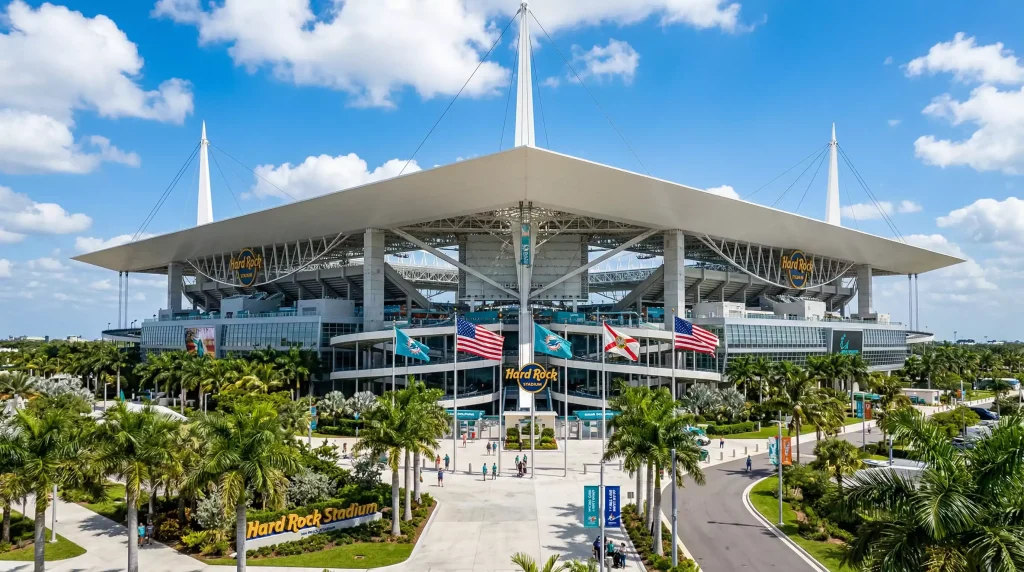
Table of Contents
Miami brings Latin American passion to American infrastructure when World Cup 2026 arrives at Hard Rock Stadium. The venue rising from Miami Gardens—home to the Miami Dolphins and countless international football events—offers something no northern American stadium can replicate: authentic Central and South American atmosphere transported to United States soil.
For Canadian fans seeking World Cup experiences beyond domestic borders, Miami provides accessible international flavour. The city’s proximity to Caribbean and Latin American populations creates supporter cultures that transform neutral venues into partisan cauldrons. Hard Rock Stadium has hosted Copa América, International Champions Cup, and El Clásico friendlies that demonstrated Miami’s appetite for premium football.
Hard Rock Stadium: Essentials
Hard Rock Stadium has evolved substantially since opening in 1987 as Joe Robbie Stadium. Multiple renovations, most recently a $550 million project completed in 2016, transformed a basic NFL bowl into modern multi-purpose facility. The distinctive canopy structure—four massive covers shading seating sections—defines current appearance while addressing Florida’s brutal summer conditions.
Capacity reaches approximately 67,000 for World Cup configuration. While smaller than some tournament venues, the size creates intimate atmosphere that larger stadiums dilute. Every seat positions relatively close to the pitch; even upper deck views maintain engagement that 80,000-seat colosseums cannot match from distant sections.
The canopy system deserves emphasis for World Cup planning. Florida summer heat requires mitigation; the shading structures block direct sun for most seating areas while leaving the field open for natural grass conditions FIFA requires. Architectural innovation addresses climate challenges that pure bowl designs ignore.
Natural grass surface meets international standards, maintained by grounds crews experienced with South Florida’s challenging growing conditions. Heat, humidity, and tropical rainfall test any pitch; Hard Rock Stadium’s drainage and maintenance protocols have handled the demands successfully.
Location in Miami Gardens places the stadium in Miami-Dade County’s northern reaches, distinct from South Beach glamour that defines international Miami perception. The surrounding area lacks walkable attractions; stadium visits require intentional travel rather than happening upon venues while exploring.
Miami World Cup 2026 Schedule
Hard Rock Stadium hosts seven World Cup 2026 matches, including a semifinal that ranks among the tournament’s most prestigious assignments. This allocation reflects both Miami’s market importance and the venue’s proven capacity for major international football events.
Group stage fixtures bring diverse nations to South Florida across June’s opening weeks. The regional demographics ensure passionate supporter turnouts for Latin American nations; Argentina, Brazil, Colombia, and Mexican matches would generate particularly intense atmospheres given local population composition.
Round of 32 knockout football arrives at Hard Rock Stadium on June 30th. Single-elimination pressure transforms atmosphere from group stage calculations; survive or depart defines both teams’ approach. The transition from points accumulation to pure survival creates tension that fills venues regardless of competing nations.
The semifinal on July 15th represents Miami’s tournament pinnacle. Four teams remaining, two matches determining finalists—semifinal stakes exceed anything short of the final itself. Hard Rock Stadium will host one of these two matches, positioning Miami among the tournament’s final four venues.
The World Cup 2026 tournament spans sixteen stadiums across three countries, with Hard Rock Stadium among the premier American venues hosting knockout round action.
Flying to Miami from Canada
Miami International Airport handles substantial Canadian traffic year-round, with connectivity that World Cup merely amplifies. Direct flights from Toronto, Montreal, and other major Canadian cities operate frequently across multiple carriers.
Flight time from Toronto reaches approximately three hours—manageable for extended weekend trips rather than requiring full vacation commitment. Montreal adds marginal time; western Canadian cities require longer journeys or connections through American hubs. Air Canada, WestJet, American, and others serve these routes competitively.
World Cup pricing will spike dramatically on Miami routes. Canadian snowbirds know Florida flight economics intimately; June represents shoulder season normally, but World Cup demand inverts typical patterns. Book months ahead to secure reasonable fares before last-minute desperation pricing.
Fort Lauderdale-Hollywood International Airport offers alternative entry approximately thirty minutes north of Hard Rock Stadium—often with lower fares than MIA for budget-conscious travelers. The proximity makes FLL practical for stadium access while potentially saving significant airfare costs.
Miami International to Hard Rock Stadium covers approximately twenty miles, normally thirty to forty-five minutes by car. Match day traffic extends this significantly; factor additional time for game-day arrivals regardless of entry point.
Rental cars serve Miami travel effectively given limited public transit. Uber and Lyft operate throughout the region, though surge pricing during major events reaches substantial premiums. Having personal transportation provides flexibility for exploring beyond stadium vicinity—South Beach, Wynwood, Coconut Grove warrant attention.
Accommodation spreads throughout greater Miami. South Beach commands premium pricing for iconic location; Brickell and downtown offer urban alternatives; Fort Lauderdale provides value options at distance cost. Proximity to Hard Rock Stadium specifically holds limited appeal given surrounding area character—most visitors stay in tourist-friendly districts and commute to matches.
Miami for World Cup Fans
Miami provides experiences extending World Cup attendance into memorable vacation. The city’s international character, beach culture, and nightlife create context that purely domestic destinations cannot match.
South Beach defines Miami’s global image—Art Deco architecture, celebrity culture, beautiful people parading Ocean Drive. The scene overwhelms some visitors while enchanting others. World Cup weeks will see supporter groups claiming territory throughout, transforming beach areas into international football festivals.
Latin American food culture reaches peaks throughout Miami. Cuban cuisine dominates Little Havana; Venezuelan arepas, Colombian bandeja paisa, Peruvian ceviche—the diaspora communities have established culinary destinations rivalling anything found in home countries. Finding excellent meals requires only moderate exploration; local recommendations unlock neighborhood gems.
Art and design scenes have flourished, particularly in Wynwood with its famous muralled walls and gallery district. The Design District offers high-end shopping alongside contemporary art. These neighbourhoods provide cultural complement to beach and nightlife activities.
Nightlife extends late by American standards, with South Beach clubs operating into early morning hours. World Cup atmosphere will amplify the scene as supporter groups celebrate victories and commiserate defeats throughout the night. Pace yourself—Miami’s humidity exhausts faster than visitors expect.
Football culture in Miami reflects the city’s demographics. Inter Miami’s arrival has energized local supporters, but the deeper roots lie in international allegiances—residents supporting clubs and nations from throughout the Americas. This creates authentic atmosphere that newer American markets cannot replicate.
Summer in Miami: Be Prepared
June and July in Miami test anyone unaccustomed to subtropical summer conditions. Understanding what awaits prevents unpleasant surprises that inadequate preparation causes.
Average high temperatures exceed 32°C (90°F) with humidity levels pushing heat indices substantially higher. The combination creates oppressive conditions that limit comfortable outdoor activity to early morning and evening hours. Afternoon heat during typical kick-off windows demands serious respect.
Afternoon thunderstorms arrive almost daily during summer months. The pattern typically brings clear mornings, building clouds through midday, then dramatic but brief downpours between 2:00 and 5:00 PM. These storms pass quickly but bring lightning that forces temporary venue evacuations when detected nearby.
Hard Rock Stadium’s canopy system provides significant relief. The shading structures block direct sun for most seating sections, reducing heat exposure substantially compared to open-air alternatives. However, the canopy doesn’t create air conditioning—humidity persists regardless of sun blocking.
Hydration becomes essential rather than optional. Drink water proactively throughout match attendance, not merely when thirst signals dehydration already occurring. Stadium concessions sell bottled water at premium pricing; the cost justifies itself against dehydration consequences.
Clothing choices matter significantly. Lightweight, breathable fabrics in light colors reflect heat better than dark alternatives. Sunscreen application before stadium entry prevents burns that cloud cover doesn’t prevent—UV radiation penetrates Miami’s typical haze effectively.
Air conditioning throughout Miami provides relief between outdoor exposures. Hotels, restaurants, shopping centers—indoor spaces run aggressive cooling that feels extreme after outdoor heat. The contrast can cause chills; light layers for transitions between environments prevent discomfort.
For Canadian visitors accustomed to temperate summers, Miami’s conditions require adjustment. Arriving a day or two early allows some acclimatization before stadium attendance demands extended outdoor exposure. The heat is manageable with preparation; it becomes miserable without it.
Frequently Asked Questions
Hard Rock Stadium brings Latin American passion to American tournament structure when World Cup 2026 reaches Miami. The venue has hosted international football frequently enough that operational experience matches infrastructure capability. What Miami adds beyond logistics is atmosphere—the genuine supporter cultures that transform neutral American venues into environments approaching South American intensity.
For Canadian fans, Miami offers accessible warmth both meteorologically and atmospherically. The flight from Toronto measures three hours; the cultural distance feels greater, immersing visitors in international environment that domestic destinations cannot provide. The heat demands respect, the humidity requires preparation, but the experience rewards those who embrace Miami’s particular World Cup character. When the semifinal arrives on July 15th, Hard Rock Stadium will pulse with energy that justifies every bead of sweat.
