
Estadio Azteca: Where World Cup 2026 Begins
 Available in US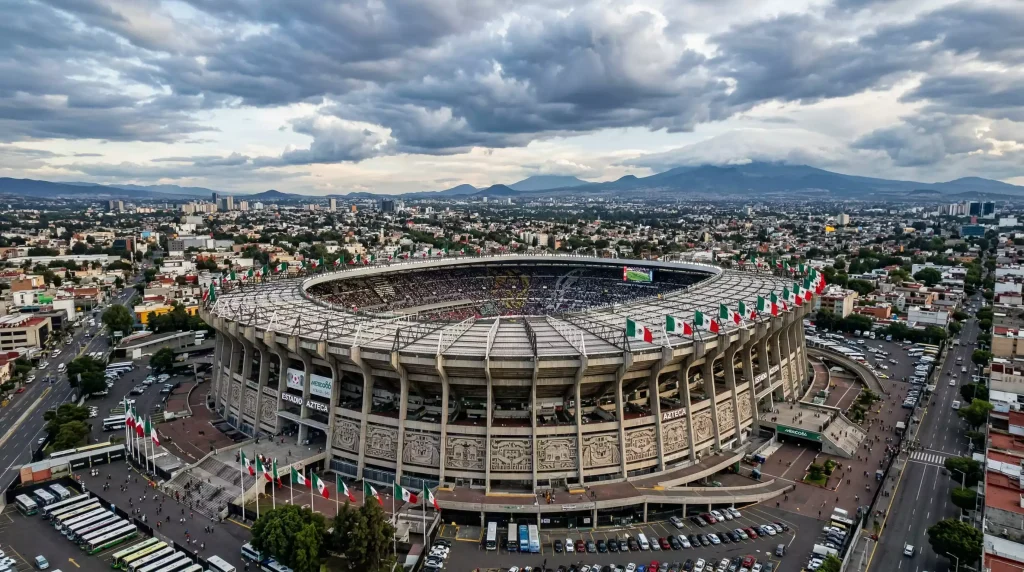
Table of Contents
Every World Cup begins with a single match—a moment when years of qualification, preparation, and anticipation culminate in ninety minutes that officially launch football’s greatest tournament. On June 11th, 2026, that moment arrives at Estadio Azteca in Mexico City, where Mexico faces South Africa in a fixture that carries historical weight unmatched by any other opening venue.
Estadio Azteca is not merely a stadium. It’s a cathedral of football where Pelé lifted the Jules Rimet trophy, where Maradona’s Hand of God and Goal of the Century occurred within minutes of each other, where Mexican football’s soul resides. When FIFA awarded the opening match to this venue, they honoured history while creating new chapters in the sport’s ongoing narrative.
For Canadian fans planning World Cup journeys, understanding Azteca means appreciating football’s sacred ground while navigating practical considerations—altitude adaptation, Mexico City logistics, and the unique atmosphere that only this stadium provides.
Estadio Azteca: The Legend
Numbers quantify Azteca’s scale without capturing its essence. Capacity reaches approximately 83,000 for World Cup configuration—among the tournament’s largest venues. The bowl structure, carved into volcanic rock on the Pedregal lava fields, creates natural acoustics that amplify crowd noise beyond what architecture alone could achieve.
Opened in 1966, the stadium was purpose-built to host the 1970 World Cup. The name references Aztec heritage, connecting modern Mexican sport to pre-Columbian civilization. This cultural resonance distinguishes Azteca from corporate-named contemporaries; it represents national identity rather than commercial partnership.
The playing surface sits 2,240 meters above sea level—higher than any other World Cup venue in 2026. This altitude fundamentally affects match dynamics, creating conditions that favour acclimatized teams and challenge sea-level visitors. The thinner air reduces oxygen availability, accelerating fatigue for unaccustomed players while causing ball flight to behave differently than at lower elevations.
Two massive scoreboard structures anchor the stadium ends, though modernization has upgraded display capabilities multiple times since original construction. The distinctive façade, featuring patterned concrete that references pre-Columbian architectural motifs, marks Azteca as unmistakable even from aerial views that show many similar bowl stadiums.
The neighbourhood surrounding Azteca—Coyoacán district’s southern reaches—provides urban context unlike suburban American venues. Dense residential areas, commercial strips, and transportation arteries create complex event logistics but also authentic Mexican atmosphere that begins well beyond stadium gates.
Two World Cup Finals, Three Tournaments
No stadium in football history rivals Azteca’s World Cup credentials. Two finals played on its pitch produced two of the sport’s most iconic champions, while three tournaments hosted across fifty-six years span eras from black-and-white footage to ultra-high-definition broadcasts.
The 1970 World Cup announced Azteca to global audiences. Brazil’s extraordinary team—Pelé, Jairzinho, Tostão, Gérson, Carlos Alberto—dismantled Italy 4-1 in the final, producing collective football that remains benchmark artistry decades later. Carlos Alberto’s famous goal, finished after a sweeping team move, stands among the sport’s most replayed moments. That Brazil retired the original Jules Rimet trophy by winning it permanently adds mythological weight to the occasion.
Sixteen years later, the 1986 World Cup returned to Mexico after Colombia withdrew as original hosts. Diego Maradona dominated the tournament, his virtuoso performances culminating in Azteca quarterfinal moments that define his legacy. Against England, the Hand of God and Goal of the Century occurred within four minutes—controversy and brilliance intertwined permanently. Argentina defeated West Germany 3-2 in the final, Maradona orchestrating triumph throughout.
Mexico’s national team has called Azteca home for decades, building fortress reputation through qualifying campaigns where visiting teams struggle with altitude, atmosphere, and partisan officiating accusations. The “dos a cero” scoreline—2-0 Mexican victories—became cultural meme during World Cup qualifying cycles where Azteca proved nearly impenetrable.
Club football adds another layer. Club América, Mexico’s most successful and controversial team, plays home matches at Azteca, bringing weekly Liga MX drama to the venue. Cruz Azul also called Azteca home for many years before departing. This club usage maintains operational continuity that tournament-only venues lack.
The 2026 World Cup makes Azteca the first stadium to host three separate tournaments—a distinction FIFA highlighted when confirming venue selection. This historical precedent positions Mexico City’s opening match as a celebration of football’s ongoing relationship with a venue that shaped the sport’s greatest memories.
World Cup 2026 Opening: Mexico vs South Africa
The opening match pairing carries intentional narrative weight. Mexico as hosts provides partisan atmosphere that neutral openers lack. South Africa, the 2010 World Cup hosts, brings experience hosting football’s greatest tournament—a symbolic passing of torches between nations that understand what hosting means.
For Mexico, this match demands statement victory. Opening at home, in Azteca, with global attention before any other 2026 fixture—the pressure exceeds normal group stage calculations. El Tri must channel the stadium’s energy into performance while managing nerves that historical significance amplifies.
South Africa enters as heavy underdogs but carries nothing to lose. Bafana Bafana qualified through African football’s competitive pathway, proving they belong regardless of odds assessments. An upset here—stealing points from hosts in their celebratory opener—would rank among World Cup’s greatest opening day shocks.
The ceremonial aspects preceding kick-off will showcase Mexican culture, FIFA production values, and tournament themes across multiple hours. The opening ceremony, traditionally elaborate for hosts’ first matches, transforms Azteca into spectacular stage before football begins. Attendees experience show business alongside sport.
Television audiences worldwide—estimated in billions—tune into opening matches at rates exceeding standard group fixtures. The curiosity factor of tournament launch combines with ceremony spectacle to create must-watch television that sets World Cup tone. Mexico understands this spotlight and will aim to create memorable start.
For complete Mexico World Cup 2026 analysis, including Group A breakdown, El Tri’s squad assessment, and betting perspectives, our dedicated coverage examines the hosts’ full tournament outlook.
Azteca Match Schedule
Beyond the opening match, Estadio Azteca hosts additional World Cup 2026 fixtures that showcase the venue through later tournament stages.
Eight total matches take place at Azteca across group stage and knockout rounds. This substantial allocation reflects both the stadium’s capacity and Mexico’s co-host status within the tournament structure. More matches at Azteca means more opportunities for fans to experience this historic venue.
Group stage fixtures beyond Mexico’s opener bring diverse nations to Mexico City. The stadium’s prestige attracts premium matchups; FIFA scheduling places compelling contests at venues warranting global attention. Expect the marquee group games—high-ranking nations, compelling narratives—among Azteca’s assignments.
Round of 32 and Round of 16 knockout matches extend Azteca’s tournament role into elimination stages. Single-elimination tension in this environment, with Mexican supporters potentially backing neutral favourites, creates atmosphere intensity that group matches cannot match.
Match timing considers Mexico City’s climate patterns. June and July afternoons bring afternoon heat and potential thunderstorms; evening kick-offs reduce heat stress while avoiding typical late-afternoon downpours. The covered seating sections provide some protection, but open areas expose attendees to elements.
Travel logistics for multiple Azteca matches require careful planning. Those attending several fixtures might base in Mexico City throughout, experiencing North America’s largest metropolitan area between games. Single-match visitors face more concentrated logistics—arrive, attend, depart—where efficiency matters.
From Canada to Mexico City
Mexican travel differs from domestic American tourism for Canadians, requiring passport documentation, potential visa considerations, and longer flights than north-south American alternatives. Planning ahead addresses these requirements smoothly.
Direct flights connect Toronto Pearson, Montreal Trudeau, and Vancouver International to Mexico City’s Benito Juárez International Airport. Flight time from Toronto reaches approximately four and a half hours—manageable for World Cup pilgrimage though substantially longer than American venue options. Multiple carriers including Air Canada, Aeromexico, and others serve these routes.
World Cup pricing on these routes will spike dramatically. Booking six months or more ahead secures reasonable fares; last-minute availability commands premium pricing if seats remain at all. Consider nearby cities—Guadalajara, Monterrey, even U.S. border cities—as alternative entries with connecting transportation to Mexico City.
Accommodation in Mexico City ranges from budget hostels through premium international hotels. The Zona Rosa, Polanco, Roma, and Condesa neighbourhoods offer tourist-friendly environments with restaurants, nightlife, and Metro accessibility. Book accommodation aggressively early—Mexico City’s hotel inventory, while substantial, faces unprecedented World Cup demand.
From airport to city centre, options include Metro connections (affordable but crowded), authorized taxi services, and ride-share applications. The Metro’s Line 4 connects to the airport, though luggage during rush hours tests patience. Pre-arranged hotel transfers provide comfort at premium cost.
Currency exchange deserves attention. Mexican pesos provide transaction basis; while major tourist areas accept Canadian and American dollars, exchange rates favour local currency. ATM withdrawal or currency exchange upon arrival typically offers reasonable rates. Credit card acceptance varies—carry cash for smaller purchases.
Safety considerations accompany Mexico City travel advisories. The World Cup context brings enhanced security presence, particularly around venues and tourist areas. Standard precautions—avoiding displays of wealth, staying in recommended neighbourhoods, using authorized transportation—serve visitors well. The city welcomes tourists enthusiastically while some areas warrant avoidance.
The Altitude Factor
Estadio Azteca’s elevation—2,240 meters (7,349 feet) above sea level—creates competitive conditions unlike any other World Cup venue in 2026. Understanding altitude’s effects informs both match analysis and visitor preparation.
For players, reduced oxygen availability accelerates fatigue. High-intensity efforts that sea-level conditioning supports become more taxing at altitude. Teams acclimatized through training camps in elevated locations—Mexico, Colombia, parts of Spain—hold advantages over opponents arriving directly from coastal cities. Match fitness at minute seventy-five diverges significantly based on acclimatization.
Ball physics change noticeably. The thinner air offers less resistance, causing shots to travel faster and further than players expect. Goalkeepers face adjusted calculations; defenders must account for passes that carry beyond typical distances. Set pieces—free kicks, corners—become more dangerous as conventional flight paths steepen.
For visitors, altitude affects comfort rather than athletic performance. Shortness of breath during exertion, mild headaches, and sleep disruption affect many travelers to Mexico City. These symptoms typically resolve within two to three days as bodies adjust. Arriving early before match day allows acclimatization; same-day arrival risks discomfort during stadium experiences.
Hydration matters significantly. The dry air at altitude combined with physical activity dehydrates faster than travelers expect. Drinking water proactively—before feeling thirsty—prevents issues that dehydration causes. Alcohol consumption, tempting during World Cup celebration, amplifies altitude effects and should moderate accordingly.
Medical considerations accompany altitude travel. Those with respiratory or cardiovascular conditions should consult physicians before Mexico City visits. Most healthy adults adjust without serious issues, but awareness prevents surprising symptoms from causing alarm.
Visiting teams approach Azteca altitude strategically. Some arrive early for acclimatization camps; others minimize altitude exposure, betting on fitness advantages from avoiding adaptation attempts. Historical results suggest no single approach guarantees success—Mexico’s home record at Azteca involves multiple factors beyond oxygen levels.
Frequently Asked Questions
Estadio Azteca awaits its third World Cup, carrying memories that define football’s history into a tournament promising new legends. Where Pelé danced and Maradona schemed, where Mexican passion fills every corner, where altitude tests champions and atmosphere inspires beyond measure—this is where World Cup 2026 officially begins.
For Canadian fans making the pilgrimage to Mexico City, the opening match offers immersion in football culture that American venues cannot replicate. The journey requires more planning than domestic alternatives, but the reward—witnessing World Cup’s start at its most historic venue—justifies every logistical challenge. When Mexico and South Africa kick off on June 11th, they write the first words of a story that Azteca has been telling since 1970.
