
BMO Field Toronto: Canada’s World Cup Home
 Available in US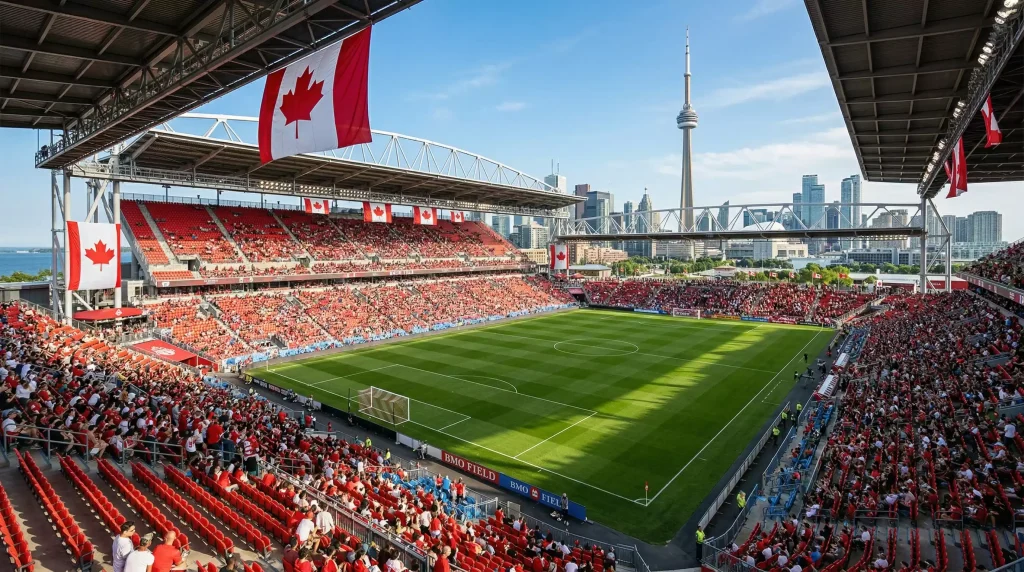
Table of Contents
The first time I walked into BMO Field was September 2007, weeks after it opened. Toronto FC were losing to DC United in their inaugural season, and the atmosphere felt like something genuinely new for Canadian sports. Nearly two decades later, that same stadium will host the most significant football match ever played on Canadian soil: Canada versus Bosnia and Herzegovina on June 12th, 2026. The CanMNT opens their home World Cup in Toronto, and BMO Field stands ready to deliver the moment our football community has spent generations imagining.
BMO Field has evolved dramatically since those early TFC days. The original 20,000-seat venue underwent multiple expansions, adding covered stands, improved facilities, and eventually a capacity increase to 30,000 for World Cup configurations. The stadium now combines intimate football atmosphere with infrastructure capable of hosting global events. When Les Rouges take the pitch against Bosnia, approximately 30,000 voices will create noise levels that the building’s acoustic design amplifies into something approaching European fortress standards.
For the Canadian football community, BMO Field represents home in ways that transcend mere geography. This is where the national team qualifies for tournaments, where Toronto FC built MLS credibility, and where Canadian players first experience professional football atmospheres. The World Cup arriving at BMO Field completes a circle that began when Canadian soccer supporters first dared to dream their national team might host football’s greatest tournament.
Toronto’s Theatre of Dreams: BMO Field’s Journey to World Cup Status
BMO Field opened in April 2007 as Canada’s first soccer-specific stadium, a designation that distinguished it from the cavernous multi-purpose venues where Canadian soccer had traditionally been marginalized. The stadium sits on Exhibition Place grounds, occupying land that once hosted the original CNE Stadium and maintaining Toronto’s long tradition of waterfront sporting events. The location provides downtown accessibility while offering parking and transit options that major events demand.
The original configuration seated approximately 20,000 supporters in an intimate bowl that brought fans close to the pitch. This proximity created atmosphere that larger venues struggle to replicate — supporters could hear players communicate, witness tactical adjustments in real-time, and feel connected to the action in genuinely visceral ways. Early TFC supporters established the south-end supporters’ section that remains the stadium’s emotional heartbeat.
Expansion came gradually as Toronto FC’s popularity exceeded expectations. The east stand addition in 2015 increased capacity to approximately 30,000 while maintaining the original stadium’s sightlines and acoustic properties. The covered canopy extending around most of the bowl improved fan comfort during Toronto’s variable weather while enhancing sound reflection that makes BMO Field genuinely loud during important matches.
World Cup hosting required further modifications. FIFA specifications demanded upgraded media facilities, additional hospitality areas, enhanced security infrastructure, and the technological systems that modern tournament broadcasting requires. The pitch dimensions already met international standards, but surrounding areas underwent renovation to accommodate the global spotlight that World Cup hosting brings.
The stadium’s Exhibition Place location provides advantages that purpose-built suburban venues cannot match. The Gardiner Expressway and Lakeshore Boulevard provide vehicle access, while Exhibition GO station sits adjacent to the grounds. Streetcar routes along Lakeshore and King Street extend the public transit network directly to stadium gates. The combination makes BMO Field one of the most accessible World Cup venues for supporters without personal vehicles.
Canada at BMO Field: One Match, One Moment
Canada plays exactly one World Cup 2026 match at BMO Field: the tournament opener against Bosnia and Herzegovina on June 12th, with an expected 3:00 PM Eastern kickoff. The scheduling places Canada’s first home World Cup match during prime afternoon viewing, maximizing domestic audience while maintaining comfortable playing conditions before summer heat peaks.
Bosnia and Herzegovina earned their World Cup spot through one of qualifying’s most dramatic storylines. Their penalty shootout victory over Italy denied the four-time champions a third consecutive World Cup absence while providing Bosnia their second-ever tournament appearance. The team features 40-year-old Edin Džeko, whose experience and quality demand respect despite his advanced age. Canada cannot approach this opener as a comfortable introduction.
The match carries weight beyond its three-point value. Canada has never won a World Cup group stage match, having lost all three fixtures at the 2022 tournament in Qatar. The psychological burden of that winless record weighs on a squad that desperately needs early success to build momentum. Winning at BMO Field — on home soil, before Canadian supporters — would exorcise demons that have haunted this programme through decades of disappointment.
Ticket demand for the Canada-Bosnia match at BMO Field exceeds any previous Canadian football event. The stadium’s 30,000 capacity seems suddenly small when millions of Canadians want to witness history. Those fortunate enough to obtain tickets will experience something unrepeatable: the moment Canadian World Cup football finally comes home.
Atmosphere projections suggest BMO Field will achieve noise levels rivalling any World Cup venue. The covered stands trap sound, the intimate bowl focuses energy, and the supporters who have waited decades for this moment will not waste the opportunity. Players from both nations should expect conditions that exceed anything club football provides — the weight of national expectation creates electricity that regular matches cannot generate.
Match Schedule: All BMO Field World Cup Fixtures
Beyond Canada’s opener, BMO Field hosts six additional World Cup group stage matches throughout June 2026. The fixture list brings diverse footballing cultures to Toronto, offering Canadian supporters opportunities to experience World Cup atmosphere regardless of whether Canada-Bosnia tickets proved obtainable.
The schedule includes matches from multiple groups, distributing supporter demand across various nationalities. European clubs with significant Toronto diaspora populations — particularly those involving Italian, Portuguese, or Croatian heritage — will find local supporter bases ready to create atmosphere rivalling home venues. Toronto’s multicultural demographics translate directly into World Cup engagement that monocultural cities cannot replicate.
Ticket pricing for non-Canada fixtures at BMO Field sits below the opener but above typical international football rates. Group stage matches between smaller nations offer the most accessible entry points, with prices escalating as participating teams’ profiles increase. The experience of attending any World Cup match at BMO Field rewards investment regardless of which nations contest the fixture.
The concentration of group stage matches creates a festival atmosphere throughout Exhibition Place during June 2026. Fan zones, cultural exhibitions, and gathering spaces will surround BMO Field, extending the World Cup experience beyond match attendance. Supporters without tickets can still participate in Toronto’s celebration, watching matches on screens throughout the city while absorbing the tournament’s energy.
For those planning multiple BMO Field matches, Toronto’s accommodation market will test budgets. Hotels within walking distance of Exhibition Place command premium rates during World Cup weeks. The broader GTA offers more affordable options, though transportation logistics complicate access. Booking well in advance remains essential regardless of budget level.
Getting to BMO Field: Every Route to Canada’s Home Matches
BMO Field’s Exhibition Place location offers transportation flexibility that suburban stadiums cannot match. The venue sits approximately 4 kilometres west of downtown Toronto’s core, accessible via multiple transit routes, major roadways, and even pedestrian paths along the waterfront. Match day requires planning, but options exist for every transportation preference and budget level.
GO Transit provides the most direct access from Toronto’s broader metropolitan area. Exhibition GO station sits directly adjacent to BMO Field, with trains running from Union Station and extended service during major events. The 10-minute journey from Union eliminates downtown traffic concerns while depositing supporters steps from stadium gates. Enhanced World Cup scheduling should increase train frequency during match windows.
TTC streetcar routes serve Exhibition Place via King Street (Route 504) and Bathurst (Route 511), connecting to subway lines at various transfer points. The 509 Harbourfront streetcar runs along Queens Quay, offering scenic waterfront access from Union Station. Streetcar travel requires patience during match hours when vehicles become crowded and schedule adherence deteriorates.
The Exhibition Place grounds provide paid parking for those insisting on personal vehicles. Lots fill early for major events, making arrival two to three hours before kickoff advisable for those requiring guaranteed spaces. Parking rates during World Cup matches will exceed typical TFC or Argos pricing, reflecting demand levels that Toronto events rarely experience.
Ride-sharing services operate throughout Toronto, though surge pricing during World Cup matches will significantly increase costs. The designated pickup and dropoff zones at Exhibition Place manage vehicle flow, but departure delays after matches test patience as thousands simultaneously request rides. Coordinating with fellow supporters or walking to nearby pickup points reduces wait times.
From elsewhere in Canada, Toronto Pearson International Airport serves as the primary gateway. The Union Pearson Express connects the airport to Union Station in 25 minutes, from where Exhibition GO provides final transport to BMO Field. Total travel time from airport to stadium runs approximately 45 minutes under ideal conditions, extending considerably during rush hours or event traffic.
The BMO Field Match Day Experience
Attending a World Cup match at BMO Field requires preparation that differs from typical TFC fixtures. Gates open multiple hours before kickoff, with security screening creating bottlenecks that early arrival avoids. FIFA’s clear bag policy restricts what supporters can bring inside, meaning the backpacks and larger bags common at Canadian sporting events cannot enter the venue.
The stadium’s concourse offers food and beverage options that have improved significantly since opening day. Local vendors provide options beyond generic stadium fare, though prices reflect captive-audience economics. Alcohol service follows Ontario regulations, with limits on purchase quantities and consumption areas that vary based on FIFA tournament policies.
Seating sections at BMO Field each offer distinct experiences. The south end behind goal houses the most vocal supporter groups, where standing, singing, and active support create atmosphere that television broadcasts capture effectively. The west stand provides excellent sightlines along the pitch length, favoured by supporters who prefer seated viewing with comprehensive tactical perspectives. East stand seating offers similar views at slightly lower price points.
Premium hospitality options command prices that make standard tickets seem modest. Suite access, club seating, and enhanced hospitality packages provide air-conditioned comfort, premium food service, and exclusive facilities that justify costs for those prioritizing comfort over atmosphere. The Canada World Cup 2026 experience at BMO Field spans every budget level, each offering genuine connection to historic moments.
Weather considerations matter for June matches in Toronto. Early summer temperatures typically range from 15°C at evening matches to 25°C during afternoon kickoffs, with humidity that can feel oppressive on still days. The covered canopy provides shade for most seating areas, but the uncovered south end requires sunscreen for afternoon fixtures. Occasional June rain showers demand waterproof preparation despite covered seating.
Beyond the Pitch: Toronto During World Cup 2026
Toronto transforms during major sporting events, and World Cup 2026 will amplify this phenomenon beyond previous experience. The city’s diversity means significant supporter populations for numerous participating nations, creating street-level celebrations that extend World Cup atmosphere throughout neighbourhoods far from Exhibition Place.
Fan zones throughout downtown will broadcast matches on large screens, offering communal viewing experiences for those without stadium tickets. Previous World Cup tournaments saw Toronto’s Yonge-Dundas Square, Nathan Phillips Square, and various public spaces become gathering points for supporter communities. The 2026 tournament, with Canada hosting and competing, will exceed all previous engagement levels.
The city’s restaurant and entertainment infrastructure will strain under World Cup demand. Reservations at popular establishments require advance planning, while sports bars and pubs will reach capacity hours before important kickoffs. The smart approach involves identifying alternatives — the Portuguese cafes along Dundas West, the Italian bars in Corso Italia, the Latin American spots throughout the city — where diaspora communities create authentic atmospheres without typical sports-bar chaos.
Toronto’s June weather generally cooperates with outdoor celebration. Long evening daylight extends well past 9:00 PM, providing comfortable conditions for post-match gatherings. The occasional summer storm demands indoor alternatives, but Canadian summer typically delivers conditions that European supporters find enviable compared to their homelands.
For supporters attending multiple matches or extending Toronto visits, the city offers extensive cultural and entertainment options. The waterfront harbourfront area provides walking paths and patios within easy distance of BMO Field. The CN Tower, Royal Ontario Museum, and Distillery District attract visitors during daylight hours. The combined World Cup and Toronto experience creates memories that justify extended stays.
