
BC Place Vancouver: World Cup Comes West
 Available in US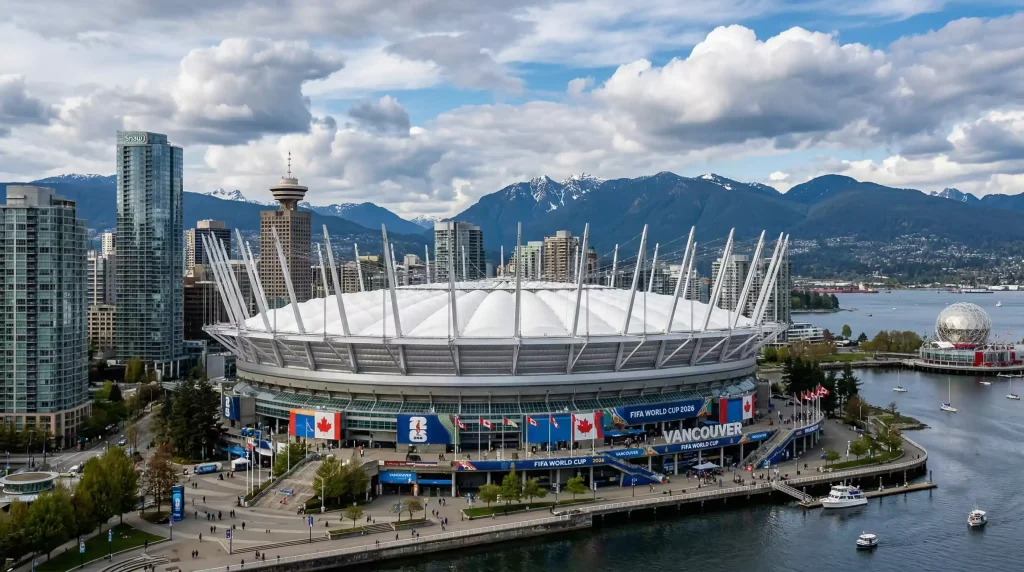
Table of Contents
Vancouver’s relationship with football differs fundamentally from the rest of Canada. The city hosted matches during the 2015 Women’s World Cup, maintained a passionate Whitecaps supporters culture through the team’s various league iterations, and cultivated Pacific Rim connections that bring Asian football interest alongside the typical North American sporting calendar. When World Cup 2026 arrives at BC Place, the west coast welcomes the tournament with an enthusiasm shaped by geography, demographics, and decades of football development that distinguishes this market from any other Canadian city.
BC Place itself represents architectural ambition realized. The retractable roof system, installed during the stadium’s 2011 renovation, allows open-air conditions when Vancouver’s summers cooperate while providing shelter when Pacific moisture decides otherwise. The capacity of approximately 54,000 for World Cup configuration makes BC Place Canada’s largest World Cup venue, dwarfing BMO Field’s intimate 30,000. The scale difference creates distinct atmospheres — where Toronto offers intensity, Vancouver provides spectacle.
I have attended matches at BC Place across multiple configurations, from Whitecaps MLS fixtures to BC Lions CFL games to concerts that filled the venue beyond football capacity. The stadium handles crowds efficiently, its downtown location proving remarkably accessible despite initial skepticism about urban venue logistics. For World Cup 2026, BC Place becomes the stage where Canada plays two of their three group matches, making it the de facto home venue for a nation’s World Cup ambitions.
The Roof That Changed Everything: BC Place’s Modern Era
The original BC Place opened in 1983 as a domed stadium, its inflatable roof representing cutting-edge technology for the era. That air-supported structure served Vancouver adequately for decades until a 2007 deflation incident revealed the system’s vulnerabilities. The subsequent renovation replaced the original roof with the world’s largest cable-supported retractable roof, transforming BC Place from enclosed concrete dome into a flexible modern venue capable of hosting football under conditions players and supporters prefer.
The retractable roof operates in approximately 20 minutes, allowing venue operators to respond to changing weather conditions even during events. For World Cup matches in June, the roof will likely remain open unless rain threatens, providing natural light and open-air atmosphere that enclosed stadiums cannot replicate. The flexibility proves invaluable for a tournament spanning weeks where weather prediction remains uncertain.
Beyond the roof, the renovation addressed seating configurations, sightlines, and amenities that the original 1983 design had dated. The current lower bowl provides excellent pitch views from any seat, while upper deck seating trades proximity for panoramic perspectives that capture the full tactical picture. The premium club level and suite accommodations serve corporate hospitality demands that World Cup hosting requires.
Capacity for World Cup matches reaches approximately 54,000, accounting for FIFA’s requirements around hospitality areas, media facilities, and broadcast infrastructure. This makes BC Place Canada’s premier World Cup venue by size, capable of hosting more supporters than BMO Field and any other Canadian football facility. The scale supports Canada’s statement that it can deliver World Cup experiences matching any global standard.
The playing surface underwent attention for World Cup preparation. BC Place typically uses an artificial turf system suited to Canadian football’s requirements, but FIFA mandates natural grass for World Cup matches. A modular grass installation, similar to systems used at other World Cup venues, transforms the surface while maintaining quality throughout tournament duration. The grass arrives in sections, grown off-site and installed to create a seamless pitch meeting international specifications.
Canada’s West Coast Fortress: Two Home Matches at BC Place
Canada plays two World Cup group stage matches at BC Place, making Vancouver’s stadium the primary venue for Les Rouges’ home tournament experience. The June 18th match against Qatar and the June 24th closer against Switzerland place crucial fixtures on the west coast, where Canada will look to secure the points necessary for knockout qualification.
The Qatar match carries particular significance. The 2022 World Cup hosts struggled badly during their home tournament, losing all three matches while failing to score. Their qualification for 2026 came through expanded Asian slots rather than performance, and questions persist about their ability to compete against established football nations. Canada should view this fixture as essential for progression — dropping points against Qatar likely eliminates Les Rouges from knockout contention.
Switzerland presents the genuine Group B test. The Nati entered 2026 as group favourites based on their Euro 2024 quarter-final run and overall European consistency. Granit Xhaka anchors a midfield that controls possession against most opponents, while Swiss defensive organization frustrates teams seeking space behind. Canada’s June 24th clash with Switzerland likely determines group positioning — a result here could mean the difference between first place and early elimination.
The Canada World Cup 2026 campaign builds toward these BC Place fixtures. The Toronto opener establishes early momentum, but Vancouver hosts the matches that determine outcomes. Canadian supporters travelling west will find a city embracing its World Cup moment with intensity matching anything the eastern markets can generate.
Atmosphere projections for Canada’s BC Place matches suggest 54,000 voices creating noise levels that rival any World Cup venue globally. The stadium’s acoustics, enhanced by the retractable roof structure whether open or closed, amplify crowd sound effectively. Players from both nations should expect conditions that exceed typical international football — the weight of Canadian expectation creates electricity that regular matches cannot generate.
The Complete Schedule: All BC Place World Cup Matches
BC Place hosts six World Cup 2026 group stage matches across the tournament’s first two weeks. Beyond Canada’s two fixtures, four additional matches bring diverse footballing cultures to Vancouver, offering supporters opportunities to experience World Cup atmosphere regardless of ticket availability for the host nation’s games.
The fixture distribution spreads demand across multiple supporter bases. Vancouver’s significant Asian-Canadian population creates natural interest in matches involving AFC representatives, while the city’s diverse communities ensure supporters for numerous participating nations reside locally. The mix produces atmospheres that vary dramatically between fixtures — European matches bring one energy, South American fixtures another, Asian matches yet another still.
Ticket availability for non-Canada fixtures offers more accessible World Cup entry points. While Canada-Switzerland tickets command premium prices reflecting national interest, matches between smaller nations present opportunities to attend World Cup football at BC Place without competing against millions of Canadian hopefuls. The experience of attending any World Cup match in Vancouver rewards investment regardless of participating nations.
The concentration of group stage matches creates festival atmosphere throughout downtown Vancouver during June 2026. Fan zones, cultural exhibitions, and public viewing areas will surround BC Place and extend throughout the city, providing World Cup engagement for those without stadium tickets. Vancouver’s natural beauty — mountains, harbour, temperate climate — enhances the celebratory environment beyond anything indoor or suburban venues could achieve.
For supporters attending multiple BC Place fixtures, Vancouver’s tourism infrastructure handles demand capably. Hotels throughout downtown, Coal Harbour, and Yaletown place accommodation within walking distance of the stadium. Extended travel options in North Vancouver, Burnaby, and Richmond provide budget alternatives connected via SkyTrain and other transit links.
Getting to BC Place: Vancouver Transportation Essentials
BC Place occupies one of North America’s most transit-accessible stadium locations. The venue sits in downtown Vancouver, adjacent to SkyTrain stations, bus routes, cycling infrastructure, and pedestrian pathways that make reaching match events straightforward from virtually anywhere in the metro region. The downtown location eliminates the suburban isolation that characterizes many North American sports venues.
SkyTrain provides the most efficient access from outside the immediate downtown core. Stadium-Chinatown Station on the Expo Line sits directly adjacent to BC Place, while Main Street-Science World Station offers an alternative approach with a brief walk. The Canada Line connects Vancouver International Airport to downtown, making stadium access from air travel remarkably simple — a 25-minute train ride deposits supporters within steps of the venue.
Bus routes throughout Vancouver converge on the downtown core, with numerous services stopping within blocks of BC Place. The density of transit options means supporters from any metropolitan neighbourhood can reach the stadium without vehicle dependence. Enhanced World Cup scheduling should increase frequency on key routes during match windows.
Cycling infrastructure in Vancouver exceeds Canadian norms, with dedicated lanes connecting residential areas to the downtown core. BC Place provides bicycle parking for supporters choosing two-wheeled transportation, though securing spaces on match days requires early arrival. The separated bike lanes along False Creek and through Yaletown offer scenic routes to stadium gates.
Personal vehicle access, while possible, fights Vancouver’s traffic patterns and expensive parking realities. The streets surrounding BC Place fill with match traffic, while parking rates reflect downtown demand combined with event premiums. Those insisting on driving should arrive several hours early, book parking in advance where possible, and plan departure patience as thousands of vehicles simultaneously exit post-match.
From elsewhere in Canada, Vancouver International Airport serves as the gateway. Direct flights connect all major Canadian cities, with Toronto-Vancouver service operating frequently on multiple carriers. The Canada Line SkyTrain connects YVR to downtown in approximately 25 minutes, depositing passengers at Waterfront Station from where Stadium-Chinatown is two stops east on the Expo Line.
Match Day at BC Place: The Full Experience
Attending World Cup matches at BC Place requires preparation beyond typical Whitecaps fixtures. Gates open multiple hours before kickoff, with security screening creating bottlenecks that early arrival avoids. FIFA’s clear bag policy restricts what supporters can bring inside, eliminating the backpacks and larger bags common at Canadian sporting events.
The stadium’s concourse wraps around the seating bowl, providing food and beverage access throughout the venue. Local vendors offer options beyond generic stadium fare, with Pacific Northwest influences appearing in some concession offerings. Prices reflect captive-audience economics, meaning bringing empty wallets proves strategically unwise. Alcohol service follows BC regulations, with restrictions that may vary based on FIFA tournament policies.
Seating sections at BC Place offer varied experiences. The lower bowl behind both goals attracts the most vocal supporters, where standing, singing, and coordinated displays create atmosphere that defines World Cup football. Sideline lower sections provide optimal sightlines for tactical observation, while upper deck seating trades proximity for perspectives capturing the full pitch width and tactical movement patterns.
Premium hospitality commands prices exceeding standard tickets significantly. Suite access, club seating, and enhanced packages provide climate-controlled comfort regardless of whether the roof opens, premium food and beverage service, and exclusive facilities that justify costs for those prioritizing comfort alongside atmosphere. Every budget level connects to genuine World Cup experience, each offering distinct advantages.
Weather at BC Place during June presents minimal concerns thanks to the retractable roof. Vancouver’s summer days typically reach 20-24°C with sunshine, though Pacific moisture can deliver rain at any time. The roof provides insurance against weather disruption while allowing open-air conditions when skies cooperate. Supporters should layer clothing to accommodate the temperature range between outdoor gathering and potentially enclosed stadium environment.
Vancouver Beyond the Pitch
Vancouver transforms during major events, and World Cup 2026 will amplify this phenomenon dramatically. The city’s natural setting — mountains meeting ocean, temperate rainforest framing urban development — provides backdrop that few World Cup host cities can match. For supporters travelling from elsewhere in Canada or internationally, Vancouver rewards extended visits beyond match attendance.
The waterfront areas provide walking access from downtown hotels to Stanley Park, Granville Island, and harbour pathways that extend for kilometres in multiple directions. Post-match decompression along the seawall, watching sunset behind North Shore mountains while processing tournament emotions, creates memories distinct from the stadium experience itself.
Fan zones throughout the city will broadcast matches for those without stadium tickets. Previous tournaments saw Robson Square, Canada Place, and various public spaces become gathering points for supporter communities. The 2026 tournament brings these celebrations to venues throughout metro Vancouver, where significant diaspora populations create authentic atmospheres for numerous participating nations.
The culinary scene reflects Vancouver’s Pacific Rim character. Asian cuisines dominate diverse neighbourhoods — Japanese in West Broadway, Chinese in Richmond, Korean along North Road, Vietnamese in Main Street areas. European options satisfy supporters seeking familiarity, while Canadian coastal seafood provides local flavour that visitors appreciate. Restaurant reservations during World Cup weeks require advance planning as demand exceeds supply.
For supporters extending Vancouver stays, the natural attractions provide contrast to World Cup intensity. Grouse Mountain, Capilano Suspension Bridge, and the Sea-to-Sky Highway toward Whistler offer day-trip options that showcase British Columbia’s landscapes. The combined World Cup and Vancouver experience creates value that justifies travel investment from anywhere in Canada or beyond.
