
MetLife Stadium: Home of the World Cup 2026 Final
 Available in US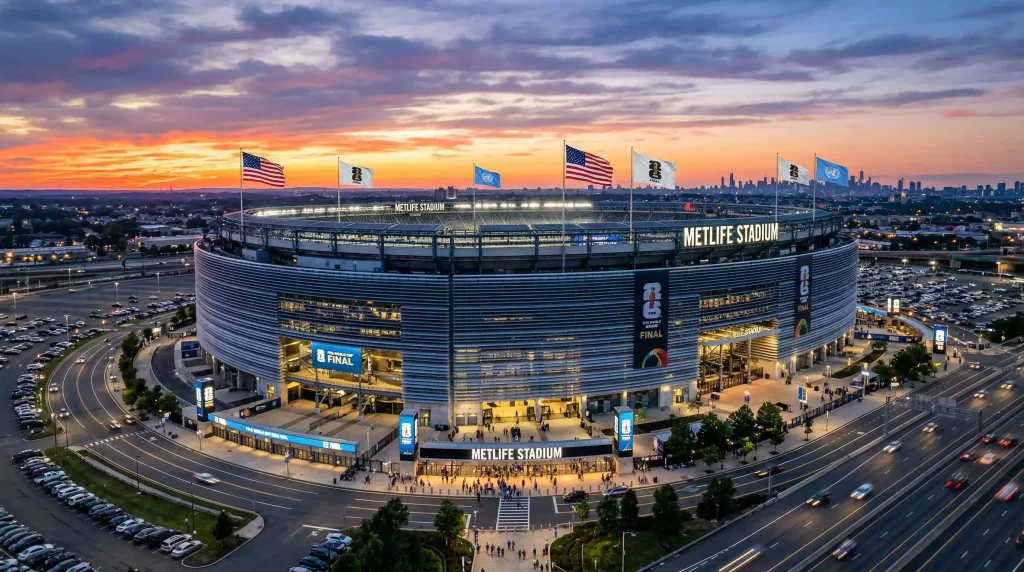
Table of Contents
On July 19th, 2026, the world’s attention focuses on East Rutherford, New Jersey. MetLife Stadium, the colossus that rises from the Meadowlands marshes, hosts the biggest prize in global football—the FIFA World Cup Final. For Canadian fans making the pilgrimage south, this venue represents the pinnacle of the tournament experience, where champions are crowned and legacies cemented.
The selection of MetLife as the final venue generated debate among football purists. American football’s influence pervades every corner—from field dimensions to luxury suite configurations. Yet FIFA’s choice acknowledges practical realities: massive capacity, modern infrastructure, proximity to global media hubs, and the New York metropolitan area’s ability to absorb hundreds of thousands of international visitors.
Understanding this venue matters for anyone planning World Cup attendance, whether holding final tickets or hoping to experience the atmosphere from surrounding areas.
MetLife Stadium: The Numbers
Raw capacity tells only part of the story, but it remains impressive. MetLife accommodates 82,500 spectators for NFL games, with World Cup configurations potentially reaching 87,000 through field-level seating additions. This makes it the largest NFL stadium by capacity and among the largest venues worldwide hosting the 2026 tournament.
Opened in 2010 at a cost exceeding $1.6 billion, MetLife replaced the beloved but aging Giants Stadium that had served since 1976. The new facility prioritized modern amenities—over 200 luxury suites, four massive video boards, and infrastructure designed for multiple event configurations. Two NFL franchises, the Giants and Jets, share tenancy, making it one of few stadiums hosting two major professional teams.
The open-air design creates atmosphere while exposing attendees to July weather. Unlike domed alternatives, MetLife offers authentic outdoor football experience, though New Jersey humidity in midsummer requires preparation. The bowl shape concentrates crowd noise effectively, creating intensity that enclosed stadiums sometimes dilute.
Location in the Meadowlands Sports Complex provides ample parking—over 28,000 spaces—alongside transit connections that handle NFL game days but face unprecedented World Cup demands. The facility sits in East Rutherford, New Jersey, approximately eight miles from midtown Manhattan, accessible yet separated from urban chaos.
Field dimensions accommodate World Cup specifications comfortably. The playing surface measures 105 by 68 meters for international matches, with room for broadcast positions, team areas, and security perimeters. Natural grass installations replace artificial turf for the tournament, addressing player preference and FIFA requirements.
From Giants Stadium to Global Glory
MetLife inherits a legacy from its predecessor that shaped American soccer history. Giants Stadium hosted the 1994 World Cup, including Italy’s iconic matches and the tournament’s electrifying group stages. That tournament proved Americans would embrace football given proper presentation—a lesson FIFA remembers thirty-two years later.
The 1994 experience transformed American soccer infrastructure planning. Attendance records, television ratings, and commercial success demonstrated viability that subsequent MLS formation required. Giants Stadium, despite limitations for soccer viewing in certain sections, delivered memorable moments that veterans still discuss.
MetLife has hosted notable soccer events since opening, including International Champions Cup matches, CONCACAF Gold Cup fixtures, and high-profile friendlies drawing premium European clubs. These events tested logistics and sight lines while building operational experience that World Cup demands.
The stadium’s naming rights, held by insurance company MetLife since inception, provide corporate identity without historical resonance. Unlike venues named for legendary figures or geographic features, MetLife carries commercial branding that some traditionalists lament. For World Cup purposes, the name simply identifies location—substance matters more than label.
Giants Stadium’s demolition in 2010 cleared physical space while preserving memories. Many Canadian fans old enough to remember 1994 associate the Meadowlands with that tournament’s magic. MetLife continues the tradition, improved facilities compensating for lost nostalgic connection.
World Cup 2026: The Final and Beyond
MetLife hosts multiple World Cup fixtures, but the final defines its tournament role. FIFA’s decision to award the championship match to New Jersey reflects several strategic considerations beyond raw capacity.
Media infrastructure ranks paramount. New York’s broadcasting capabilities, concentrated nearby network headquarters, and established international press corps simplify coverage logistics that more remote venues complicate. The final attracts global audiences measured in billions; technical execution cannot falter.
Hotel inventory surrounding MetLife, combined with Manhattan’s endless accommodation options, handles VIP delegations, media personnel, and general attendance better than alternatives. FIFA officials, corporate sponsors, and national association executives require premium hospitality that the region provides abundantly.
Security coordination benefits from New York area experience with major events. Multiple agencies have collaborated on presidential visits, UN General Assembly sessions, and countless high-profile gatherings. World Cup final security demands similar coordination at unprecedented scale.
Beyond the final, MetLife hosts six total matches including a semifinal. Group stage fixtures showcase the venue to worldwide audiences before knockout rounds amplify stakes. The progression from early tournament matches through elimination rounds to the final creates narrative momentum that FIFA marketing leverages effectively.
The semifinal on July 14th precedes the final by five days, providing reset time for pitch recovery, facility reconfiguration, and fresh preparation. This spacing protects surface quality while allowing distinct atmospheres for separate occasions.
Ticket allocation for the final favours FIFA partners, national associations, and commercial packages over public sales. Canadian fans seeking final tickets face challenging availability and premium pricing, though secondary markets inevitably emerge. Planning well ahead—ideally secured during initial sales windows—remains essential for those determined to attend.
The complete World Cup 2026 schedule covers all 104 fixtures across sixteen venues, with MetLife Stadium hosting matches from the group stage through the final.
MetLife Stadium Match Schedule
Six matches grace MetLife’s pitch during the tournament, culminating in the July 19th final. The progression from group stage through elimination rounds builds toward that championship moment.
Group stage fixtures in June showcase MetLife early, introducing global audiences to the venue before stakes escalate. These matches feature prominent nations whose supporter bases travel well, ensuring capacity crowds despite earlier tournament positioning. Specific group assignments place compelling matchups at MetLife, though scheduling details merit checking as draw implications settle.
The Round of 32 match on June 29th brings knockout football to the Meadowlands. Single elimination’s tension fills the stadium differently than group matches where goal difference calculations sometimes dampen pure drama. This fixture likely features a group winner against a third-place qualifier, creating classic favourite-versus-underdog narrative.
The semifinal on July 14th represents MetLife’s penultimate World Cup moment. Four teams remaining, two matches deciding finalists—the semifinal atmosphere combines relief at reaching this stage with anxiety about falling one step short. Historical semifinals produce legendary matches; MetLife hopes to add its chapter.
Then July 19th arrives. The final. Two nations remaining from forty-eight that started. MetLife transforms into the world’s most watched venue, broadcast to every continent, analyzed by commentators in dozens of languages. Ninety minutes—potentially one hundred twenty plus penalties—determine the champion. For those present, the memory becomes lifelong treasure.
Getting to MetLife: A Canadian’s Guide
Canadian fans enjoy relative proximity that transcends typical international tournament travel. From Toronto, New York area sits approximately 550 kilometers—a drive achievable in a long day, a flight measured in minutes rather than hours. Montreal fans face slightly longer journeys; western Canadians require flights regardless.
Flight options into the New York area multiply your planning choices. Newark Liberty International offers closest proximity—MetLife sits roughly fifteen minutes away without traffic. John F. Kennedy International provides more flight options but requires crossing metropolitan congestion. LaGuardia serves domestic routes primarily but handles some Canadian connections.
From Toronto Pearson, direct flights to Newark operate frequently on multiple carriers. Air Canada, United, and various competitors offer service, with World Cup dates commanding premium pricing. Booking early—months ahead—secures better fares before demand spikes closer to matches.
Train travel appeals to those preferring ground transportation without driving stress. Amtrak service from Toronto or Montreal reaches Penn Station Manhattan, though journey times stretch beyond ten hours. From Penn Station, NJ Transit connects to the Meadowlands Sports Complex station adjacent to MetLife. This rail option suits travellers extending New York stays beyond match days.
Driving from Ontario makes sense for groups sharing vehicle costs. The QEW to Buffalo, then Interstate 90 toward Albany before dropping south on Interstate 87 covers roughly eight hours from Toronto under normal conditions. World Cup traffic near the venue adds unpredictable time; arriving early beats anxious delays.
Border crossing adds Canadian-specific considerations. Enhanced driver’s licenses, Nexus cards, or passports facilitate entry. Peak World Cup periods may see increased border waits; factor additional time into driving plans. Documentation requirements haven’t changed, but volume increases processing duration.
Accommodation near MetLife ranges from budget chains along New Jersey highways to Manhattan luxury commanding premium rates. The Meadowlands area itself offers limited walking-distance options; most fans stay in Manhattan, Jersey City, or Hoboken, commuting to matches via transit or arranged transportation. Booking accommodations many months ahead prevents scrambling as the final approaches.
What to Expect on Match Day
World Cup atmosphere differs fundamentally from NFL games that MetLife typically hosts. International football supporters bring distinct traditions—coordinated chanting, flags covering entire sections, color-coded sea effects—that transform American venue culture.
Arriving early proves essential for security processing that World Cup requires. Expect airport-style screening, prohibited item restrictions beyond normal stadium policies, and designated entry gates based on ticket sections. FIFA guidelines restrict bags, outside food and beverages, and various items that NFL games permit. Reviewing current restrictions before departure prevents gate disappointments.
Tailgating culture, cherished at NFL games, faces World Cup modifications. The Meadowlands parking lots allow gathering, but alcohol policies tighten compared to football Sundays. Official fan zones in Manhattan provide alternatives for pre-match celebration with organized activities, screens showing other matches, and atmosphere building.
July weather in New Jersey demands preparation. Average high temperatures exceed 29°C (85°F) with humidity amplifying discomfort. Open-air seating means direct sun exposure for afternoon matches; evening fixtures offer relief but late July heat persists. Sunscreen, hydration supplies, and lightweight clothing become essentials rather than suggestions.
Inside the stadium, food and beverage options reflect American venue standards—adequate variety with predictable pricing premiums. Expect lines during halftime; strategic timing or seat-side ordering where available reduces wait frustration. Dietary restrictions can be accommodated at designated concession locations.
Departure after matches tests patience. Eighty thousand people dispersing simultaneously overwhelms any infrastructure. NJ Transit trains fill beyond comfortable capacity; roadways gridlock for hours. Post-match lingering inside the stadium while initial waves depart, or pre-arranged transportation meeting points away from main exits, eases the departure challenge.
The atmosphere itself—the reason for attending—delivers beyond description. Television captures action but misses collective energy, the sound rising from eighty thousand throats, the visual spectacle of competing supporter sections creating color contrasts. For football’s ultimate match, the final, these sensory elements combine into something memory preserves permanently.
Frequently Asked Questions
MetLife Stadium awaits its defining moment. The Meadowlands has witnessed American football championships, legendary concerts, and memorable sporting events across decades. World Cup 2026’s final adds global football’s ultimate prize to that legacy.
For Canadian fans fortunate enough to secure tickets, the journey from Toronto or Montreal represents manageable pilgrimage to witness history. Whether your nation competes for the trophy or neutral appreciation draws you to the spectacle, MetLife promises atmosphere worthy of football’s grandest occasion. The champion lifts the trophy here. The world watches here. And those present become part of something greater than any single match can contain.
