
World Cup 2026 Group L: England’s Tournament Begins
 Available in US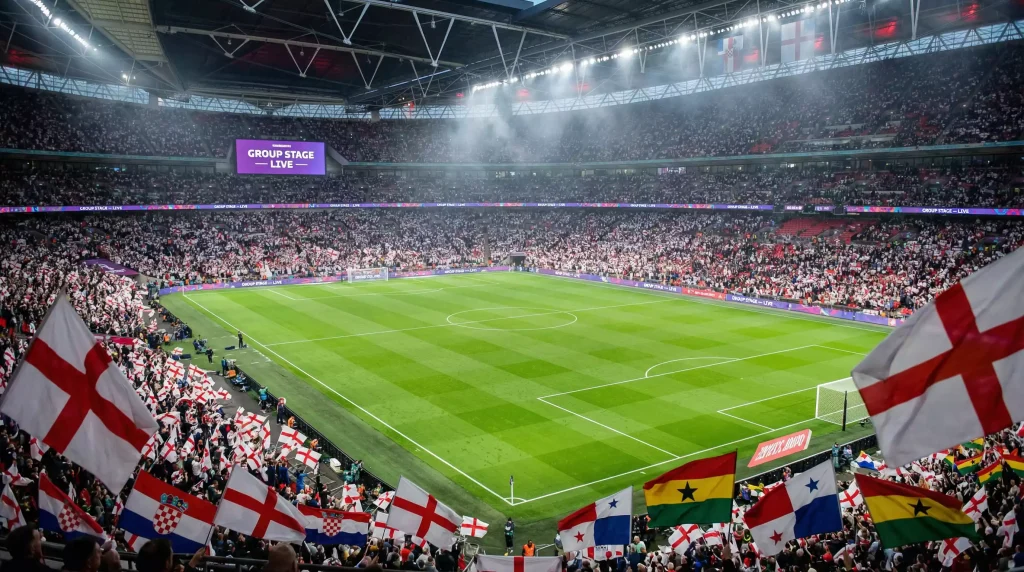
Table of Contents
The last group drawn always carries a particular weight, and World Cup 2026 Group L delivers exactly the narrative tension the tournament craves. England enters as perpetual favourites haunted by six decades without a trophy. Croatia arrives with a golden generation playing what may be its final act. Ghana seeks redemption after controversial exits past. Panama returns to prove their 2018 appearance was no fluke. Four nations, four distinct footballing identities, one brutal reality: only two advance.
I have covered England through three World Cup cycles now, watching the same pattern repeat: overwhelming pre-tournament expectation, solid group stage performances, and heartbreak somewhere between the quarter-finals and the final whistle. Group L offers England no easy path despite being clear favourites. Croatia knocked them out in 2018. Ghana’s athleticism troubles European defences. Panama may lack individual stars but compensates with collective spirit that cannot be measured in FIFA rankings.
The betting markets tell one story. England at -350 to win the group seems straightforward. But World Cup history teaches us that straightforward rarely survives first contact with tournament football. Group L sits in the American midwest and southeast, with matches spread across Kansas City, Atlanta, and Philadelphia. The venues favour neither European nor CONCACAF sides, creating genuinely neutral ground where form matters more than familiarity.
Football’s Coming Home? England’s 60-Year Wait Continues
Sixty years. That number hangs over English football like a permanent cloud, occasionally parting to reveal silver linings before closing again. I was at Wembley for the Euro 2020 final when Bukayo Saka’s penalty miss sent the nation into mourning. I watched from the press box in Qatar as England dominated France for stretches before succumbing to Harry Kane’s missed penalty. The pattern repeats with cruel consistency.
Yet this England squad may represent the finest collection of attacking talent the country has produced since 1966. Jude Bellingham has evolved from teenage prodigy to genuine Ballon d’Or contender at Real Madrid, controlling matches with a maturity that belies his 22 years. Phil Foden finally translated his Manchester City brilliance to international level during qualifying. Bukayo Saka provides width, directness, and end product that terrifies full-backs across Europe.
The depth chart reads like a Premier League All-Star roster. Cole Palmer emerged as perhaps England’s most clinical finisher during the 2024-25 season. Anthony Gordon offers genuine pace on either flank. Kobbie Mainoo’s emergence at Manchester United suggests midfield succession planning is well underway. Trent Alexander-Arnold’s positional flexibility adds tactical wrinkles that opponents must respect.
Defensively, questions persist. John Stones remains world-class when fit, though fitness has proven inconsistent. Marc Guéhi established himself during Euro 2024 but faces the step up to World Cup knockout pressure. The goalkeeper position seems settled with Jordan Pickford, whose big-tournament performances consistently exceed his club-level perception.
England’s World Cup 2026 odds sit at +550 for the tournament, fifth-favourite behind Spain, France, Brazil, and Argentina. Group L odds heavily favour England at -350 to finish first, with Croatia at +280 offering the primary challenge. The Three Lions should advance comfortably, but the manner of advancement matters for knockout positioning.
What concerns me about England extends beyond personnel. Gareth Southgate departed after Euro 2024, leaving the FA to navigate managerial transition during a World Cup cycle. The new coach inherits extraordinary talent but limited preparation time. Tournament football rewards cohesion built over years, not months. England’s individual brilliance must somehow coalesce into collective excellence by June 2026.
The Vatreni’s Encore: Croatia’s Golden Generation Takes Its Bow
Luka Modrić will turn 41 during the 2026 World Cup. Let that number sink in. A midfielder who has graced three World Cup semi-finals, won everything at club level, and earned a Ballon d’Or will be competing at the highest level at an age when most footballers have long since retired. Whether this represents his final act or merely another chapter remains uncertain, but Croatia’s entire World Cup 2026 narrative centres on their ageless captain.
Croatia’s run since 2018 defies all conventional wisdom about small-nation football. A country of four million people reached the 2018 final, finished third in 2022, and qualified for 2026 with characteristic efficiency. The secret lies partly in their diaspora-enhanced talent pool, partly in a federation that prioritizes development, but mostly in a collective mentality that treats pressure as privilege.
The Vatreni faced familiar foes during qualifying, dispatching Wales and Poland to secure their place. The campaign showed both Croatia’s enduring quality and emerging concerns. Modrić remains indispensable despite his age, raising questions about what happens when he finally departs. Mateo Kovačić provides reliable support, though he too sits in his thirties. The midfield succession plan involves Lovro Majer and Martin Baturina, talented players who lack major tournament experience.
Defensively, Croatia has rebuilt around Joško Gvardiol, whose performances at Manchester City established him among the world’s elite centre-backs. The Leipzig product combines physical dominance with technical ability, comfortable carrying the ball into midfield or shutting down elite attackers. Alongside him, Josip Šutalo has emerged as a reliable partner, though the full-back positions show age-related concerns.
Ivan Perišić’s injury history creates uncertainty on the flanks, while the striking position remains Croatia’s perennial weakness. Andrej Kramarić offers experience and efficiency, but Croatia lacks a genuine twenty-goal-a-season centre forward. They compensate through midfield creativity and collective pressing, manufacturing goals through system rather than individual brilliance.
Croatia at +280 to win Group L represents interesting value for believers in tournament experience. The Vatreni have faced and defeated England in major tournament play, know exactly how to handle pressure, and possess the tactical discipline to execute game plans. Their ceiling remains a semi-final or beyond. Their floor sits somewhere around the round of 16. Few teams offer such a narrow range of outcomes.
Black Stars Rising: Ghana’s Quest for African Glory
The Asamoah Gyan penalty against Uruguay in 2010 remains African football’s greatest what-if moment. Luis Suárez’s handball on the line, the subsequent spot-kick striking the crossbar, and Ghana’s exit in extra time denied the continent its first World Cup semi-finalist. Fourteen years later, Ghana returns to World Cup competition seeking redemption for that Johannesburg heartbreak and carrying the weight of African expectation.
Ghana’s road to 2026 required navigating one of CAF’s most competitive qualifying campaigns. The Black Stars finished atop their group ahead of Angola and Sudan, demonstrating improved defensive organization under coach Otto Addo. The German-born manager implemented a pragmatic approach that balanced Ghana’s traditional attacking flair with European-influenced structure.
The squad reflects Ghana’s evolving football identity. Mohammed Kudus emerged as a genuine star at West Ham, combining technical ability with physical presence in ways that terrify defenders. His ability to drive through midfield, combine in tight spaces, and finish from distance makes him Ghana’s most complete attacking threat since Michael Essien’s prime.
Thomas Partey provides the midfield anchor when fit, though injuries have plagued his recent seasons at Arsenal. The question of Partey’s availability and form significantly impacts Ghana’s World Cup ceiling. With him at full fitness, Ghana can compete with anyone. Without him, the midfield lacks the elite-level control necessary against European opposition.
Jordan Ayew and Antoine Semenyo offer experienced attacking options, though neither has dominated at club level in recent seasons. The full-back positions feature Tariq Lamptey, whose Brighton performances showcase explosive pace and defensive improvements that make him one of Africa’s most exciting young defenders.
Ghana enters Group L as underdogs, priced at +1400 to win the group, reflecting the challenge posed by England and Croatia. However, the third-place qualification route offers Ghana a realistic path to the knockout rounds. Finishing above Panama while pushing the European giants seems an achievable target.
What makes Ghana dangerous extends beyond individual talent. African teams have increasingly troubled European opposition at World Cups, as Morocco’s 2022 semi-final demonstrated. Ghana’s players compete across Europe’s top leagues, understand tactical demands, and carry the mental weight of representing a continent’s ambitions. Underestimate them at your peril.
Los Canaleros Return: Panama’s Second World Cup Act
Román Torres’s goal against Costa Rica in October 2017 remains the most important in Panamanian football history. That strike secured Panama’s first-ever World Cup qualification, sending an entire nation into delirious celebration. The 2018 tournament itself proved humbling — three defeats, one goal scored, nine conceded — but the experience planted seeds that have now flowered into a second qualification.
Panama’s path to 2026 came through CONCACAF’s reformed qualifying system, where they emerged from a competitive octagonal format ahead of traditional powers. The campaign required resilience, as Panama entered the final matchday needing results to fall their way. They delivered when it mattered, demonstrating the mental fortitude that defines Central American football.
Coach Thomas Christiansen has built a system that maximizes Panama’s collective strengths while minimizing individual limitations. The Danish-born manager implemented defensive discipline that made Panama difficult to break down throughout qualifying. They conceded fewer goals than Mexico during the octagonal, a statistic that surprised many observers.
Panama lacks household names recognizable to casual football fans, which proves both blessing and curse. Opponents tend to underestimate teams without obvious stars, yet Panama struggles to generate the individual brilliance that unlocks tight matches. César Yanis and Édgar Bárcenas provide attacking thrust, while Adalberto Carrasquilla anchors the midfield with positional discipline.
The goalkeeping position features Orlando Mosquera, whose Pachuca performances in Liga MX demonstrated shot-stopping ability capable of stealing points against superior opposition. Panama will need several outstanding goalkeeper performances to progress from Group L, and Mosquera has shown such capabilities in high-pressure moments.
Panama’s World Cup 2026 odds reflect their underdog status: +5000 to win the group, heavy outsiders for any knockout advancement. Yet the third-place route offers hope. If Panama can steal points from Ghana while keeping defeats to England and Croatia respectable, goal difference calculations might yet favour their progression.
The Central American advantage should not be dismissed entirely. Panama’s players know North American conditions, travel times, and climate in ways that European and African opponents do not. The venues in Kansas City and Atlanta sit closer to Panama City than to London or Accra. Home advantage may be American, but regional familiarity belongs to Los Canaleros.
The Bracket Unfolds: Group L Schedule and Implications
Group L’s schedule creates fascinating storylines through its sequencing. England opens against Croatia on June 14th in Atlanta, a repeat of the 2018 semi-final that saw Croatia triumph in extra time. Neither team will have forgotten that Moscow afternoon. The opening match carries psychological weight extending far beyond three points.
Ghana faces Panama in the parallel opener, a match that likely determines which team realistically contends for third-place advancement. The African side enters as clear favourites, but Panama’s defensive discipline could frustrate Ghana’s attacking ambitions. A draw would suit neither team’s advancement calculations.
The second matchday sees England play Ghana in Philadelphia on June 18th, while Croatia faces Panama in Kansas City. These matches should clarify the group picture. If favourites hold, England and Croatia each claim six points heading into the final matchday, rendering their head-to-head irrelevant for positioning purposes.
Group L concludes on June 24th with simultaneous kickoffs: England versus Panama and Croatia versus Ghana. The scenarios multiply depending on results, but the likeliest outcome sees England and Croatia already qualified, playing for first place while Ghana and Panama contest elimination.
Venue selection favours neither European contingent. Mercedes-Benz Stadium in Atlanta offers a covered environment that neutralizes weather concerns. GEHA Field at Arrowhead in Kansas City provides genuine neutral ground where crowd composition depends entirely on ticket purchases. Lincoln Financial Field in Philadelphia splits the difference, offering outdoor conditions that could favour either side depending on June weather patterns.
For Canadian bettors, Group L offers numerous markets beyond simple winner predictions. England to qualify at -800 seems prohibitively short, but Croatia to qualify at -200 provides reasonable value given their tournament pedigree. Ghana to qualify at +150 tempts those who believe in African progress, while Panama to qualify at +450 rewards believers in Central American resilience.
Where Smart Money Moves: Group L Betting Analysis
The most intriguing Group L betting angle involves the England-Croatia opener. Historical precedent favours Croatia in major tournament knockout matches, though group stage dynamics differ significantly. England’s new manager will have had limited preparation time, potentially creating early-tournament uncertainty that experienced Croatia can exploit.
England-Croatia draw at +340 offers value for those expecting a cagey opener where neither team risks defeat. Both nations know they should advance regardless of opening result, potentially encouraging conservative approaches. The under 2.5 goals market at +110 aligns with this cautious expectation.
Ghana over Panama in their opener appears straightforward, but the handicap market deserves attention. Ghana -1 at +150 asks whether the Black Stars can win comfortably against organized CONCACAF defending. Panama’s record against African opposition remains limited, but Central American teams typically perform better than rankings suggest in World Cup competition.
The top scorer market within Group L heavily favours England’s attackers. Harry Kane leads the odds at +300 for most group goals, with Jude Bellingham at +450 and Phil Foden at +600 offering alternatives. The value play might be Mohammed Kudus at +1200, given Ghana’s likely offensive burden against Panama and potential transition opportunities against the Europeans.
Group stage totals provide another betting avenue. Group L should produce goals given the attacking talent assembled. The over/under on total group goals sits around 12.5, with the over attracting slight favourite status. England alone should contribute four or five goals across three matches if performing to expectations.
For those seeking longer odds, Croatia to win the group at +280 offers genuine value against England at -350. The Vatreni’s tournament experience, particularly in matches that matter, suggests they can handle pressure that might overwhelm younger English players. If Croatia defeats or draws England in the opener while winning their other matches, group victory becomes realistic.
The third-place market often provides inefficiencies in World Cup betting. Eight best third-place teams advance to the round of 32, meaning Ghana’s +150 to qualify represents whether they can accumulate enough points to rank among the top eight third-place finishers. Given the relatively weak fourth seeds across several groups, this seems plausible.
The Final Reckoning
Group L promises drama befitting its position as the tournament’s final group. England’s eternal quest for glory faces immediate examination against Croatia, a team that has haunted their recent tournament memories. Ghana carries African ambitions and the lingering pain of 2010. Panama seeks to prove their 2018 appearance launched a sustainable programme rather than a one-off miracle.
My prediction places England first, Croatia second, Ghana third, and Panama fourth. The margin separating each position feels narrower than odds suggest. England should progress comfortably but may not dominate. Croatia possesses the quality to challenge for first place while virtually guaranteeing second. Ghana’s knockout advancement depends on results elsewhere, while Panama faces the longest odds of any Group L advancement scenario.
For bettors, Group L offers value in the margins rather than the obvious plays. England to win the group at -350 provides poor returns for significant risk. Croatia to finish first at +280 tempts those who remember their 2018 semi-final heroics against the Three Lions. Ghana to qualify at +150 rewards believers in African football’s continued rise. The smart money identifies these edges, manages bankroll accordingly, and watches Group L unfold with clinical detachment.
The beautiful game rarely respects prediction. Somewhere in Group L lurks a result that defies expectation, a moment that reshapes tournament narratives, a goal that echoes through football history. Finding where that moment occurs, and positioning accordingly, separates successful World Cup betting from hopeful speculation.
